
Last updated September 22, 2026
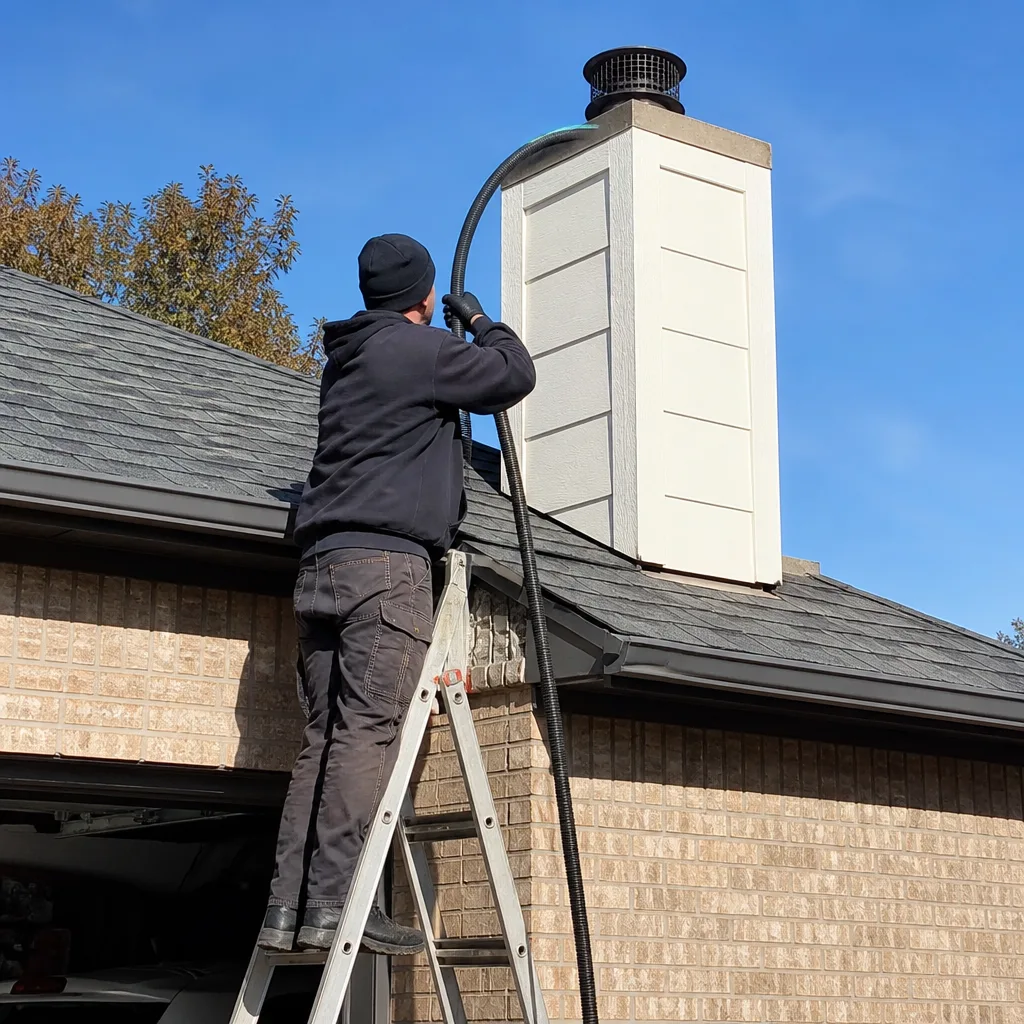
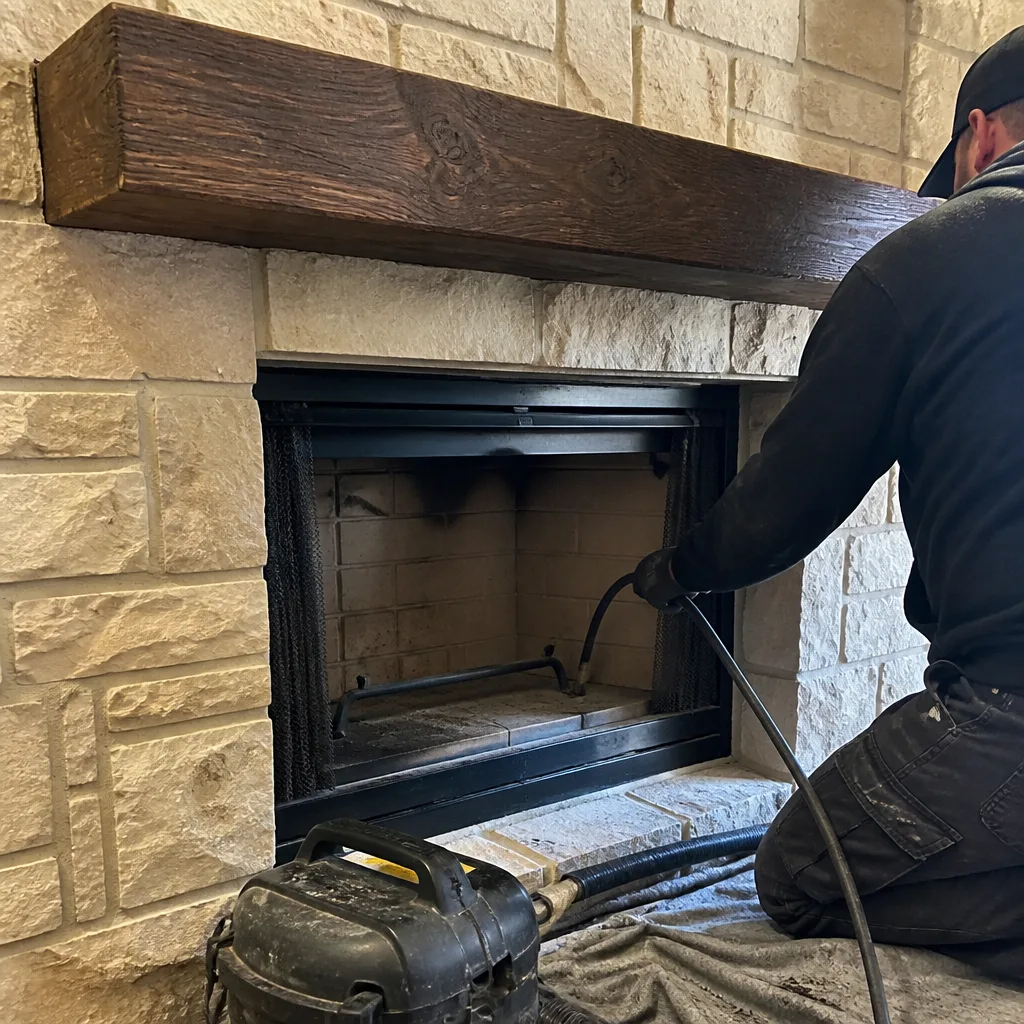
Level 1 sweep and inspection to the NFPA 211 annual standard - flue, crown, cap, and flashing checked and photographed
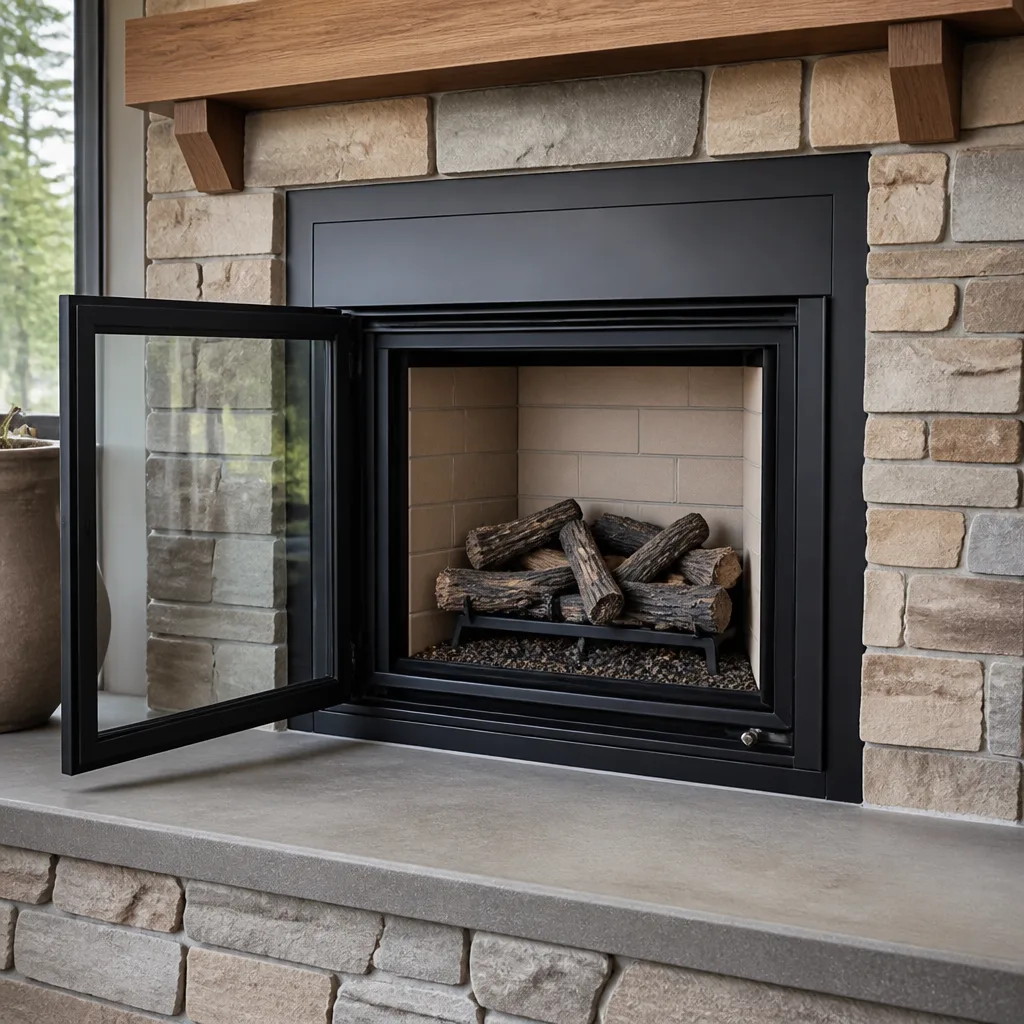
Chimney sweep logs do not sweep chimneys. They loosen some creosote - which then falls where a brush and vacuum still have to collect it.
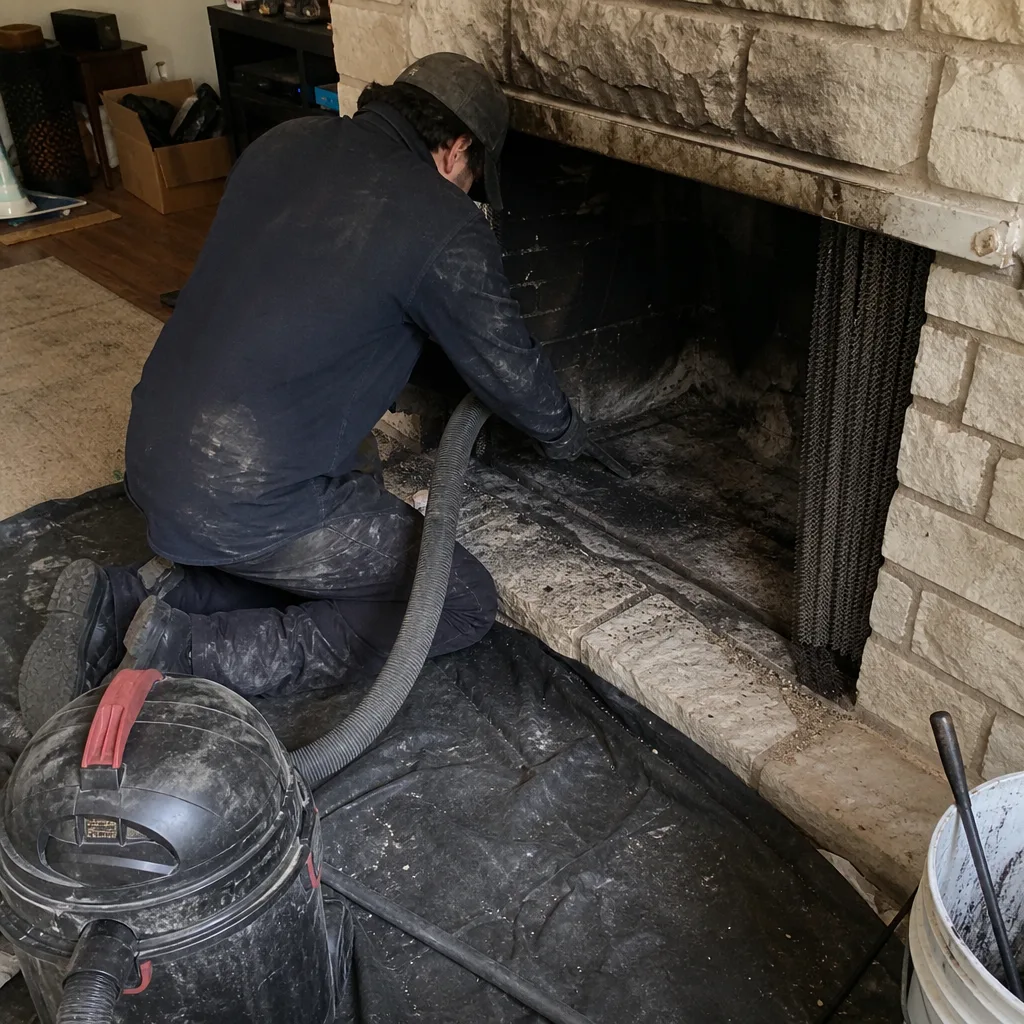 Before
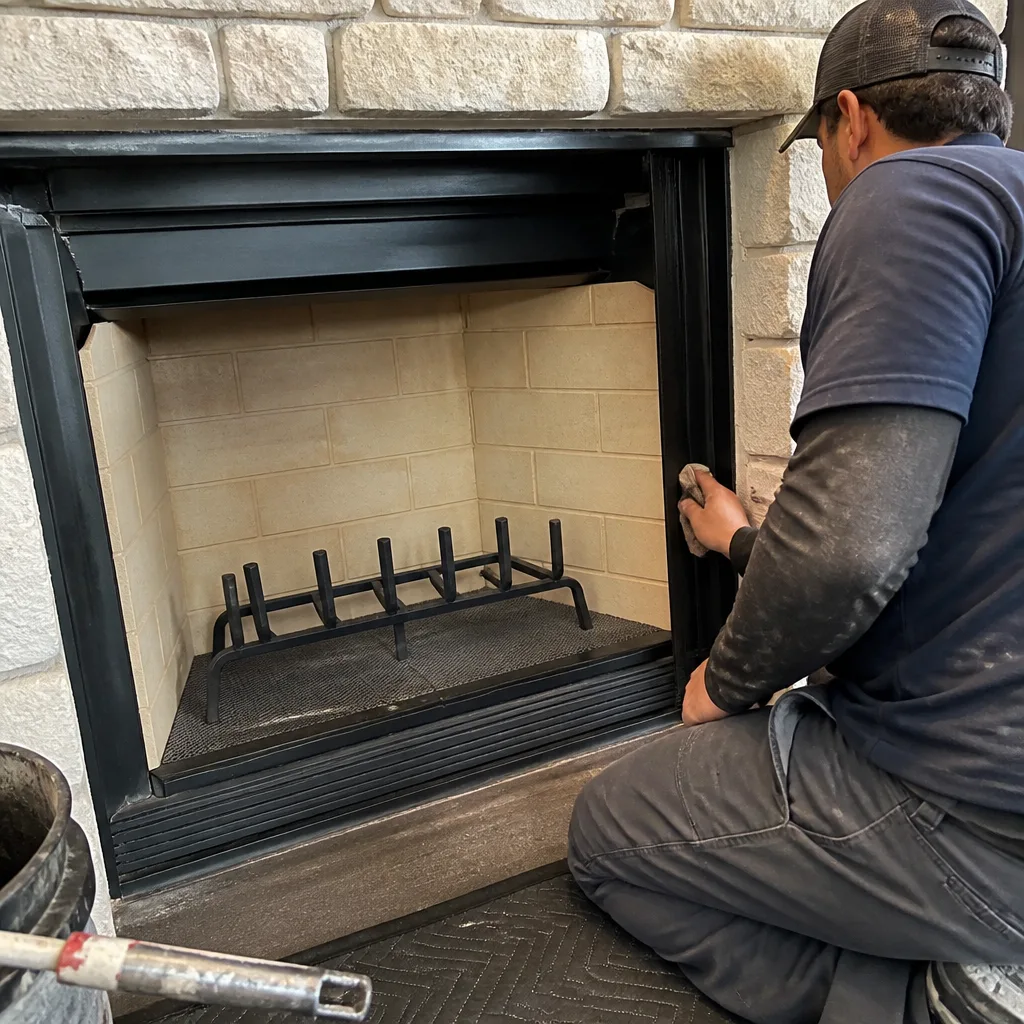 After
After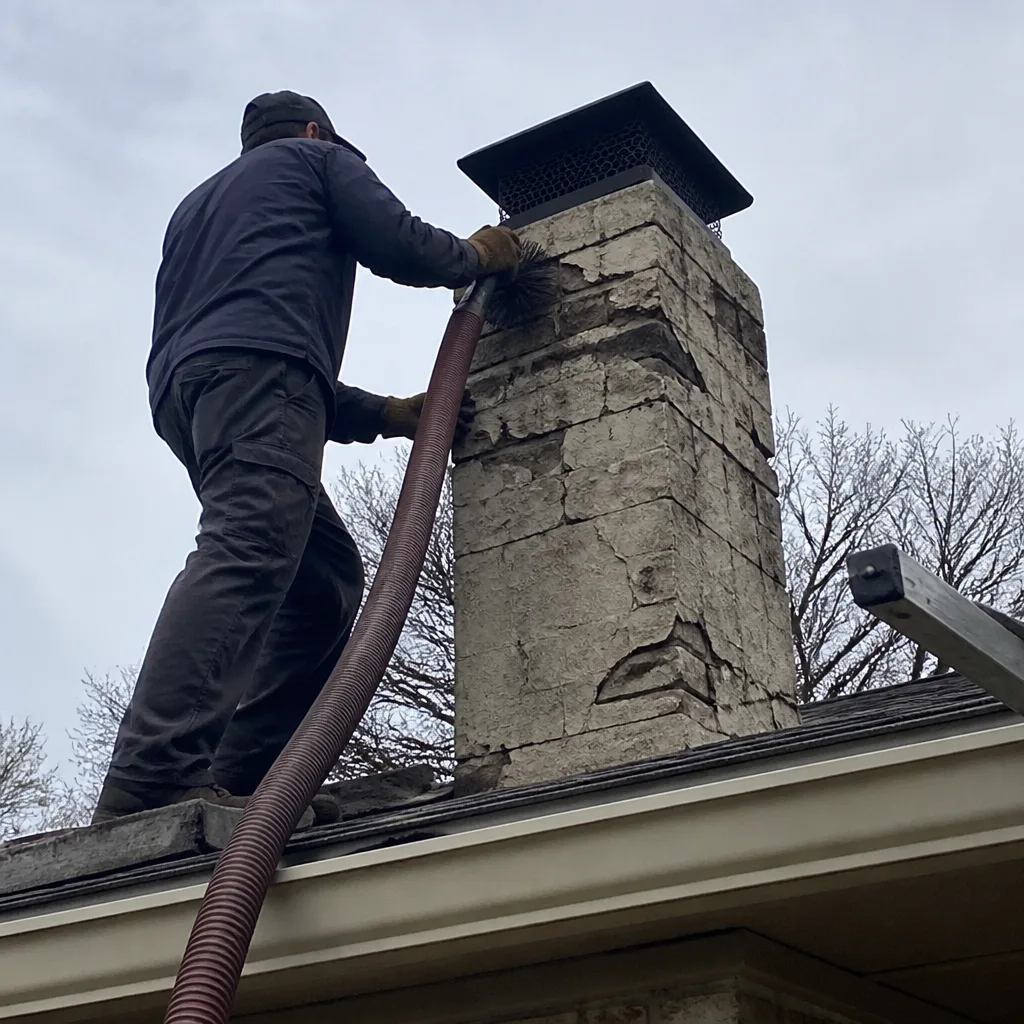 Before
 After
After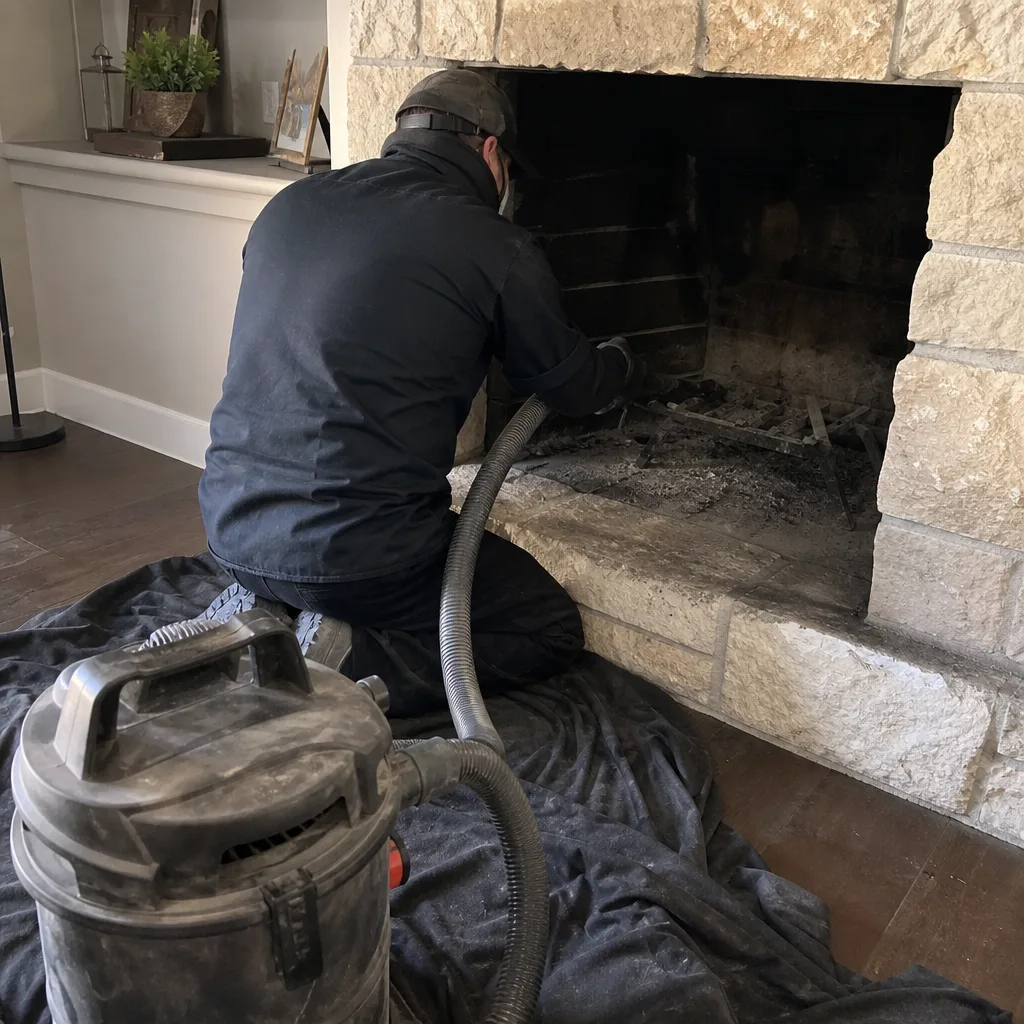 Before
 After
AfterSeasonal Chimney Cleaning Care for Fort Worth: Year-Round Homeowner’s Guide
Most Fort Worth homeowners treat chimney maintenance like a Halloween decoration - something to handle in October, then forget. That single-sweep habit misses what North Texas weather actually does to a masonry system. In our experience inspecting chimneys across Fort Worth since 2009, the chimneys with the costliest repairs are almost always the ones that sat untouched from March to October. Summer dormancy here isn’t neutral; it’s active damage time. This guide maps a month-by-month maintenance calendar built for Tarrant County’s actual climate, not a four-season textbook, with Chimney Sweep Maintenance Checklist for Fort Worth Homeowners as your companion resource.
Quick Answer
Fort Worth homeowners need two professional chimney inspections yearly: a pre-season camera scan in September before first fires, and a post-season sweep in March after burning ends. See our Chimney Cleaning Cost Breakdown: The Fort Worth Homeowner’s Reference for 2026 for current pricing. Between those visits, monthly homeowner checks of the cap, crown, and firebox catch moisture intrusion, wildlife nesting, and thermal cycling damage that North Texas’s storm-heavy summers and freeze-thaw winters accelerate.
Table of Contents
- Why Fort Worth’s Climate Breaks the Standard Calendar
- September: The Highest-Value Month for Chimney Work
- October-November: Pre-Season Prep and First Fires
- December-February: Burning Season Monitoring
- March: The Forgotten Post-Season Sweep
- April-August: Summer Dormancy Damage Control
- Hail Season Crown and Cap Assessment
- Common Mistakes to Avoid
- When to Call a Professional
- Frequently Asked Questions
- The Bottom Line
BeforeAfterWhy Fort Worth’s Climate Breaks the Standard Calendar
The standard chimney advice - “sweep once a year, ideally in fall” - was written for climates with four distinct seasons and steady heating demand. Fort Worth doesn’t work that way.
Our burning season runs roughly 16 to 20 weeks, concentrated from late November through February. The remaining 32-plus weeks, the chimney sits cold. That dormancy creates a maintenance environment most guides ignore entirely.
Three factors specific to Tarrant County reshape the calendar:
- Thermal cycling stress: Fort Worth’s winter temperature swings - 70°F afternoons dropping to 28°F by morning - expand and contract clay flue tiles at rates that crack mortar joints. A chimney that heats and cools daily through a short intense season takes more liner stress than one used steadily for six months.
- Storm-season moisture intrusion: April through June delivers an average 12 to 15 inches of rain, often with wind-driven hail. Water enters through hairline crown cracks that opened during winter freezes, then pools in the smoke chamber all summer.
- Wildlife colonization: Chimney swifts, a federally protected migratory bird, nest in Fort Worth chimneys from April through August. Their presence blocks flues and their acidic guano degrades mortar. Removal requires specific federal permits and timing windows.
The result: a chimney in Fort Worth ages differently than one in Chicago or even Houston. The maintenance calendar has to match.
September: The Highest-Value Month for Chimney Work
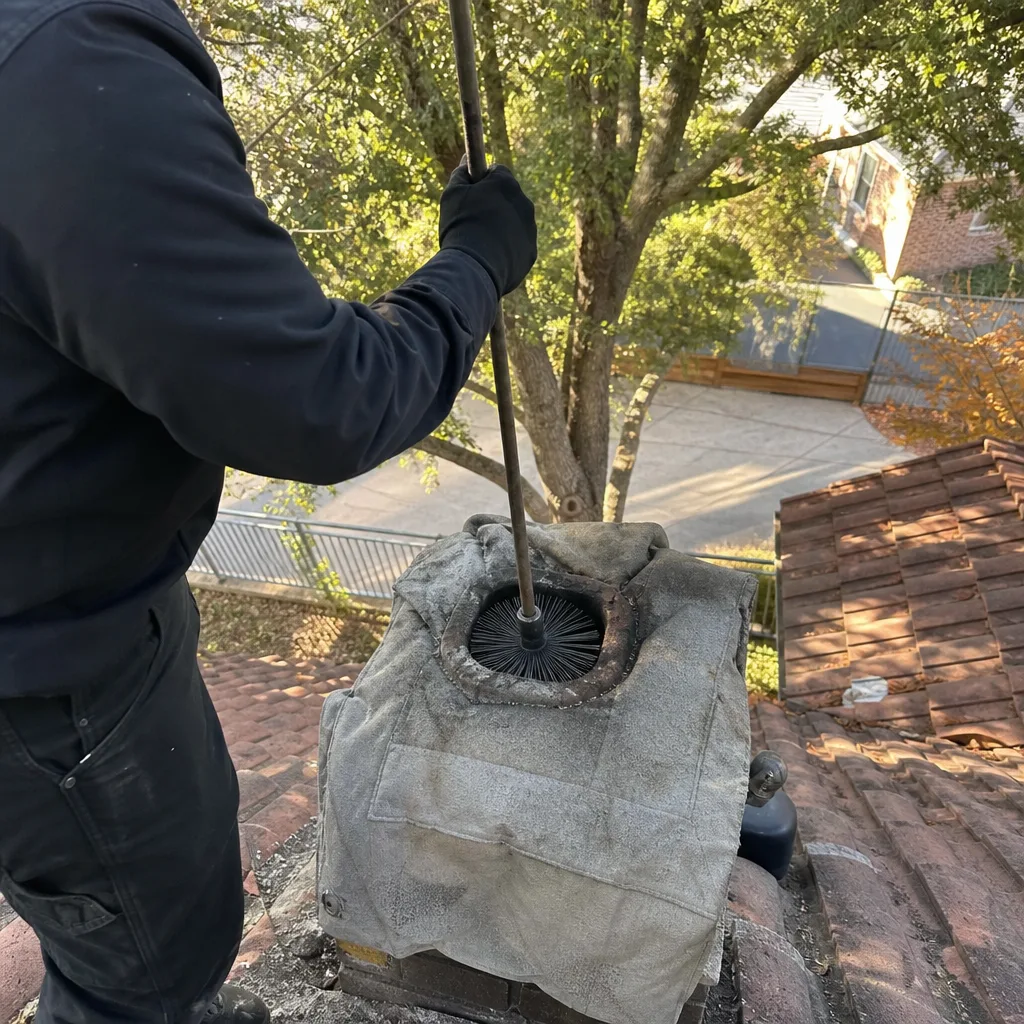
September is the highest-value month for chimney work in Fort Worth - not because burning season is approaching, but because the summer heat has cured any moisture damage from spring rain, making it the only time of year when a camera scan shows accurate liner condition before season-opening fires.
Here’s what happens in a typical Fort Worth summer: June storms drive water through crown cracks. July and August heat bakes that moisture into the masonry, causing spalling (surface flaking) on the firebox back wall and accelerating rust on the damper. By late August, the damage is fully expressed. A camera scan in September captures the true state of the system - not the damp, swollen condition of May or the freeze-contracted state of January.
What a professional September visit should include:
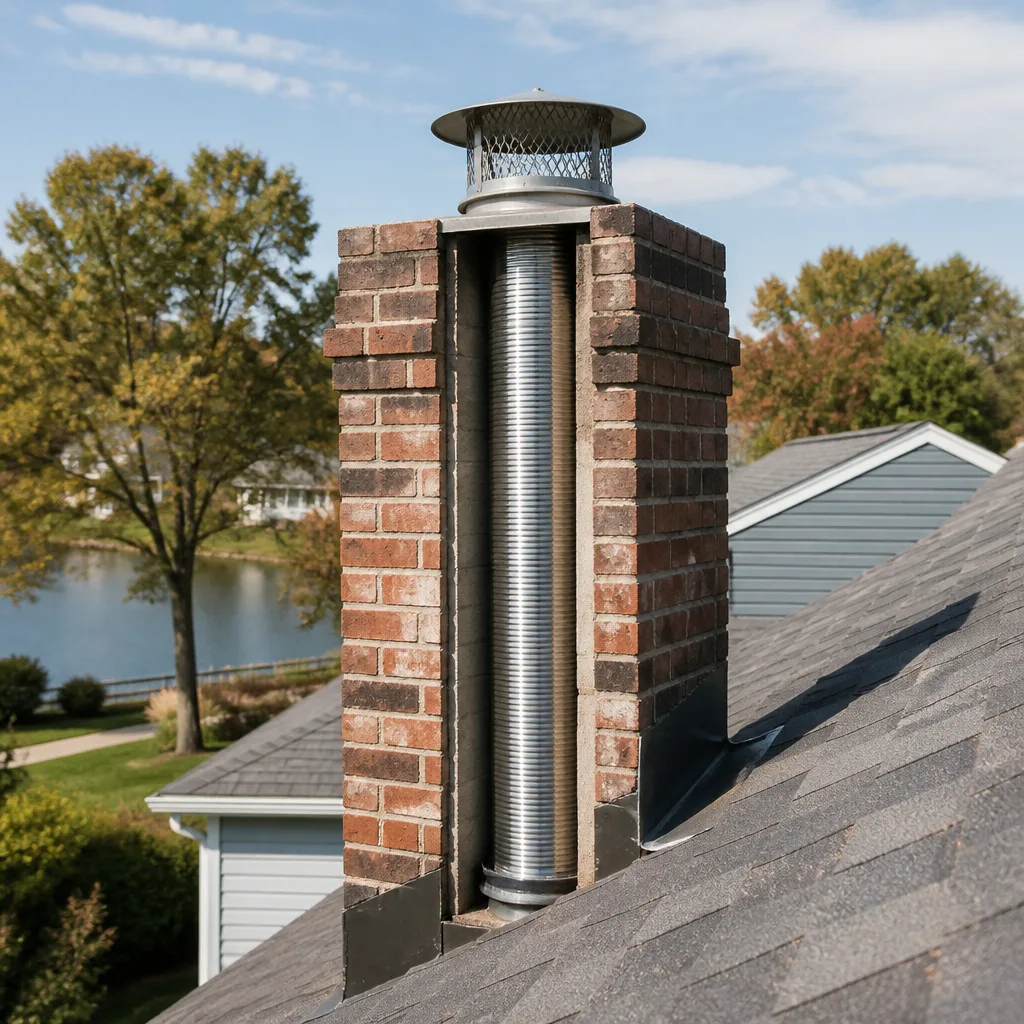
- NFPA 211 Level 2 camera inspection: A flexible camera scans the full flue liner from firebox to crown, documenting cracks, gaps, glaze buildup, or liner displacement. At Emberly Chimney Cleaners Fort Worth, this produces a dated photo record under Haven Standard Clause 4.
- Creosote classification: We classify buildup as Stage 1 (sooty, brush-removable), Stage 2 (granular, requires rotary tools), or Stage 3 (glazed, solvent treatment needed). Fort Worth’s short burning season rarely produces Stage 3 in one year, but we see it in chimneys that skipped the March post-season sweep.
- Crown and cap integrity check: Summer thermal expansion opens crown cracks that winter cold will widen. September sealing prevents freeze-thaw damage.
- Written scope and price before work: Haven Standard Clause 1 requires a written price, written scope, and written warranty before any work begins. No exceptions.
Neighborhoods across Fort Worth show distinct patterns in September inspections. In older areas like Mistletoe Heights and Berkeley Place, we regularly find unlined chimneys or terra cotta liners from the 1950s with thermal stress cracking. In newer construction in Walsh Ranch or Viridian, we see more stainless steel liner installations but frequent improper sizing from original builders. The camera doesn’t guess; it shows what’s actually there.
Booking in September also avoids the October rush. Our Chimney Sweep in Fort Worth calendar typically has same-week availability in early September, two-week waits by mid-October.
October-November: Pre-Season Prep and First Fires
By October, Fort Worth’s first cold fronts arrive. Homeowners who delayed September scheduling now face a choice: rush the inspection or light the first fire unexamined.
First fires carry specific risks in this region. Summer moisture in the flue combines with cool autumn air to produce poor draft. Smoke backs up into living rooms. Worse, any creosote remaining from last season - especially if the March sweep was skipped - ignites when heated by that first high-temperature fire.
Our protocol for October-November appointments:
- Verify draft performance: We check for negative pressure issues common in Fort Worth’s tightly sealed newer homes. Kitchen exhaust fans, whole-house vacuums, and even closed bedroom doors can reverse draft in a chimney that worked fine last year.
- Inspect the smoke chamber: The area above the firebox and below the flue, often corbeled brick, collects creosote and is inaccessible to standard brushes. We scan it with the camera and parge smooth any exposed corbelling with Chamber-Tech 2000 or HeatShield materials.
- Test damper operation: Summer humidity rusts steel throat dampers. A stuck damper discovered at 6 p.m. on the first cold night is a service call, not a maintenance item.
Fort Worth’s variable October weather creates a specific hazard: homeowners light decorative fires during 55°F evenings, then let the chimney cool for two weeks. That intermittent use pattern produces more creosote than steady burning, because the flue never reaches sustained temperatures that would burn it off.
By November, we shift to repair and installation work for chimneys that failed September inspection. Chimney Repair in Fort Worth demand peaks then, with liner replacements and crown rebuilds scheduled before sustained cold arrives.
December-February: Burning Season Monitoring
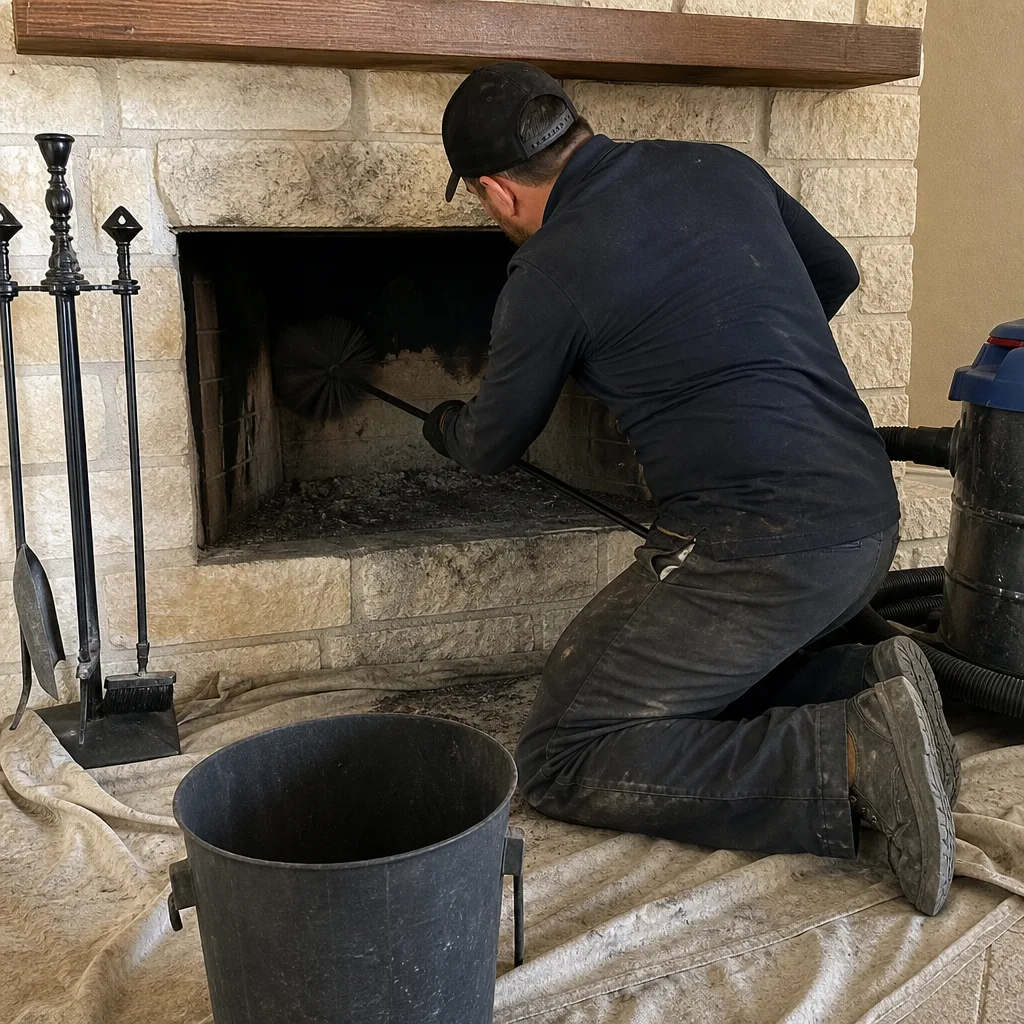
Fort Worth’s burning season runs shorter and more intense than northern climates. A typical household here burns 1.5 to 2.5 cords annually, concentrated in 16 to 20 weeks. That intensity means creosote builds faster per hour of use than in climates with steady low fires.
Homeowner tasks during burning season:
- Weekly ash removal: Maintain 1 to 2 inches of ash bed for insulation, but remove excess that restricts airflow. Wait 24 hours after last fire; embers remain active longer than they appear.
- Monthly firebox inspection: Look for spalling brick, deteriorating mortar, or white efflorescence (salt deposits indicating moisture migration). Photograph any change month-to-month for comparison.
- Smoke and CO detector verification: Test monthly. Fort Worth fire code requires CO detectors within 15 feet of sleeping areas; we recommend one in the same room as any operating fireplace.
- Burn only seasoned hardwood: Oak, hickory, or mesquite at less than 20% moisture content. Green or softwood produces Stage 3 creosote in a single season.
Warning signs that need immediate professional attention:
- Smoke entering the room at fire start-up (draft failure or blockage)
- Visible creosote flakes falling into the firebox (excessive buildup)
- Hot or discolored wall surfaces near the chimney (liner breach or clearance violation)
- Cracking or popping sounds from the chimney during fires (thermal shock to damaged liner)
These are not “watch and wait” symptoms. A breached flue liner in Fort Worth’s older homes, many with 2-inch clearance to combustibles instead of modern 2-inch requirements, creates immediate fire risk. The National Fire Protection Association reports that confined chimney fires peak in January nationally; in Fort Worth, our data shows a secondary peak in late February, when homeowners push for “one more fire” before warm weather returns.
March: The Forgotten Post-Season Sweep
March matters as much as September. Here’s why: a Fort Worth winter leaves behind specific debris types that become serious problems if left until fall.
What accumulates in a typical burning season:
- Stage 1 and 2 creosote: Brush-removable if addressed promptly; hardens to Stage 3 glaze if baked by summer heat.
- Ash and soot fines: Absorb spring moisture, becoming acidic slurry that degrades firebox mortar.
- Pyrolyzed wood fragments: Partially burned material in the smoke chamber, a fuel source for future chimney fires.
- Glazed creosote from late-season hot fires: Fort Worth homeowners often burn hot “cleaning fires” in February, believing this reduces creosote. It doesn’t remove it; it bakes it to a harder form.
The March sweep serves another purpose: documentation. A post-season camera scan creates a dated record of liner condition after the stress of active use. Compare this to your September pre-season scan, and you have year-over-year trend data that catches deterioration early. Homeowners who only sweep in October have no record of what their chimney looked like after the season ended. That’s an insurance and liability blind spot. If a chimney fire occurs the following January, the insurer’s investigator has no documentation of whether the damage was pre-existing or new.
Haven Standard Clause 4 requires this photo record on every visit. We’ve delivered it on every one of our 38,000-plus jobs since 2009. The archive exists. The question is whether your chimney is in it.
March scheduling also avoids wildlife conflicts. By early April, chimney swifts return to Fort Worth. Once a nest contains eggs or young, federal Migratory Bird Treaty Act protections prohibit disturbance until the young fledge in August. A March sweep ensures the flue is clear before nesting season locks it.
April-August: Summer Dormancy Damage Control
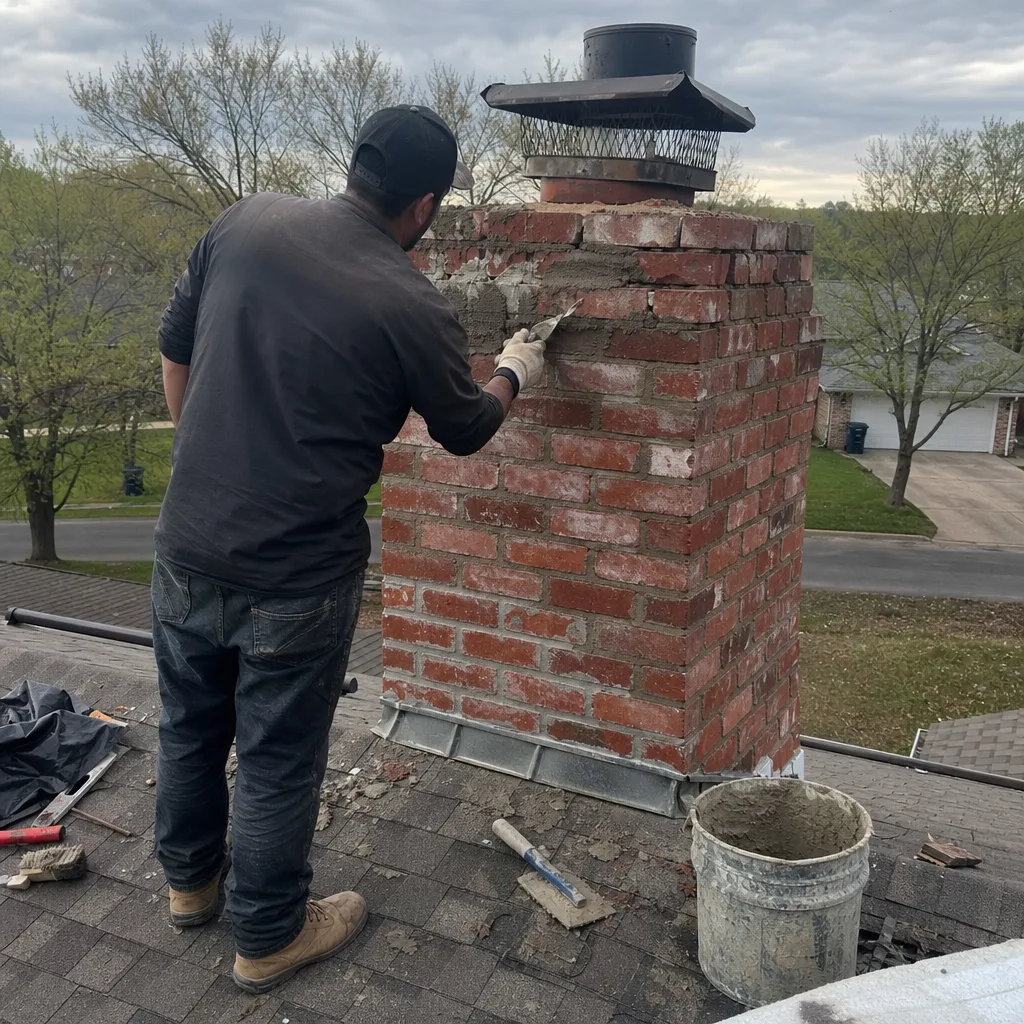
Nine months of chimney inactivity would seem like low-maintenance time. In Fort Worth, it’s the opposite. Summer dormancy produces three distinct problem categories that active burning seasons don’t.
Moisture Intrusion During Storm Season
April through June delivers Fort Worth’s heaviest rainfall, often with wind-driven precipitation during severe thunderstorms. Water enters through:
- Crown cracks opened by winter freeze-thaw cycling
- Failed or missing chimney caps (common after hail impact)
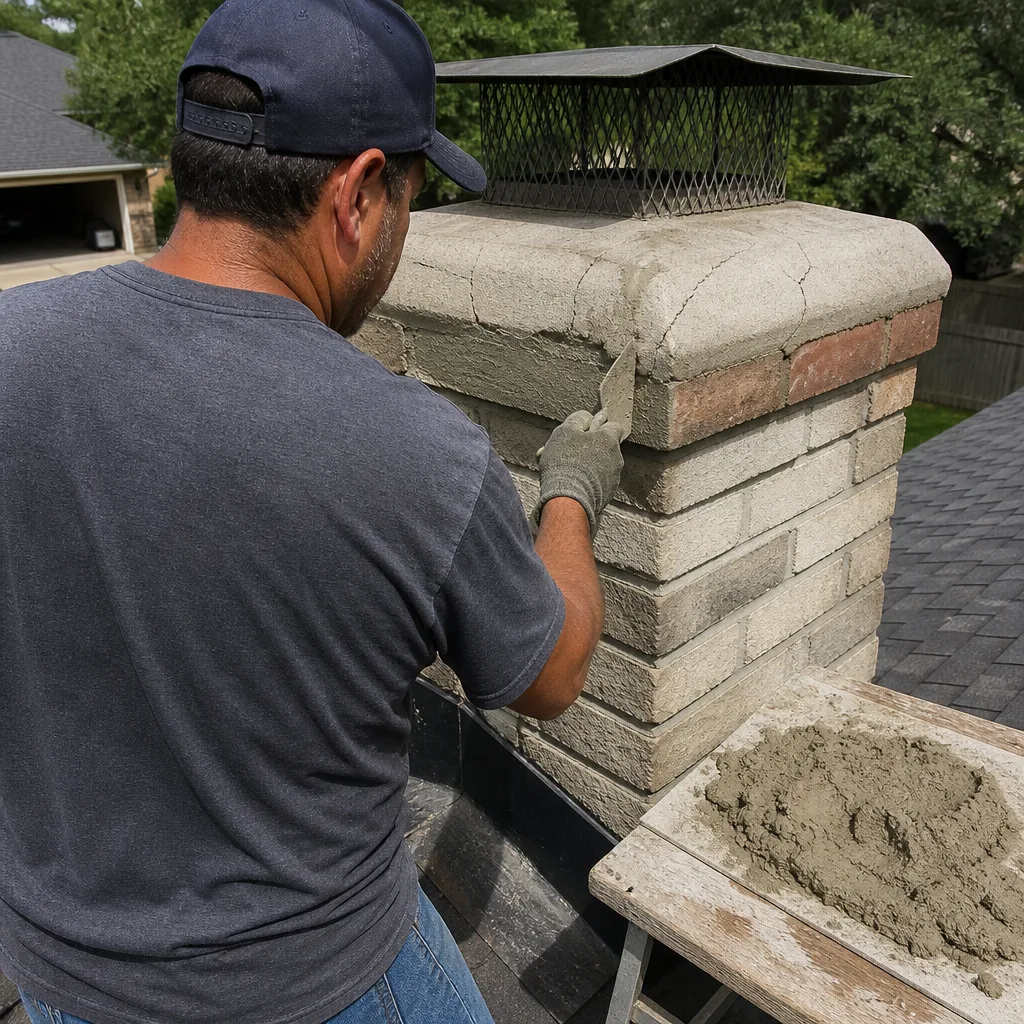
- Deteriorated flashing where the chimney meets the roof plane
- Spalled brick faces that expose interior mortar to saturation
Once inside, water pools in the smoke chamber and firebox. Summer heat accelerates evaporation, but the humidity in Fort Worth’s August air slows it. The result: sustained damp conditions that degrade mortar, rust metal components, and - in extreme cases - support mold growth detectable by musty odors when the damper is opened in fall.
Homeowner inspection protocol, monthly May through August:
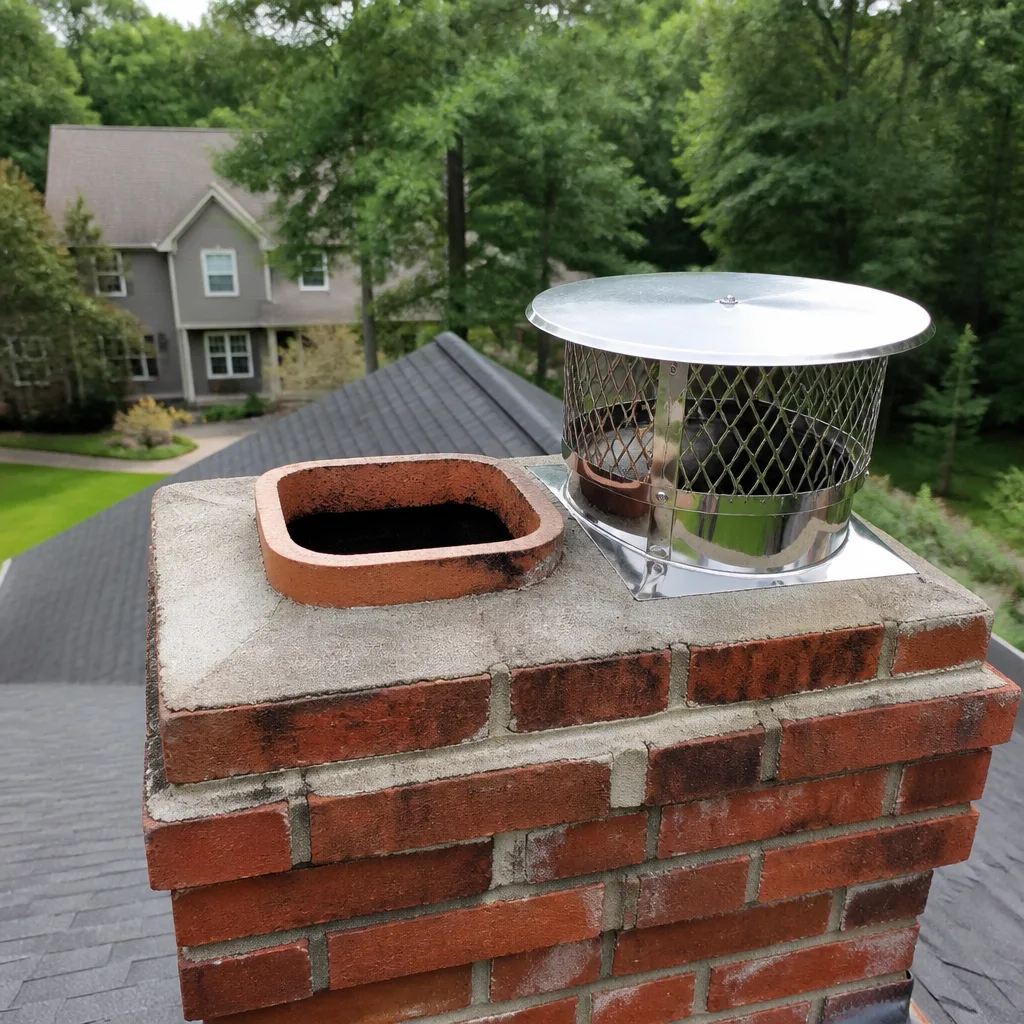
- Visually inspect the crown from ground level or a safe ladder position. Look for cracks, missing pieces, or discoloration indicating water pooling.
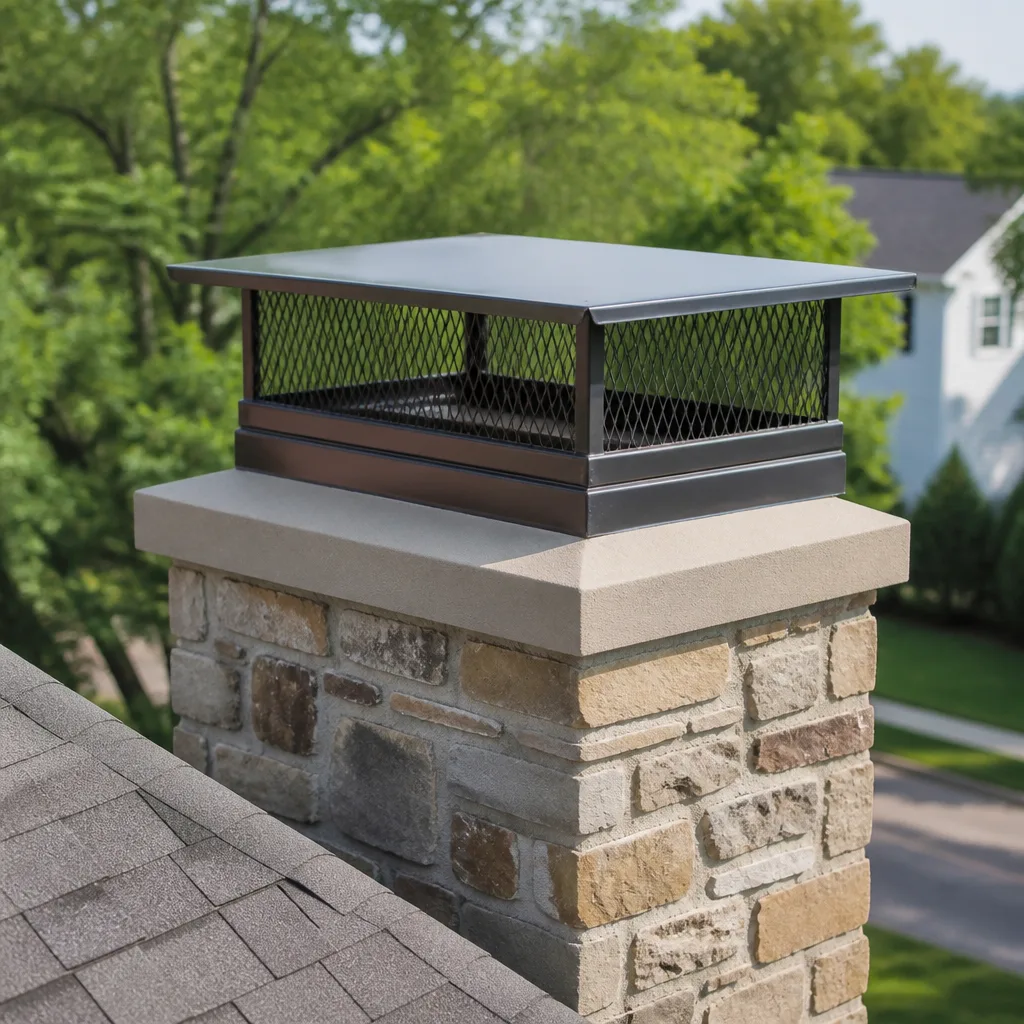
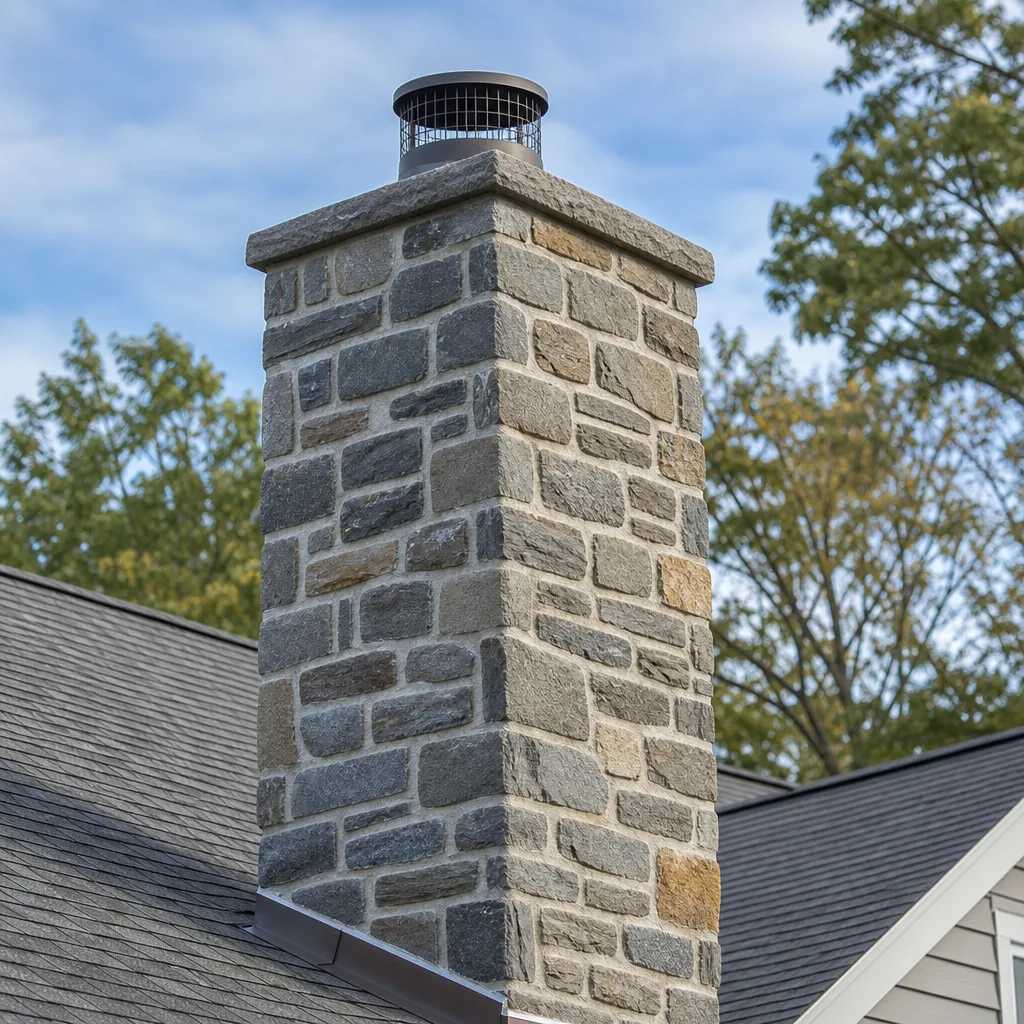
- Check the chimney cap for damage, displacement, or debris accumulation. A cap should sit squarely with intact mesh sides.
- From inside, open the damper and smell for mustiness. Shine a flashlight up the flue; water staining on liner walls indicates active intrusion.
- Inspect the firebox floor for white efflorescence or crumbling mortar.
Any of these findings warrant professional assessment before fall. Fireplace Services in Fort Worth include moisture damage evaluation and crown sealing with materials from Gelco or Olympia Chimney, selected through our Haven buying network for durability in North Texas conditions.
Thermal Cycling Damage to Clay Tile Liners
Fort Worth’s summer temperatures - routinely 95°F to 105°F - heat the exterior chimney mass while the interior flue remains at ambient. This reverse thermal gradient, opposite winter’s pattern, stresses liner joints differently. We’ve documented liner joint separation in August inspections that wasn’t visible in March, particularly in south-facing chimneys that receive direct afternoon sun.
The camera scan catches this. A flashlight inspection from below does not.
Chimney Swift Nesting
Chimney swifts (Chaetura pelagica) are small, cigar-shaped birds that cannot perch horizontally. They roost only inside chimneys or similar vertical structures. They arrive in Fort Worth in early April and depart by late August.
Key facts for homeowners:
- Swifts are federally protected under the Migratory Bird Treaty Act. Disturbing an active nest is a federal violation with penalties.
- A single pair raises one clutch annually, with young fledging roughly 30 days after hatching.
- Nest material is small twigs glued to the flue wall with saliva; removal requires professional tools and, during nesting season, federal permits.
- The best prevention is a properly sized chimney cap with intact mesh sides, installed before April.
If you hear chittering sounds from your chimney in May or June, assume nesting swifts. Do not attempt to “smoke them out” or remove material. Contact a professional who understands federal protocols. At Emberly Chimney Cleaners Fort Worth, we coordinate with Texas Parks and Wildlife for permitted removal when necessary, and we install swift-compatible caps that allow roosting without flue blockage.
Hail Season Crown and Cap Assessment
North Texas hail is a chimney maintenance factor almost never addressed in standard guides. It falls in a gap between homeowner inspection and professional assessment that leaves many chimneys damaged and unreported.
Fort Worth’s hail season peaks March through May, with secondary activity in October. Hail larger than 1 inch diameter damages chimney components in specific ways:
| Component | Hail Damage Pattern | Homeowner Detectable? |
|---|---|---|
| Concrete crown | Impact cratering, surface spalling, crack initiation at impact points | Sometimes - look for fresh gray exposed aggregate where the surface was smooth |
| Metal chimney cap | Denting, mesh tearing, displacement from flue tile | Usually - visible from ground or ladder |
| Clay flue tile top | Chipping, corner fracture, liner top displacement | Rarely - requires camera or mirror inspection |
| Flashing | Dimpling, fastener loosening, sealant displacement | Sometimes - check for lifted edges or gaps |
| Brick faces | Spalling from direct impact, especially on soft or saturated brick | Usually - look for fresh missing material |
The assessment gap: most homeowners don’t inspect their chimney after hail events. Insurance adjusters focus on roofs, gutters, and windows. Chimneys are out of sight and rarely climbed. A crown cracked by April hail goes unreported, admits water all summer, and fails structurally by the following January.
Our recommendation: after any hail event with stones exceeding 1 inch, perform a ground-level and ladder-visible inspection of the crown and cap. Photograph what you see. If the cap is dented or displaced, or if the crown shows fresh damage, schedule a professional assessment. We provide free second opinions on any written estimate, including insurance adjuster reports, under Haven Standard Clause 5.
Materials matter for hail resistance. We specify caps from Famco or Copperfield with reinforced mesh and gauge-appropriate metal for North Texas conditions. Crown repairs use silicone-enhanced concrete mixes rated for freeze-thaw and impact, not standard mortar that crumbles in two seasons.
Common Mistakes to Avoid
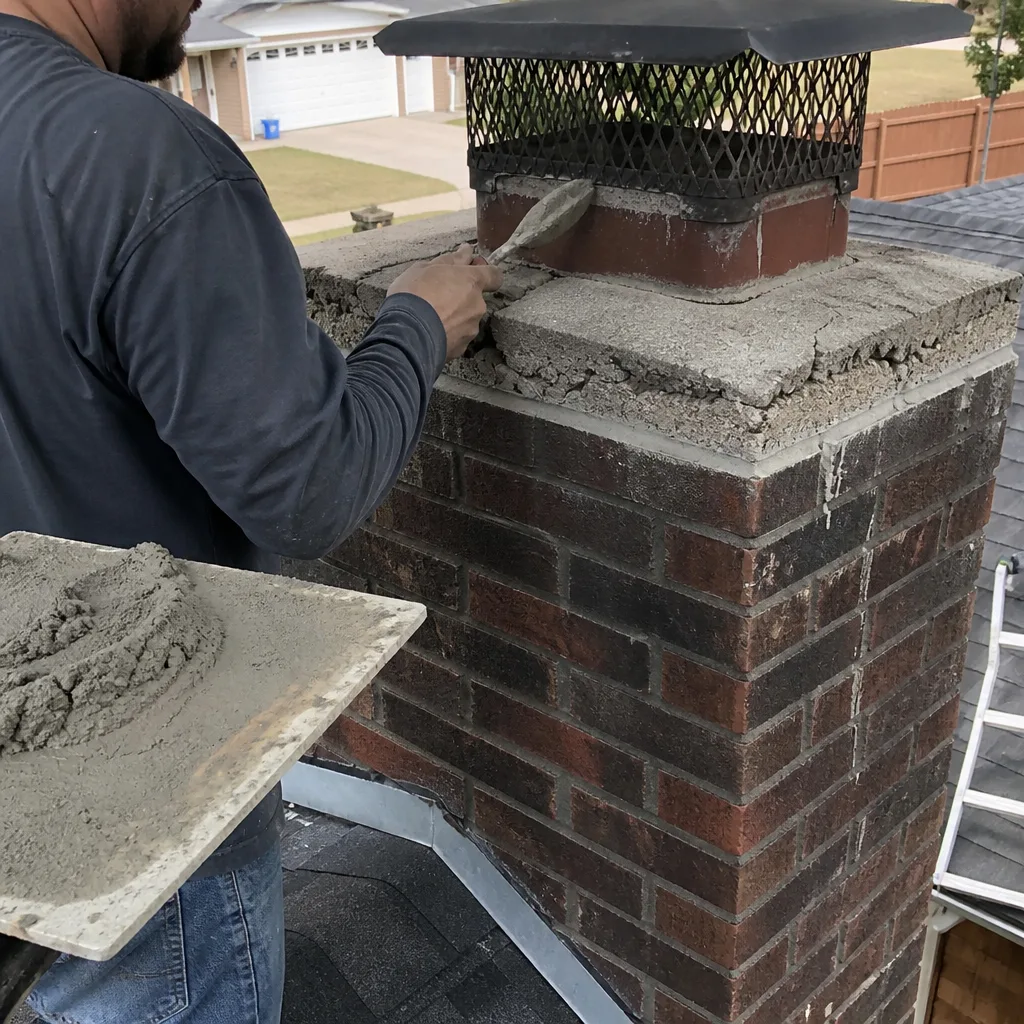
- Skipping the March post-season sweep. Creosote left in the flue hardens through summer heat, becoming glazed and significantly more expensive to remove. The September appointment then requires solvent treatment instead of standard brushing.
- Using the chimney as a vent during summer. Some Fort Worth homeowners run whole-house fans or HVAC returns near the fireplace, drawing air down the flue. This pulls humid outdoor air and attic dust into the system, accelerating corrosion and contamination.
- Installing a cheap cap from a big-box store. Mesh sizing often blocks proper draft in Fort Worth’s variable winds, and thin-gauge metal fails within two hail seasons. Proper caps from Olympia Chimney or Gelco cost more upfront, last through multiple hail events, and don’t create downdraft problems.
- Assuming no burning means no inspection needed. Gas log fireplaces produce corrosive condensation and require annual inspection of the liner and termination. A chimney used only for “ambiance” still ages.
- Ignoring neighborhood-specific risks. Homes near Fort Worth’s Trinity River floodplains (Forest Hill, Everman, parts of Lake Worth) experience higher humidity and more rapid mortar degradation. Homes in hail alleys like southwest Tarrant County see more cap and crown damage. Generic advice doesn’t account for this.
- Accepting verbal estimates. Without a written scope and price, you have no documentation if the final bill doubles. Haven Standard Clause 1 exists because this happens regularly in our market.
- Waiting for visible damage inside the home. By the time you see water stains on the ceiling near the chimney, the damage path runs through the attic, wall cavities, and structural members. The first symptom of a liner breach is often a house fire, not a warning sign.
When to Call a Professional
Call for immediate assessment if you detect smoke entering living spaces, hear animal activity, see visible creosote flakes, or notice new odors when opening the damper. Schedule professional inspection after any hail event affecting visible chimney components, and before first fires if your last sweep was more than 12 months ago.
Specific scenarios requiring NFPA 211 Level 2 camera inspection: real estate transactions, chimney fire history, new appliance installation, or visible damage to the chimney structure. A Level 1 visual inspection - flashlight and mirror - cannot evaluate flue liner condition below the roofline.
Emberly Chimney Cleaners Fort Worth offers free estimates in Fort Worth. Every estimate includes a written price, written scope, and written warranty before any work begins. Call (682) 499-2712 to schedule, or visit our Emberly Chimney Cleaners Fort Worth home page to learn more about our inspection standards.
Frequently Asked Questions
A standard chimney sweep and NFPA 211 Level 2 camera inspection in Fort Worth typically ranges from $189 to $289, depending on flue accessibility, creosote stage, and whether the fireplace is a standard open hearth, insert, or gas log system. Emberly Chimney Cleaners Fort Worth delivers a written price before any work starts, with no add-ons after arrival. Call (682) 499-2712 for an exact quote - estimates are free.
Fort Worth’s climate and burning patterns require two professional visits yearly: a pre-season camera scan and sweep in September, and a post-season inspection and cleaning in March. Between visits, monthly homeowner checks of the cap, crown, and firebox catch developing problems. The National Fire Protection Association recommends annual inspection minimum; our dual-visit protocol addresses North Texas’s specific dormancy damage risks.
You should never accept a liner replacement recommendation without dated photo or video evidence you can see for yourself. At Emberly Chimney Cleaners Fort Worth, Clause 4 of the Haven Standard requires a documented photo record on every visit. We show you the crack, gap, or deterioration, explain the hazard in plain terms, and provide a written scope with material specifications (DuraFlex stainless steel, HeatShield cerfractory, or other appropriate product) before any work is proposed. If another company recommended replacement, bring us their written estimate - our Free Second Opinion applies.
Skipped maintenance produces three predictable outcomes in Fort Worth: creosote accumulation to Stage 3 glaze, which is harder to remove and more flammable; moisture intrusion through deteriorated crowns and caps, causing spalling brick and rusted components; and undetected liner damage that breaches the chimney’s fire containment. The result is higher repair costs, invalidated homeowner’s insurance for chimney-related claims, and elevated fire risk. Annual inspection cost is typically 2% to 4% of average liner replacement cost.
Homeowners can remove light ash and inspect visible components, but flue cleaning and liner assessment require professional equipment and training. In Fort Worth’s climate, the critical finding is often thermal cycling damage to clay tile liners or moisture degradation in the smoke chamber - neither visible from below without a camera. Additionally, roof access for cap and crown inspection involves fall risk. We recommend professional service for all flue work and roofline assessment.
Summer chimney odors in Fort Worth typically indicate moisture-activated creosote deposits, animal presence, or downdraft pulling humid attic air through the flue. The odor is often musty or sharp-acidic. Check that the damper seals fully; if odors persist with damper closed, suspect water intrusion or partial animal blockage. A professional inspection with camera scan identifies the source. Summer sealing of the crown and firebox waterproofing prevent recurrence.
The Bottom Line
Fort Worth’s chimney maintenance calendar runs on two peaks, not one. September’s pre-season camera scan captures liner condition accurately after summer curing. March’s post-season sweep removes season debris before it hardens and documents system state for insurance protection. Between those visits, monthly homeowner checks of cap, crown, and firebox catch the moisture intrusion and wildlife issues that North Texas’s long dormant season produces. The homeowners with the lowest lifetime chimney costs aren’t the ones who found the cheapest sweep; they’re the ones who built documentation, addressed problems in the right season, and never let a small crack become a rebuild. Explore more guides & resources to protect your home year-round.
Written by Corrine Halstead, Owner at Emberly Chimney Cleaners Fort Worth, serving Fort Worth since 2009.