
Last updated September 22, 2026
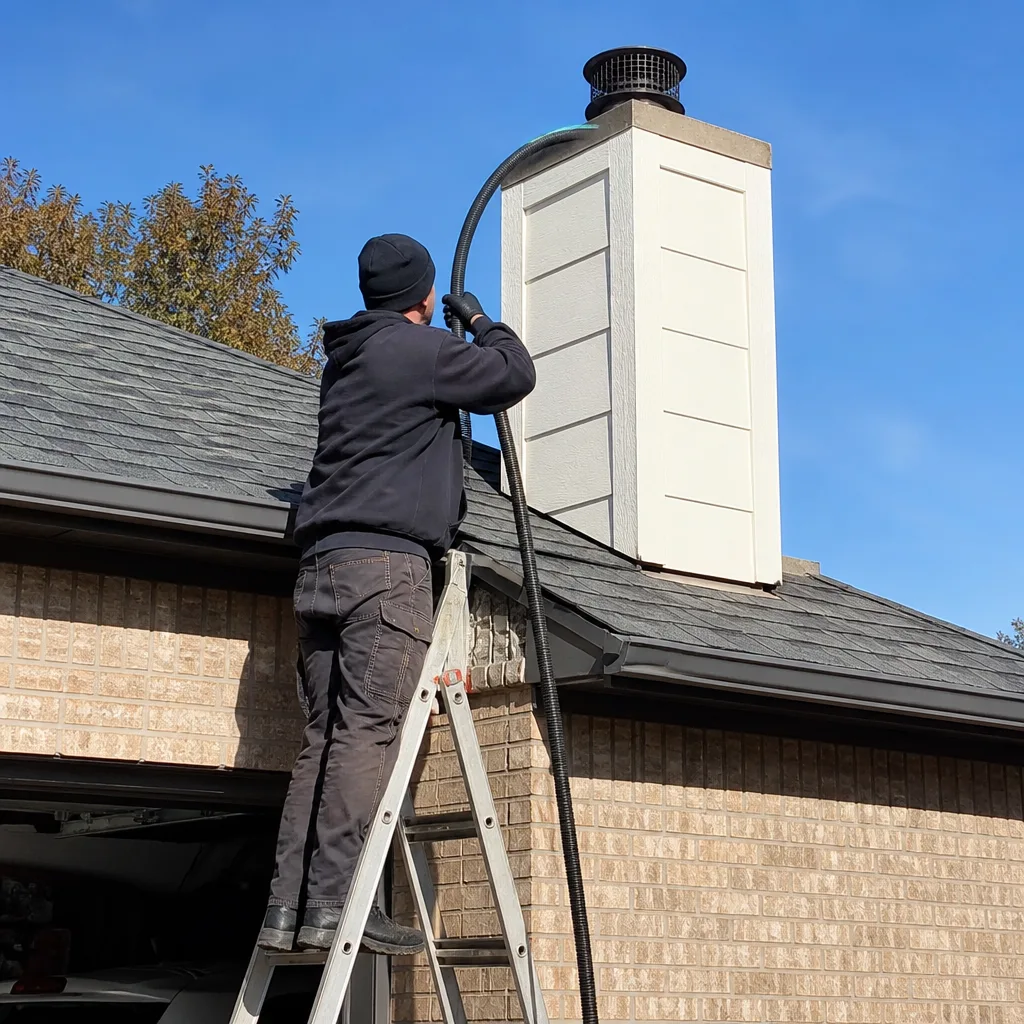
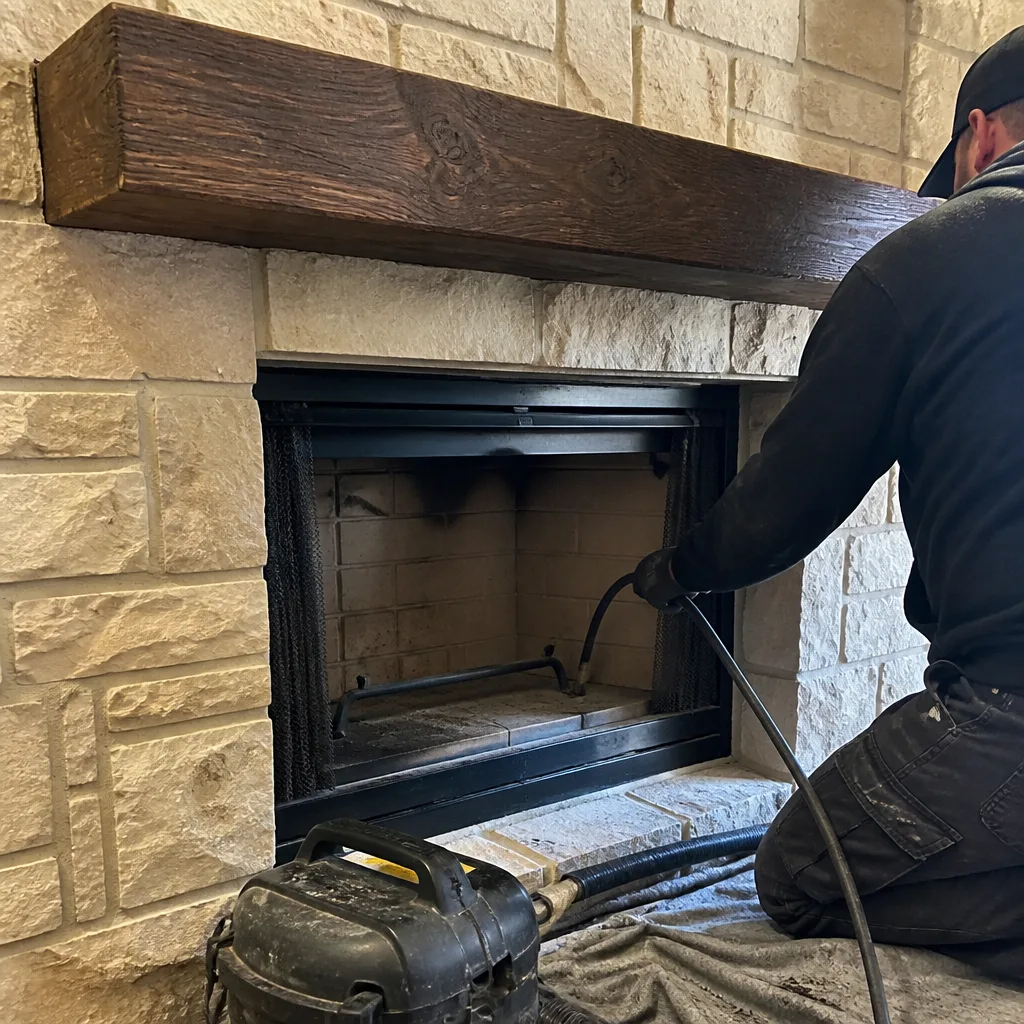
Level 1 sweep and inspection to the NFPA 211 annual standard - flue, crown, cap, and flashing checked and photographed
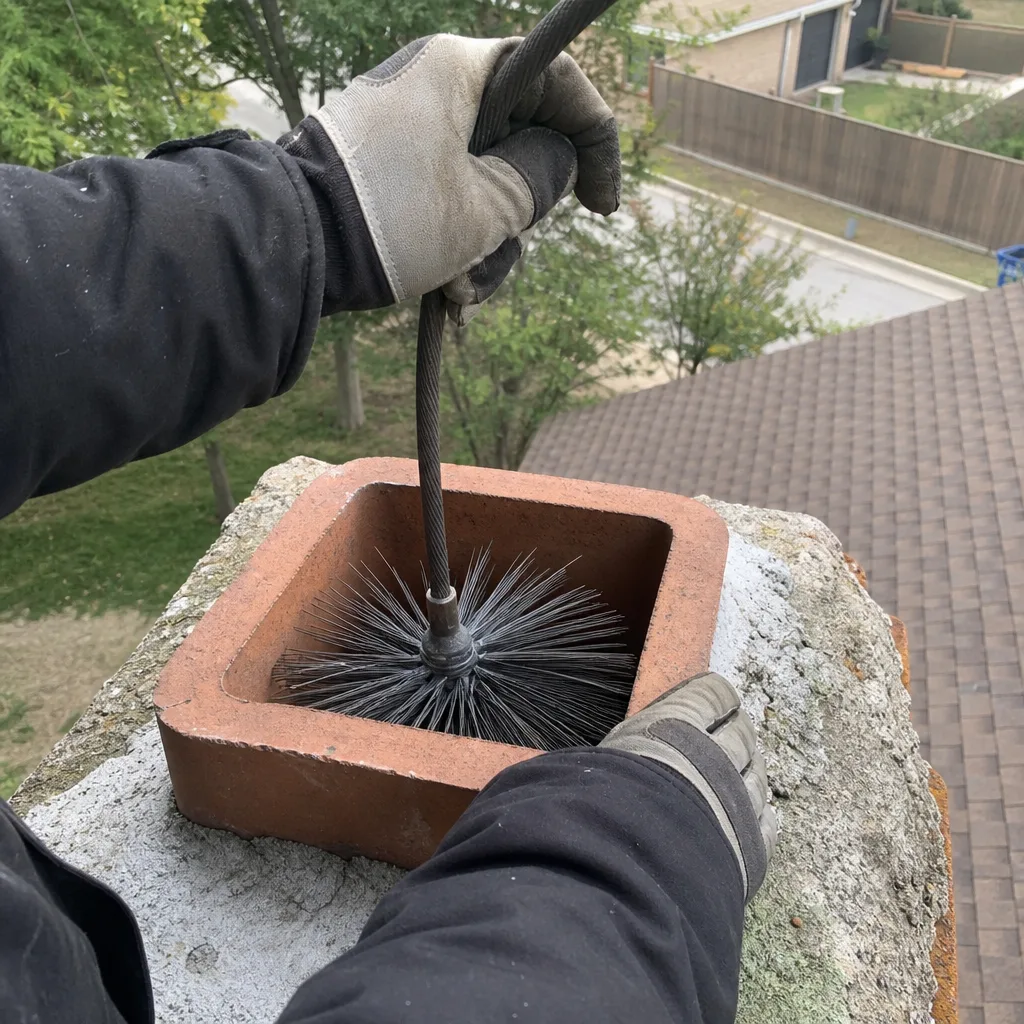
Chimney sweep logs do not sweep chimneys. They loosen some creosote - which then falls where a brush and vacuum still have to collect it.
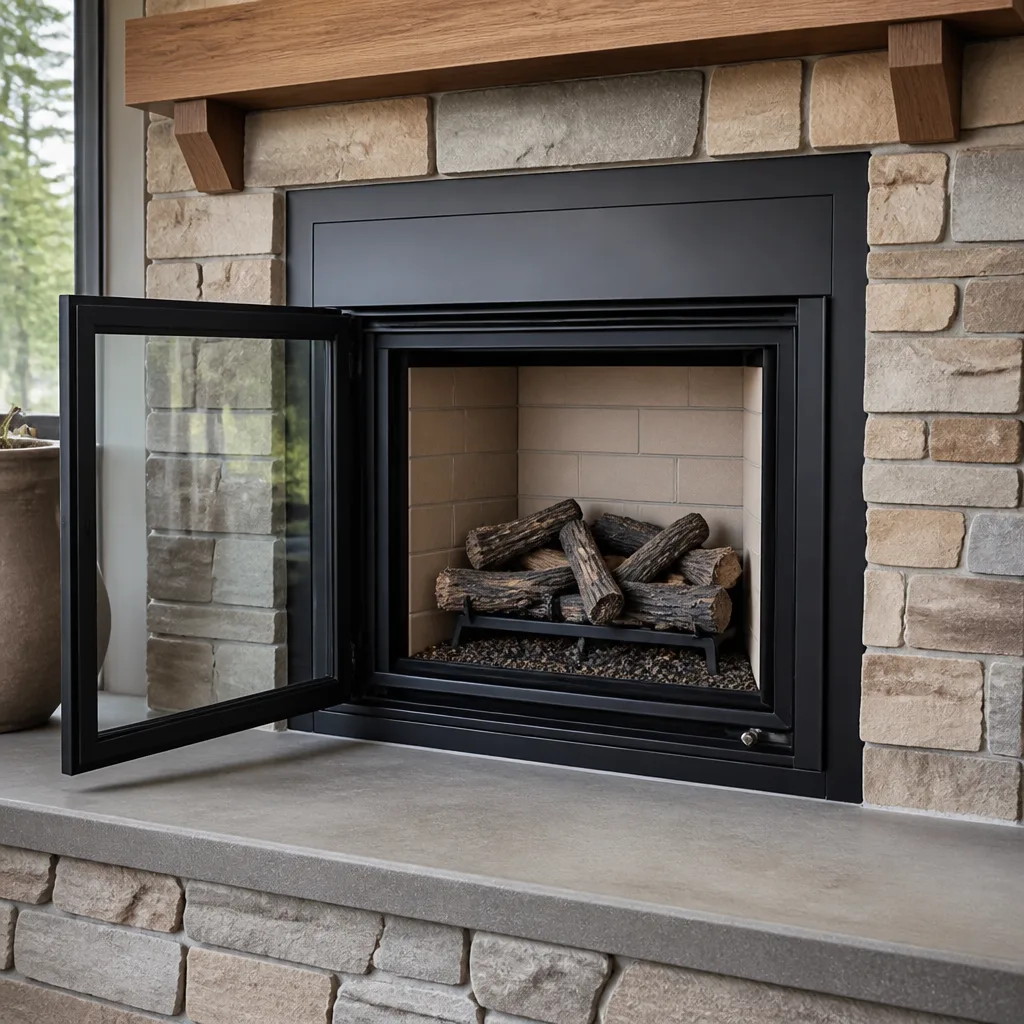
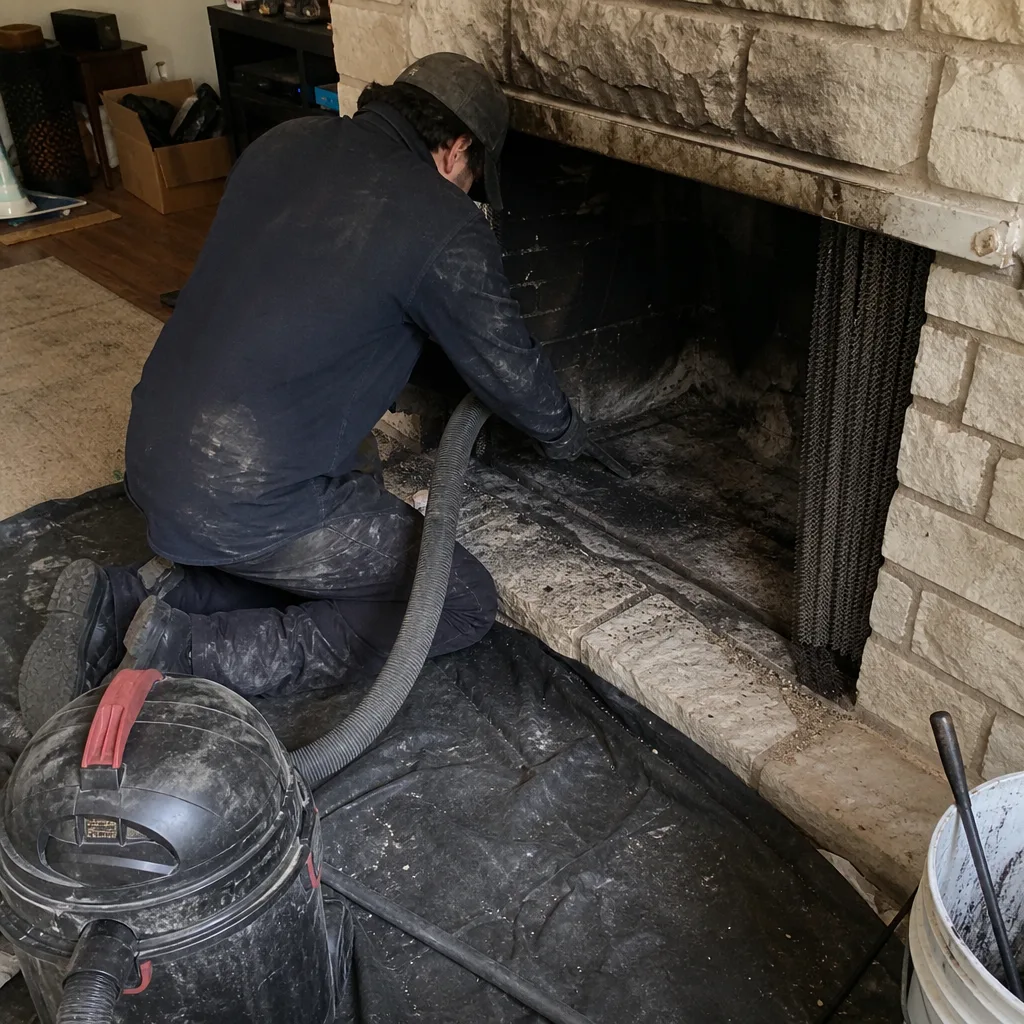 Before
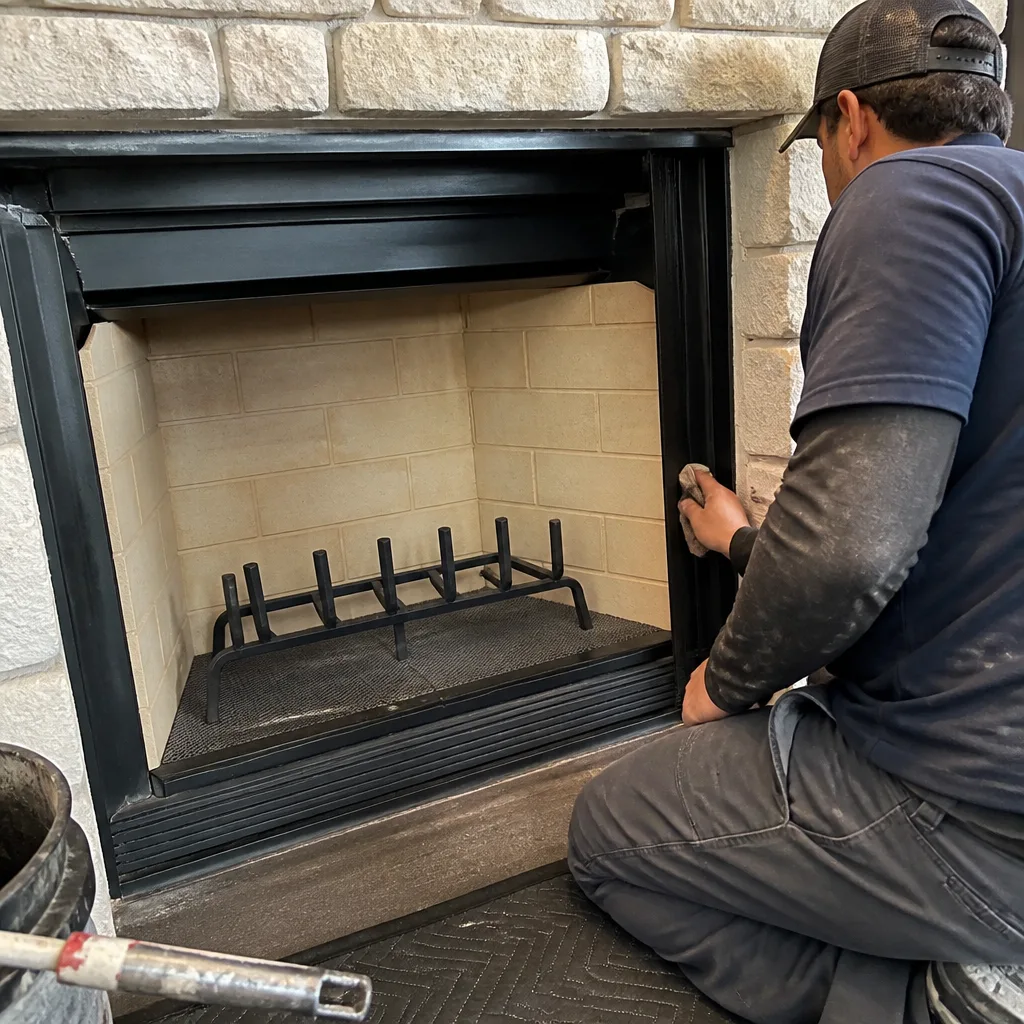 After
After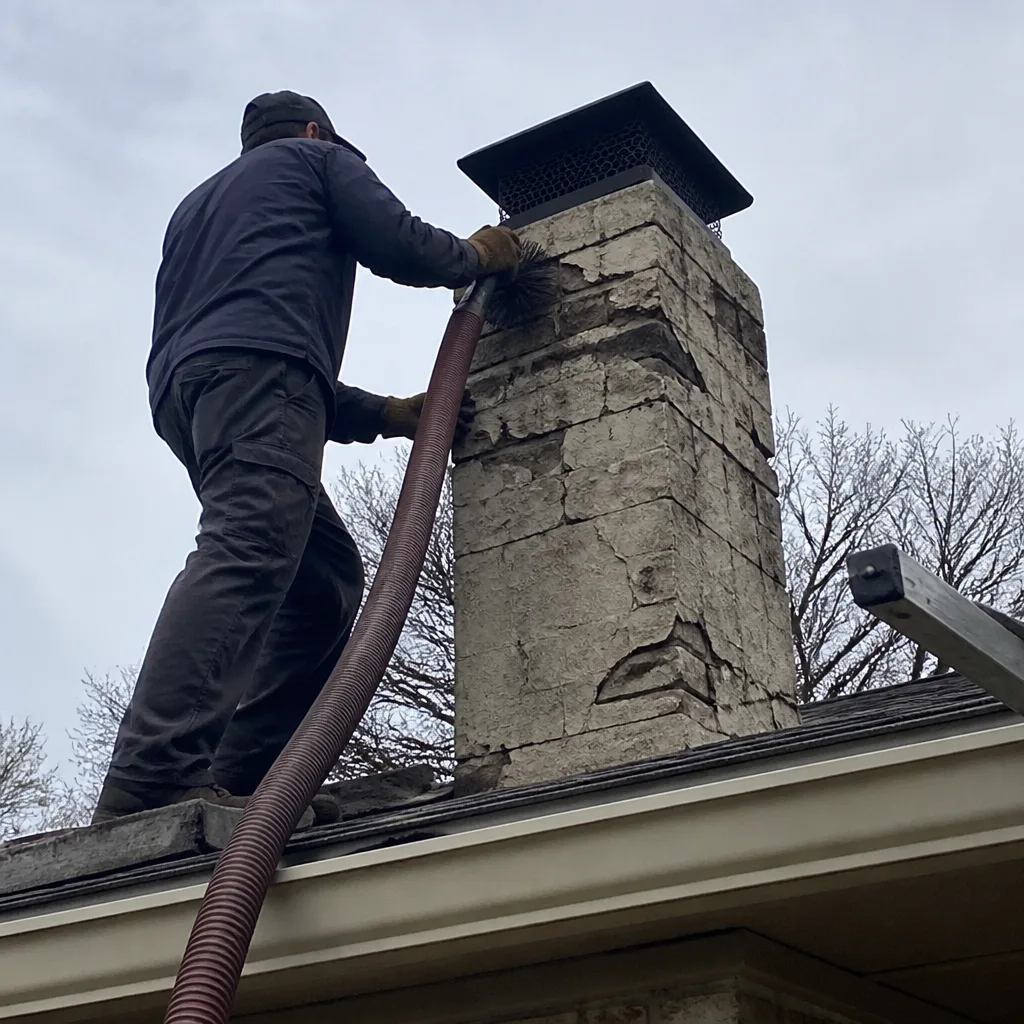 Before
 After
After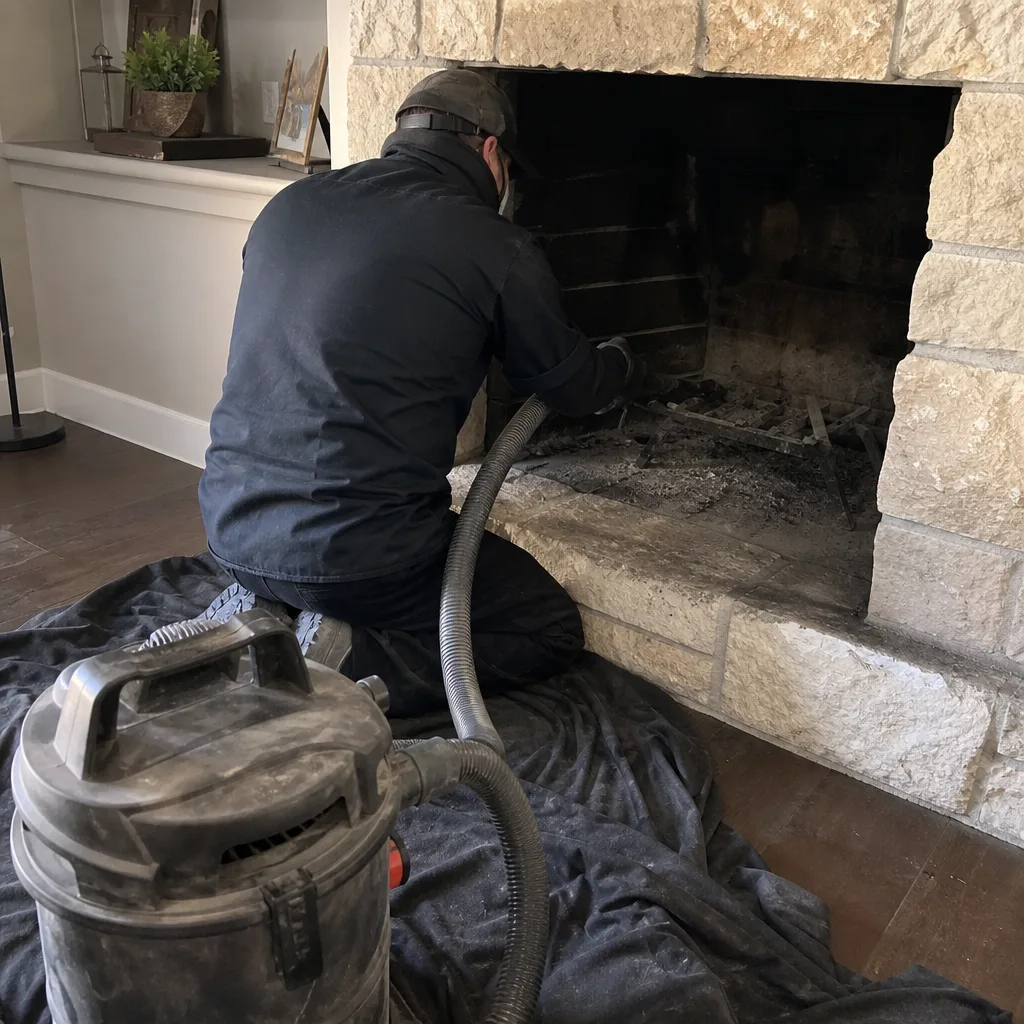 Before
 After
AfterChimney Cleaning & Sweep Maintenance Checklist for Fort Worth Homeowners
Most Fort Worth homeowners check “inspect mortar joints” off their chimney list without knowing what failure actually looks like. A hairline crack in the crown? That’s weathering. A 1/8-inch horizontal crack in the smoke chamber corbeling? That’s an NFPA 211 Level 2 deficiency that can let combustion gases leak into wall cavities. The difference matters, especially here in North Texas where our freeze-thaw cycle doesn’t happen often but hits hard when it does - 60 degrees by afternoon, 28 by morning, water trapped in masonry expanding with nowhere to go. Our Complete Guide to Chimney Cleaning in Fort Worth gives you the pass/fail criteria for every checkpoint, not just the inspection list. You’ll learn what you can handle yourself, what requires a camera inspection, and what needs immediate repair before you light the next fire.
Quick Answer
A complete chimney maintenance checklist for Fort Worth homes includes six checkpoint categories: exterior masonry and crown, cap and flashing, flue liner condition, smoke chamber and smoke shelf, firebox and damper, and post-sweep documentation through our Chimney Cleaning & Sweep services. Each item has a specific failure threshold - for example, crown cracks wider than 1/16 inch need professional sealing, and any flue liner gap or spalling requires a Level 2 camera inspection under NFPA 211. In Fort Worth’s climate, the freeze-thaw cycle and occasional ice storms make annual pre-season inspection essential, ideally in early October before the first sustained burn.
Table of Contents
- Exterior Masonry and Crown: The Freeze-Thaw Failure Points
- Cap, Flashing, and Roof Interface: Ground-Level Checks That Matter
- Flue Liner Condition: What You Can and Can’t See
- Smoke Chamber and Smoke Shelf: The Most Skipped Checkpoints
- Firebox, Damper, and Hearth: Interior Pass/Fail Criteria
- What to Document After a Professional Sweep Visits
- Seasonal Timing for Fort Worth: When to Schedule
- Common Mistakes to Avoid
- When to Call a Professional
- Frequently Asked Questions
 Before
 After
AfterExterior Masonry and Crown: The Freeze-Thaw Failure Points
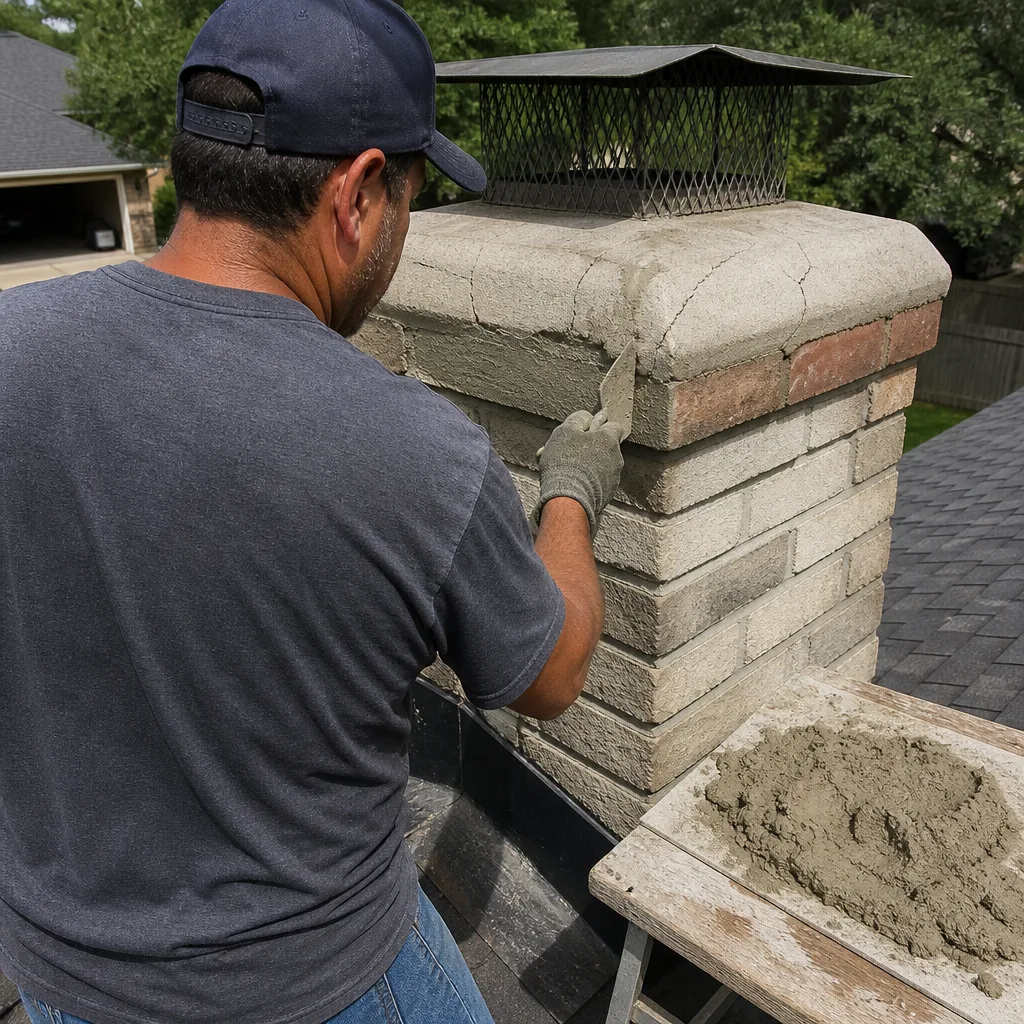
Fort Worth’s winter pattern is distinct from northern markets. We don’t get 40 freeze-thaw cycles like Chicago. We get 8 to 12 sharp swings, often within 24 hours, and that’s harder on masonry than gradual cold. Water enters micro-cracks during warm afternoon rain, freezes overnight with explosive force, and widens the crack by the next morning. By March, a 1/32-inch crown fissure can be a 3/16-inch gap that funnels water straight to the flue liner.
Here’s what to look for, with the exact threshold for calling a pro:
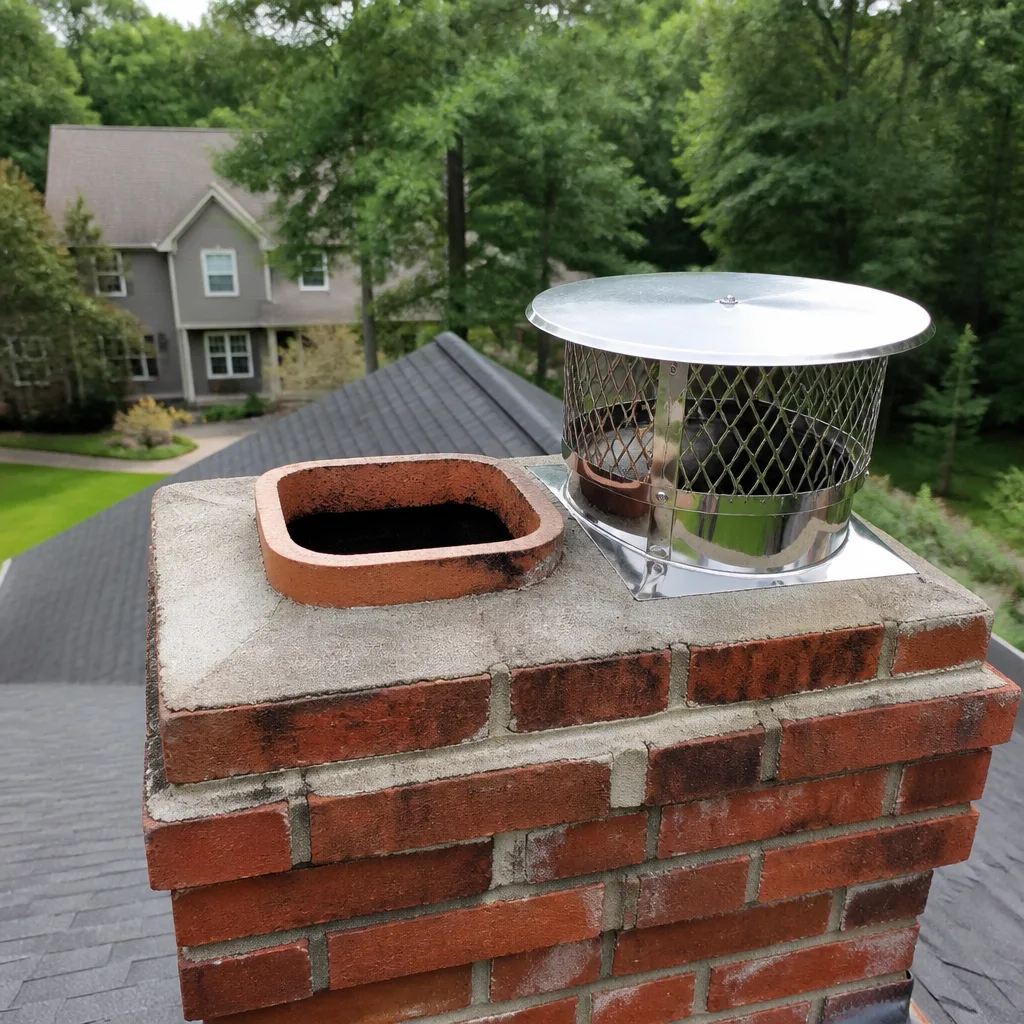
Crown Condition
- Pass: Hairline surface crazing, no visible separation from the flue tile, no ponding after rain.
- Monitor: Single crack under 1/16 inch, running vertically or diagonally, not intersecting the flue tile.
- Fail - call a professional: Any crack 1/16 inch or wider, any crack that runs to the flue tile (thermal expansion will widen it), any area where the crown material has washed away exposing the brick beneath, or any depression that holds water longer than 30 minutes after rain.
The crown is not the cap. The crown is the concrete or mortar slab that tops the chimney structure, sloped to shed water. In Fort Worth, we see accelerated crown deterioration in homes built 2005-2015, when a local building boom coincided with a run of high-lime mortar mixes that don’t hold up to our rapid wet-dry cycling. If your home is in Wedgwood, Benbrook, or the older sections of Arlington Heights, this is especially relevant - those neighborhoods have high concentrations of that construction window.
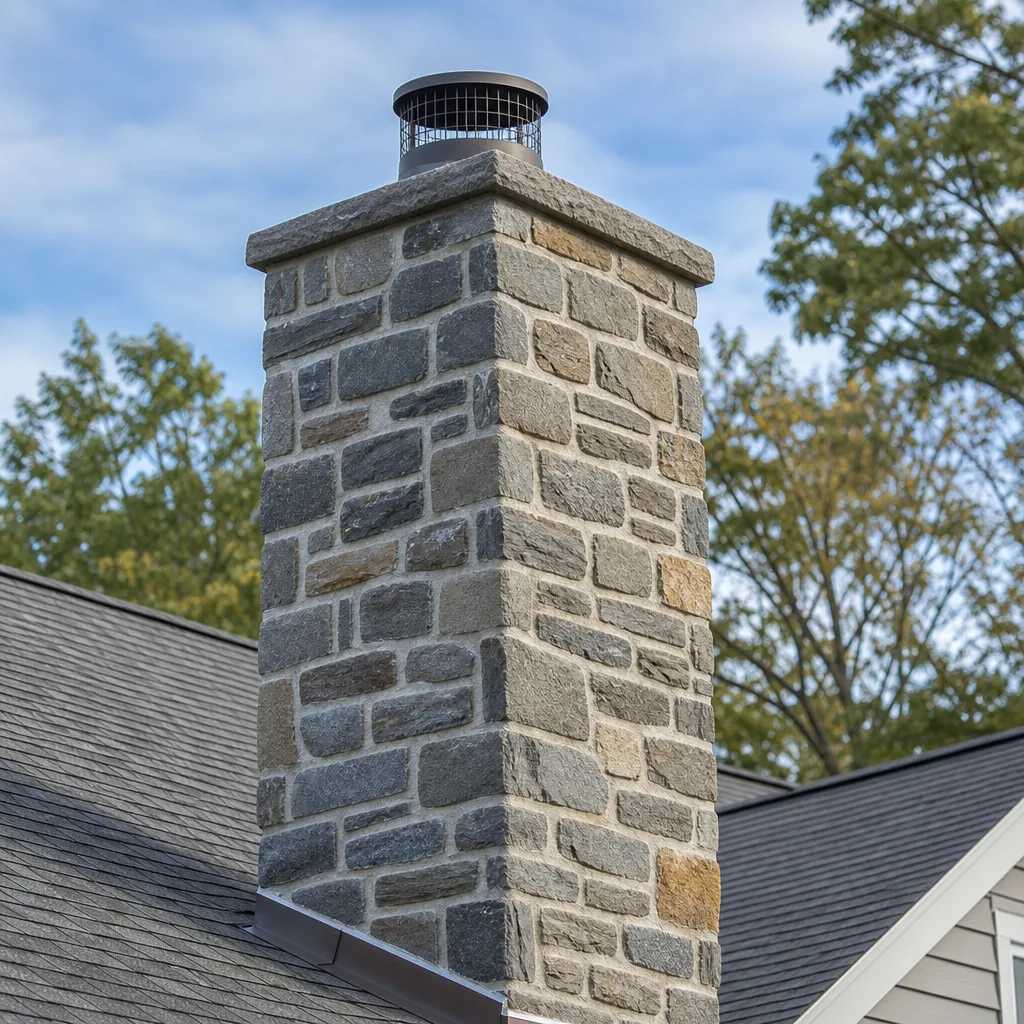
Brick and Mortar Joints
- Pass: Mortar recessed no more than 1/4 inch, no powdering, bricks sound when tapped with a key.
- Monitor: Mortar erosion to 3/8 inch depth, isolated brick faces showing surface flaking (spalling) under 1/4 inch deep.
- Fail - call a professional: Mortar missing to 1/2 inch or deeper, multiple bricks with spalling deeper than 1/4 inch, any brick that moves when pressed, or white efflorescence that returns after brushing (indicates ongoing water intrusion).
Spalling is when the brick face pops off in layers. It’s caused by water trapped inside the brick freezing and expanding. In Fort Worth, we see it most on north-facing chimney exposures, where afternoon sun doesn’t reach to drive out moisture before nightfall freezing.
Take a ground-level photo of all four sides every October. Compare year to year. The photo itself is documentation your insurer may request after a claim, and it lets you spot acceleration - a crack that grew 1/8 inch in one year needs faster attention than one that’s been stable for three.
Cap, Flashing, and Roof Interface: Ground-Level Checks That Matter
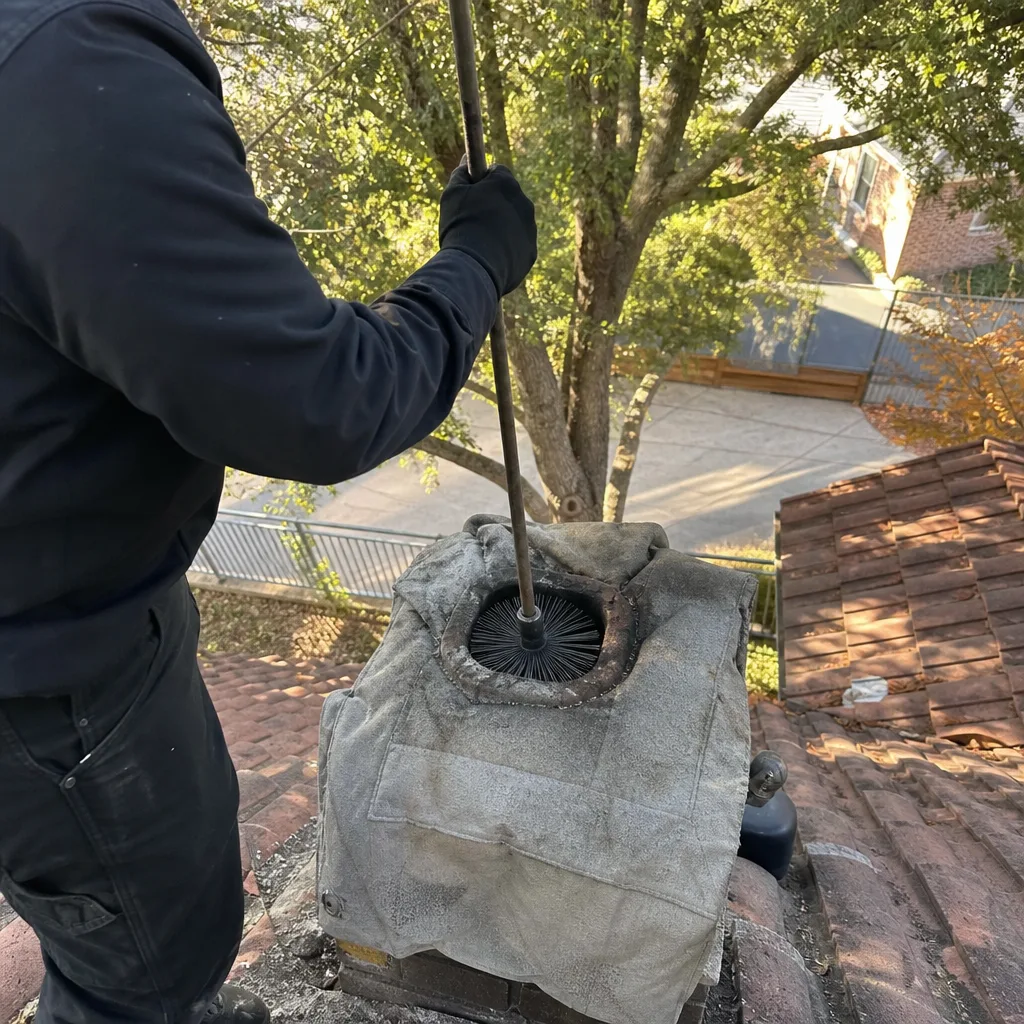
You don’t need a ladder for most of this. A pair of binoculars and your phone’s zoom are sufficient, and safer. The cap and flashing are your chimney’s weather seal. When they fail, water doesn’t just enter the flue - it runs down the chimney’s exterior inside the wall cavity, where you won’t see it until drywall stains appear or framing rots.
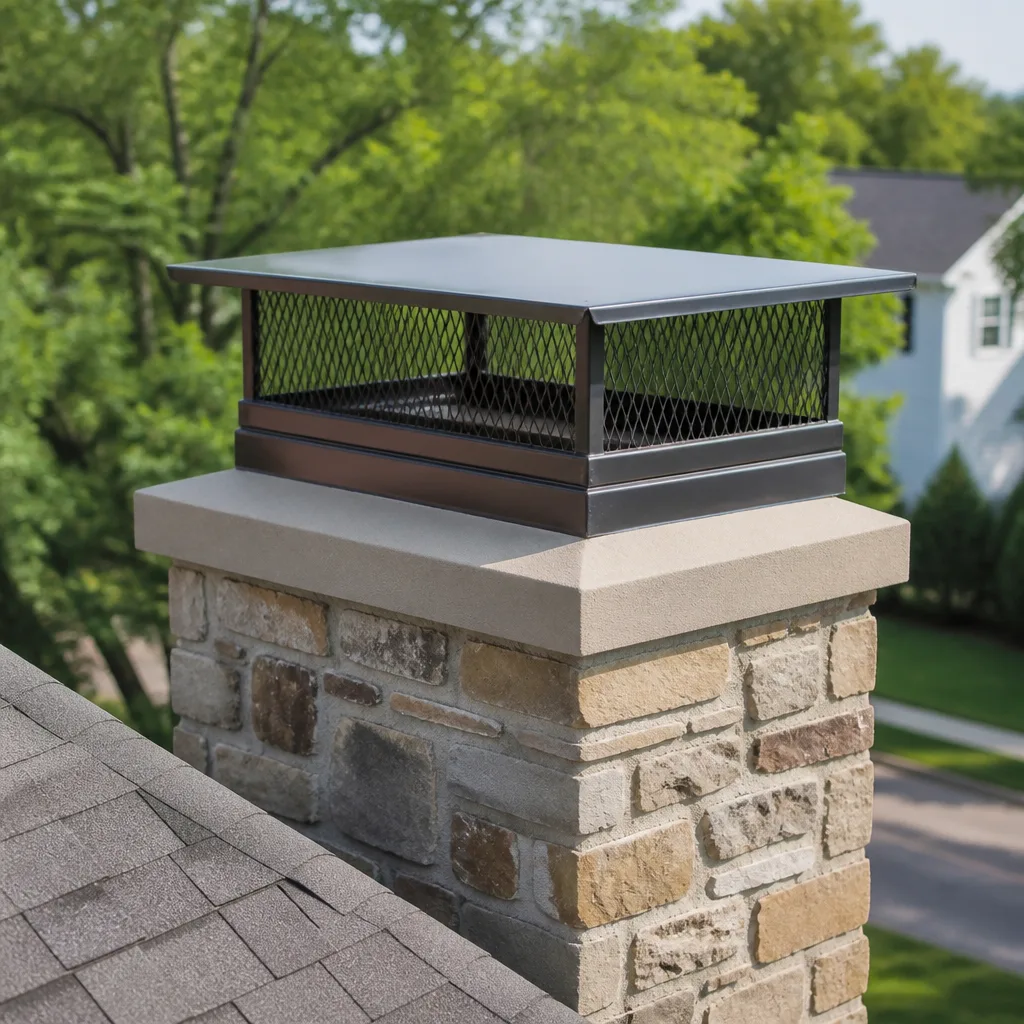
Cap Condition
- Pass: Securely mounted, mesh sides intact, no rust-through, no visible gaps between cap base and flue tile.
- Monitor: Surface rust on galvanized caps, minor mesh deformation from animal contact, slight lift at one mounting point.
- Fail - call a professional: Any rust hole in the cap top, mesh missing or torn (squirrels and raccoons will enter), cap loose or tilted, or any gap larger than 1/4 inch between cap and flue tile that allows water or animal entry.
Fort Worth has a robust squirrel population, and they’re active year-round. A cap with damaged mesh in the Cultural District or near the Trinity River greenbelt is essentially an open invitation. We’ve pulled nests from flues in January, when the homeowner lit the first fire of the season and smelled something wrong.
Flashing (the Metal Where Chimney Meets Roof)
Flashing is the most common leak source we find in Fort Worth homes, and it’s the hardest for homeowners to assess because the critical joint is often under shingles or behind siding. But you can spot the warning signs:
- Pass: No visible gaps, counter-flashing (the vertical piece) embedded in mortar with no separation, step flashing (under shingles) not visible (which means it’s doing its job).
- Monitor: Caulk or sealant visible at the flashing-masonry joint (indicates previous repair), minor lifting of the bottom counter-flashing edge.
- Fail - call a professional: Any visible gap you can slide a credit card into, rust stains on the roof below the chimney (indicates water running behind flashing), missing or displaced shingles at the chimney base, or any daylight visible from inside the attic at the chimney penetration.
If you’re comfortable in your attic, check the chimney penetration during a hard rain. Any water, dampness, or staining means the flashing has failed. In Fort Worth, our occasional ice storms lift flashing edges that were fine in summer. The freeze-thaw cycle acts on metal too - expansion and contraction fatigue the sealant and mortar embedment.
For cap replacement, we specify stainless steel or copper caps through our Haven buying network, sourced from Gelco and Famco depending on flue configuration. Galvanized caps in Fort Worth’s sun and occasional ice typically last 5-7 years. Stainless lasts 15-20.
Flue Liner Condition: What You Can and Can’t See
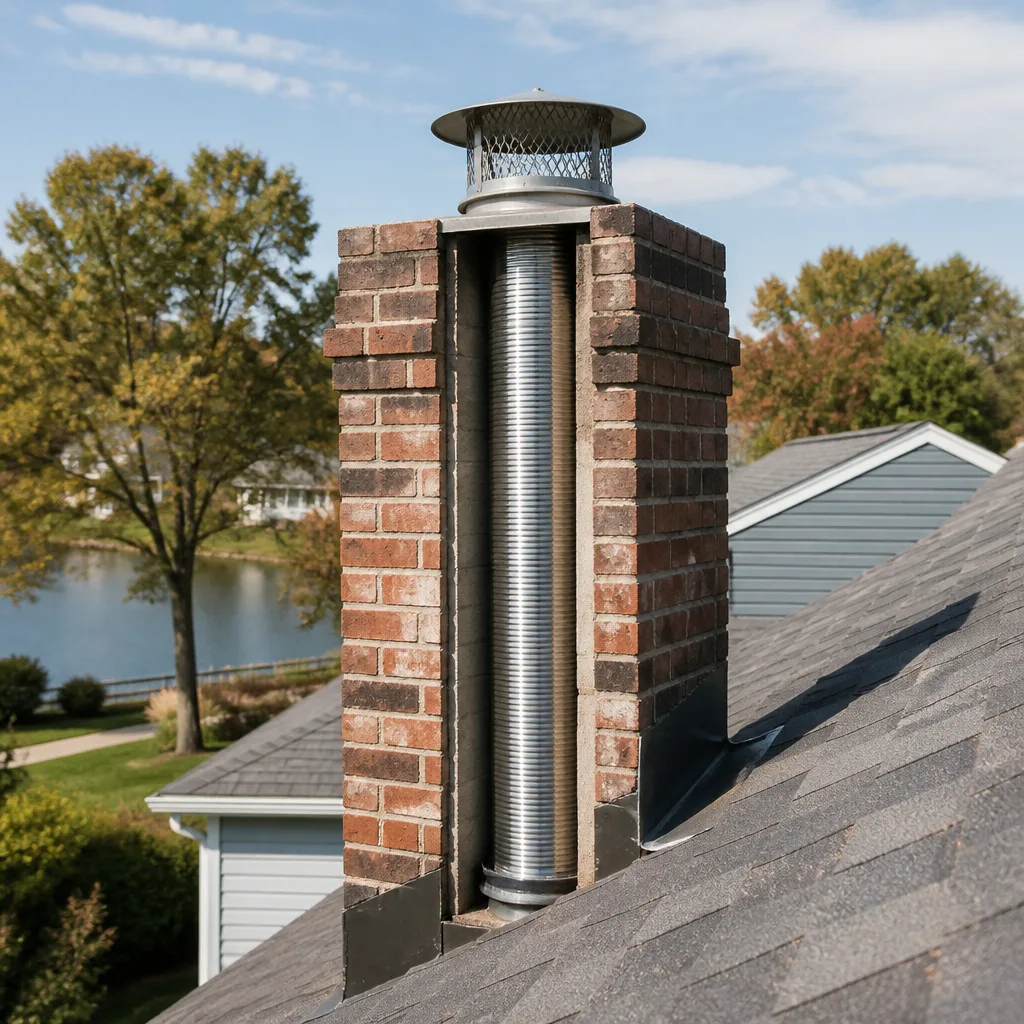
The flue liner is the critical safety barrier between combustion gases and your home’s structure. You cannot assess it adequately from the firebox with a flashlight. The NFPA 211 Level 2 inspection standard, which Level Two Chimney Fort Worth home has followed since 2009, requires a camera scan of the entire flue interior. But there are things you can check yourself, and red flags that mean you need that camera inspection now.
Firebox-Level Checks (What You Can See)
- Pass: Flue tiles visible from the damper area are intact, no cracks, no missing chunks, mortar joints between tiles tight.
- Monitor: Minor staining on tile surface, slight mortar erosion at tile joints.
- Fail - call a professional immediately: Any visible crack in a flue tile, any tile with a missing corner or spalled surface, any gap between tiles, or any mortar falling into the firebox from above. These are all indicators that the liner may have failed higher up, where you can’t see.
Here’s why “immediately” matters. A cracked flue liner can allow carbon monoxide to escape into wall cavities or living spaces. It can also let chimney fire heat reach combustible framing. In Fort Worth, where many homes in Mistletoe Heights, Berkeley Place, and the Near Southside were built 1920-1950 with unlined brick chimneys later retrofitted with clay tile liners, the liner is often 40-60 years old. Clay tile has a design life of 50 years under ideal conditions. Our thermal cycling is not ideal.
What the Camera Inspection Reveals
A Level 2 camera inspection scans the full flue length, typically 15-25 feet in a two-story Fort Worth home. We’re looking for:
- Tile liner cracks: Any crack that penetrates the tile wall, regardless of width. Hairline cracks that don’t penetrate are monitored.
- Tile shifting or settling: Misaligned tiles create gaps that collect creosote and allow gas bypass.
- Mortar joint failure between tiles: Missing or eroded mortar lets gases escape the flue channel.
- Glazed creosote (Class III): A hard, shiny, tar-like deposit that can’t be removed by standard brushing. It’s highly combustible and requires chemical treatment or rotary removal.
- Spalling or flaking liner surface: Indicates thermal shock damage, common in chimneys that have had chimney fires the owner didn’t know about.
Since 2009, we’ve documented every camera inspection with photos and video under Haven Standard Clause 4. That record belongs to the homeowner and transfers with the home. When you’re buying in Fort Worth’s competitive market, a documented chimney record is a negotiating asset. When you’re selling, it’s proof of maintenance.
Liner replacement, when needed, uses DuraFlex stainless steel relining systems or HeatShield cerfractory resurfacing, depending on flue condition and appliance type. Both are procured through our Haven buying network to keep pricing transparent.
Smoke Chamber and Smoke Shelf: The Most Skipped Checkpoints
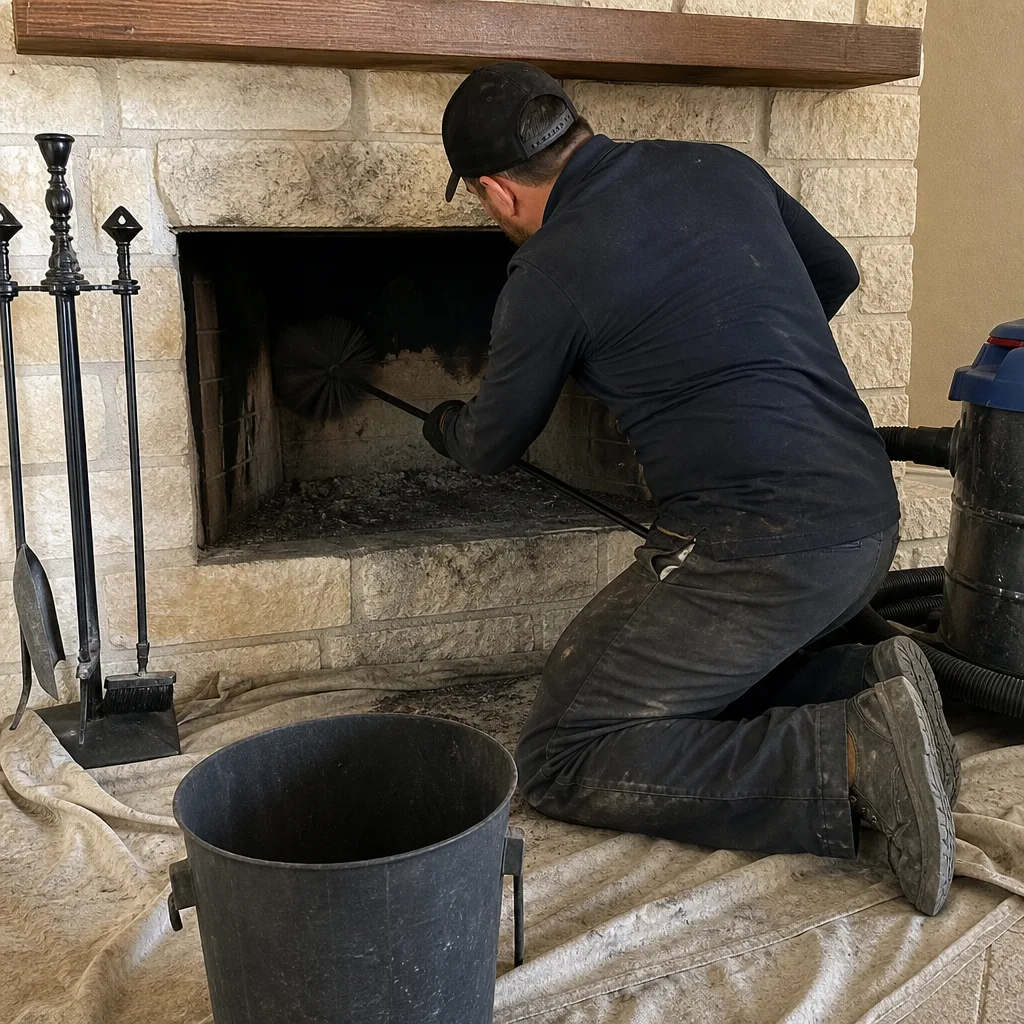
The smoke chamber is the area above the damper and below the flue liner. It’s shaped like an inverted funnel, designed to compress smoke and guide it into the flue. The smoke shelf is the flat or slightly curved ledge at the bottom of that funnel, behind the damper.
Almost no homeowner checklist includes the smoke shelf. It should be on every single one.
Why the Smoke Shelf Matters
The smoke shelf catches debris, rain that gets past the cap, and - most importantly - sparks and embers that might otherwise fall back into the firebox or house. In Fort Worth, where south winds can drive rain sideways into chimney tops, the smoke shelf often holds surprising water accumulation. It also collects fallen mortar from aging chimneys, bird nests, and the seasonal leaf debris that blows in when caps are missing or damaged.
A smoke shelf loaded with debris restricts draft, creates odor problems in summer heat, and can provide fuel for a chimney fire if ignited by upward-traveling sparks.
Smoke Chamber and Smoke Shelf Checks
These require a flashlight and a mirror, or a phone on selfie mode extended past the damper. Do not reach into the smoke chamber - the ledge is often sharp, and debris can hide nails or wire from old installations.
- Pass: Smoke shelf visible and relatively clear, no debris accumulation, smoke chamber walls smooth with no exposed corbel brick (the stepped brick that creates the funnel shape).
- Monitor: Light debris (dust, small mortar crumbs) on smoke shelf, minor roughness on smoke chamber walls.
- Fail - call a professional: Any debris accumulation deeper than 1/2 inch on the smoke shelf, any visible nest material, any water staining indicating active leak, any exposed corbel brick in the smoke chamber (the stepped brick should be parged smooth with refractory mortar), or any crack in the smoke chamber wall - especially horizontal cracks in the corbeling, which are structural failures.
The 1/8-inch horizontal crack in smoke chamber corbeling mentioned in our opening? That’s a real failure mode we see in Fort Worth homes, particularly those built 1960-1985 with corbeled brick construction rather than parged smooth walls. The crack opens when thermal expansion cycles stress the stepped brick pattern. It allows combustion gases to enter the wall cavity. It’s not visible from the firebox without a mirror or camera, and it’s not repairable with consumer products - it requires professional parging with refractory mortar or a smoke chamber renovation system.
When we perform Chimney Cleaning & Sweep in Fort Worth, smoke shelf cleaning is standard, not optional. We remove debris, inspect for damage, and document condition with photos.
Firebox, Damper, and Hearth: Interior Pass/Fail Criteria
The firebox is where the fire lives. It’s built of firebrick and refractory mortar, designed to withstand direct flame contact. The damper is the metal plate that opens to let smoke out and closes to keep conditioned air in when the fireplace isn’t in use. The hearth is the floor area in front of the firebox, required to be non-combustible and extend specific distances to catch sparks.
Firebox Checks
- Pass: Firebrick faces intact, mortar joints tight, no visible cracks through brick or mortar, rear wall straight (not bowed).
- Monitor: Surface checking (fine surface cracks) in firebrick, minor mortar erosion to 1/4 inch depth.
- Fail - call a professional: Any crack that penetrates through a firebrick, any mortar joint missing to 1/2 inch or deeper, any bowing or displacement of the rear firebox wall (indicates structural failure from overheating), or any rust staining indicating water entry from above.
A bowed rear firebox wall is a serious defect. It means the firebox has been overheated, often from burning inappropriate materials or from a chimney fire that the homeowner didn’t recognize. Chimney fires don’t always roar. Some burn slowly, quietly damaging the structure. The Fort Worth Fire Department responds to chimney fires every winter, and many homeowners are surprised to learn they’ve had one.
Damper Checks
- Pass: Opens fully and closes fully, no binding, no visible rust-through, seal reasonably tight when closed (some daylight around edges is normal for throat dampers).
- Monitor: Stiff operation, minor surface rust, slight misalignment that doesn’t affect full open/close.
- Fail - call a professional: Damper won’t open or won’t stay open, visible rust hole, broken or missing handle/chain, or damper plate detached from frame. A failed damper is both a safety issue (smoke can’t exit) and an energy issue (conditioned air escapes).
Many Fort Worth homes still have original throat dampers, located just above the firebox. These are prone to rust from condensation and heat cycling. Top-sealing dampers, mounted at the chimney cap, are a common upgrade we install - they seal more effectively and keep animals out. Olympia Chimney top dampers are among those we specify through our Haven network.
Hearth Checks
- Pass: Hearth extends minimum 16 inches in front of firebox opening and 8 inches to each side (for fireplaces under 6 square feet; larger fireplaces require more). Surface intact, no cracks, no combustible material within required clearance.
- Monitor: Minor surface staining, slight settling away from firebox edge.
- Fail - call a professional: Any crack that penetrates the hearth thickness, hearth extension less than code minimum, combustible flooring (carpet, wood) within the required clearance zone, or any indication the hearth was added later and may not meet current code.
In Fort Worth’s historic districts, especially Fairmount and Ryan Place, we’ve seen original hearths that are beautiful but undersized by modern standards. They’re legal if they were code-compliant when built and haven’t been modified, but they’re a burn risk with active use. We document this condition clearly so homeowners can make informed decisions.
What to Document After a Professional Sweep Visits
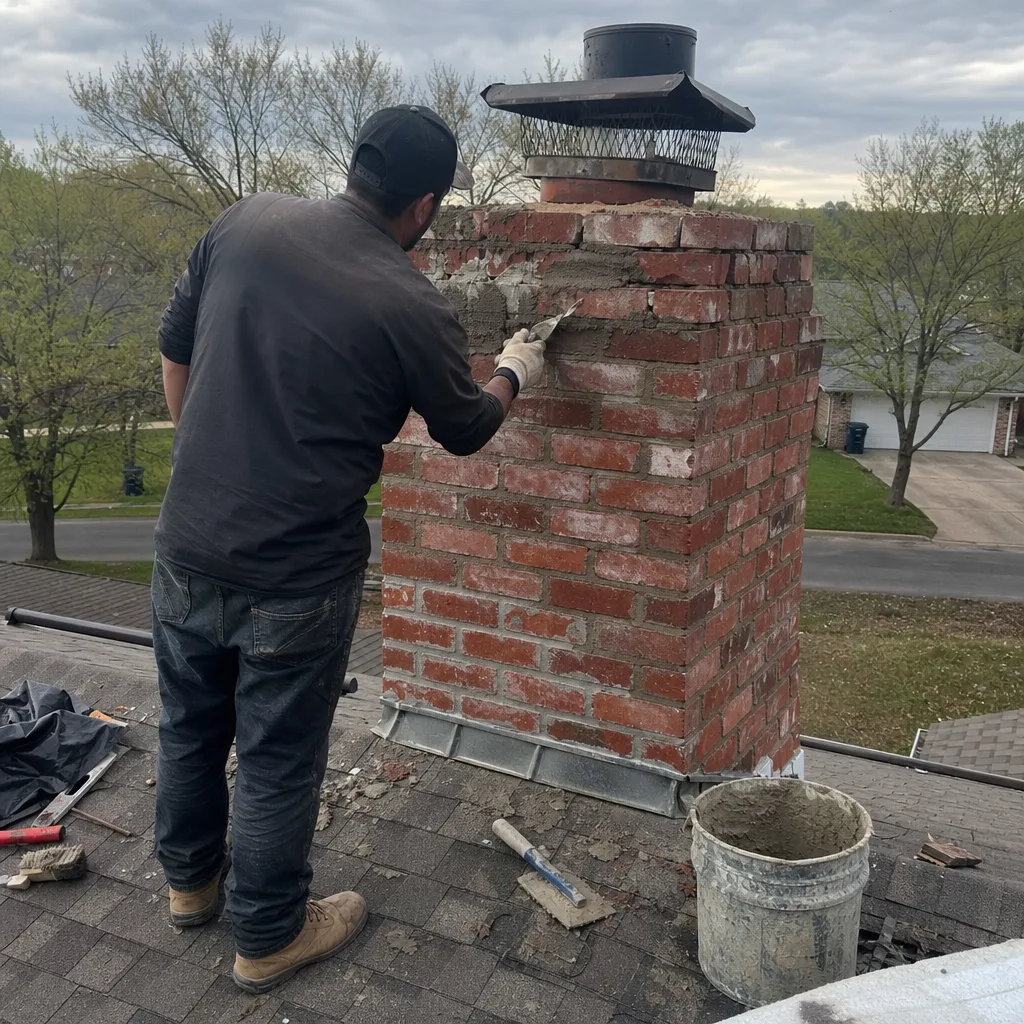
A chimney sweep visit should leave you with more than a clean flue. It should leave you with a record that protects your home, your insurance position, and the next buyer when you sell. Under Haven Standard Clause 4, we’ve required documented photo records on every job since 2009 - before regulators or insurers asked for them. For more guides & resources, here’s what that documentation should include, and what you should verify you receive.
The Three Essential Items
- Written scope and condition report: Not a checklist with checkmarks - a narrative description of what was found, where, and its condition classification. “Flue liner: clay tile, 8×12, visible length 18 feet, no cracks or spalling observed during camera scan. Creosote deposit: Class I (powdery), approximately 1/8 inch, removed by rotary brushing.” This level of specificity is what your insurer or home inspector will respect.
- Photo or video documentation: Before-and-after images of the flue interior, firebox, smoke chamber, crown, and any defects found. The photos should be dated, labeled with location, and provided in a format you can store and transfer. Video of the camera scan is even better - it shows the full flue in motion, not just selected frames.
- Written price for any recommended work, with warranty terms: Before any repair begins, you should have a written price, a written scope of what that price covers, and a written warranty. Haven Standard Clause 1 requires this - we call it H.A.V.E.N.: “Have it in writing.” No verbal estimates, no “we’ll see how it goes” pricing. If a company won’t put the price in writing before starting, that’s a signal to get a second opinion.
We offer free second opinions on any competitor’s written estimate. Bring us their scope and price. We’ll review it against what we find, with our own camera inspection, and tell you where we agree, where we differ, and why. No charge for that review.
Store your chimney documentation with your home records. When we inspect a Fort Worth home for a new owner, finding a five-year record of annual sweeps with photos dramatically changes our risk assessment. It often means a faster, less expensive inspection because we’re confirming continued good condition rather than diagnosing unknown history.
Seasonal Timing for Fort Worth: When to Schedule
North Texas burn season runs roughly November through March, with peak demand in October (pre-season scheduling) and the first cold snap, usually mid-November. The Fort Worth area sees its first sustained overnight lows in the 40s by late October, and that’s when fireplace use begins.
Here’s the timing that works:
- Early October: Ideal scheduling window. Technicians are available, you beat the rush, and any needed repairs can be completed before first use. This is when we recommend Fort Worth homeowners in Fireplace Services in Fort Worth territory schedule.
- Late October to mid-November: Acceptable but competitive. First-come, first-served. Repairs requiring parts may push into burn season.
- Mid-November through February: Emergency-only if you haven’t swept. We’ll accommodate, but you’re burning on an unknown chimney condition, and that’s when chimney fires happen.
- March through September: Off-season scheduling for proactive homeowners. Best availability, often faster turnaround, and any masonry repairs cure properly in warm weather.
Fort Worth’s specific climate factor: our occasional ice storms, most recently February 2021 and February 2023, create emergency conditions. Chimneys that were marginal become urgent when ice blocks flues, crowns crack from ice load, and homeowners fire up fireplaces they haven’t inspected in two years. Schedule before the ice, not after.
Common Mistakes to Avoid
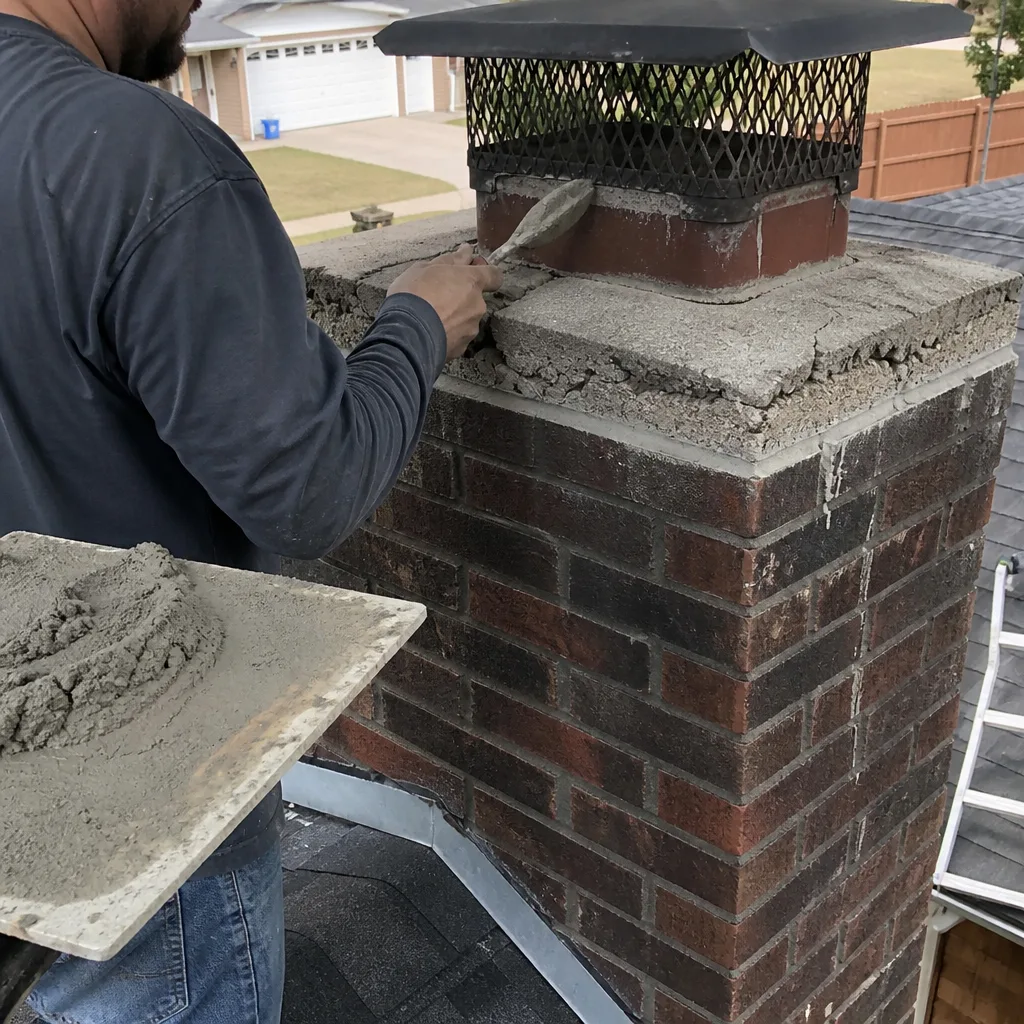
- Checking “inspect mortar” without a failure threshold. Mortar erosion is a continuum. Know that 1/2-inch depth or missing mortar to that depth means water entry and structural compromise - not just “aging.”
- Assuming a clean flue means a safe chimney. Creosote removal is one component. A clean flue with a cracked liner is still dangerous. The camera inspection matters as much as the brush.
- Ignoring the smoke shelf because it’s hard to reach. Debris accumulation there restricts draft and creates fire risk. Use a mirror, or ask your sweep to photograph it.
- Photographing only the problem areas. Document the good condition too. Year-over-year comparison requires baseline photos of all surfaces, not just the crack that worried you.
- Scheduling based on “when we remember” rather than the calendar. Annual inspection is the NFPA 211 standard for active fireplaces. In Fort Worth’s climate, with our thermal cycling, “it looks fine” is not a substitute for documented inspection.
- Accepting verbal estimates for repair work. A written price, written scope, and written warranty before work starts protects you from scope creep and lets you compare apples-to-apples. Haven Standard Clause 1 exists because we saw too many homeowners burned by vague promises.
- Using the wrong fuel for your system. Fort Worth has abundant oak and pecan, both excellent when seasoned. But burning unseasoned wood (moisture over 20%), Christmas trees, or construction scraps creates Class III glazed creosote rapidly and risks over-firing that damages liners.
When to Call a Professional
Call a certified chimney professional when any checkpoint hits the “fail” threshold described above, when you smell smoke in the house during fireplace use, when you hear animal activity in the flue, or when it’s been more than 12 months since your last documented inspection. In Fort Worth, where our freeze-thaw cycle accelerates damage, annual inspection isn’t conservative - it’s proportionate to the climate stress.
Level Two Chimney Fort Worth offers free estimates with written pricing before any work begins. Our technicians are background-checked, uniformed, and assigned by name - you’ll get a text when yours is on the way. Every visit includes an NFPA 211 Level 2 camera inspection and a documented photo record under Haven Standard Clause 4. Chimney Repair in Fort Worth and full rebuild services are available when needed, with materials sourced through our Haven buying network from DuraFlex, HeatShield, Gelco, and other specified manufacturers.
Call (682) 499-2712 for a free estimate. Live phone support, 24 hours a day.
Frequently Asked Questions
A standard chimney cleaning and Level 2 inspection in Fort Worth typically ranges from $250 to $450, depending on flue accessibility, number of flues, and creosote condition. Class III glazed creosote requiring chemical or rotary removal adds $150 to $300. We provide a written price before any work starts, with no exceptions - Haven Standard Clause 1. Call (682) 499-2712 for an exact quote; estimates are free.
NFPA 211 recommends annual inspection for all chimneys, and cleaning when creosote reaches 1/8-inch thickness. In Fort Worth’s climate, with our hard freeze-thaw cycling and active oak/pine burning, most active fireplaces need annual sweeping. Occasional users (fewer than 10 fires per season) may inspect annually and clean every 2-3 years if the camera inspection confirms minimal buildup. Call (682) 499-2712 to schedule; we’ll tell you honestly if your condition allows a longer interval.
You need liner replacement when the existing liner is cracked, gapped, spalled, or missing - conditions that allow combustion gases or chimney fire heat to reach combustible framing. We don’t recommend liner replacement without camera evidence you can see yourself. If another company says you need a liner, bring us their written estimate for a free second opinion with our own camera inspection. Sometimes the “failed liner” is a single cracked tile that can be repaired; sometimes it’s a full relining. The camera shows the difference.
Skipped maintenance leads to three predictable outcomes: creosote accumulation to combustible levels, creating chimney fire risk; water intrusion through deteriorated crowns, caps, or flashing, causing structural damage and mold; and liner failure, allowing carbon monoxide into living spaces. In Fort Worth, our thermal cycling accelerates all three. The cost of prevention is a fraction of the cost of rebuilding a fire-damaged chimney or remediating mold in wall cavities. Call (682) 499-2712 for a free estimate - we’ll show you exactly what your chimney’s condition is.
You can remove light, powdery Class I creosote from an accessible firebox and lower flue with proper brushes and rods, but you cannot safely assess flue liner condition, smoke chamber integrity, or crown deterioration from the ground. The NFPA 211 Level 2 camera inspection requires equipment and training most homeowners don’t have. More importantly, chimney work involves heights, confined spaces, and exposure to carcinogenic creosote. We recommend professional service for the inspection component even if you handle light cleaning yourself. For Chimney Cleaning & Sweep in Fort Worth, we’re available to handle both.
A Level 1 inspection is a visual examination of readily accessible portions of the chimney exterior and interior, appropriate for chimneys under continued service with no changes. A Level 2 inspection adds a camera scan of the full flue interior, accessible areas in attics and crawl spaces, and inspection of chimney clearances - required at sale or transfer of property, after an operating malfunction, or after external events like earthquakes or chimney fires. Level Two Chimney Fort Worth performs Level 2 as our default on every visit, not as an upgrade, because the camera reveals what visual inspection cannot. Haven Standard Clause 4 requires that photo documentation.
The Bottom Line
A useful chimney checklist names the failure threshold for every item, not just the item itself. In Fort Worth, our sharp freeze-thaw cycles, active wildlife, and hard-water mineral deposits create specific stress patterns that accelerate deterioration. Inspect your crown, cap, flashing, flue liner, smoke chamber, smoke shelf, firebox, and damper annually, with ground-level photography for year-over-year comparison. Know that 1/16-inch crown cracks, 1/2-inch mortar erosion, any flue tile crack, and any smoke chamber wall damage are all “call a professional” conditions. Demand written documentation - scope, photos, price, warranty - from any sweep you hire. Store it. Transfer it when you sell. The chimney that killed someone in the news last winter was almost always the one that “looked fine” and hadn’t been camera-inspected in years.
Level Two Chimney Fort Worth has completed more than 38,000 chimney inspections and cleanings since 2009, every one with a written price before work started and a documented record when done. The 365-Day Done Right Promise applies to every job. Call (682) 499-2712 for a free estimate. Live phone support, 24 hours a day.
Written by Corrine Halstead, Owner at Level Two Chimney Fort Worth, serving Fort Worth since 2009.