
Last updated September 22, 2026
Level 1 sweep and inspection to the NFPA 211 annual standard - flue, crown, cap, and flashing checked and photographed
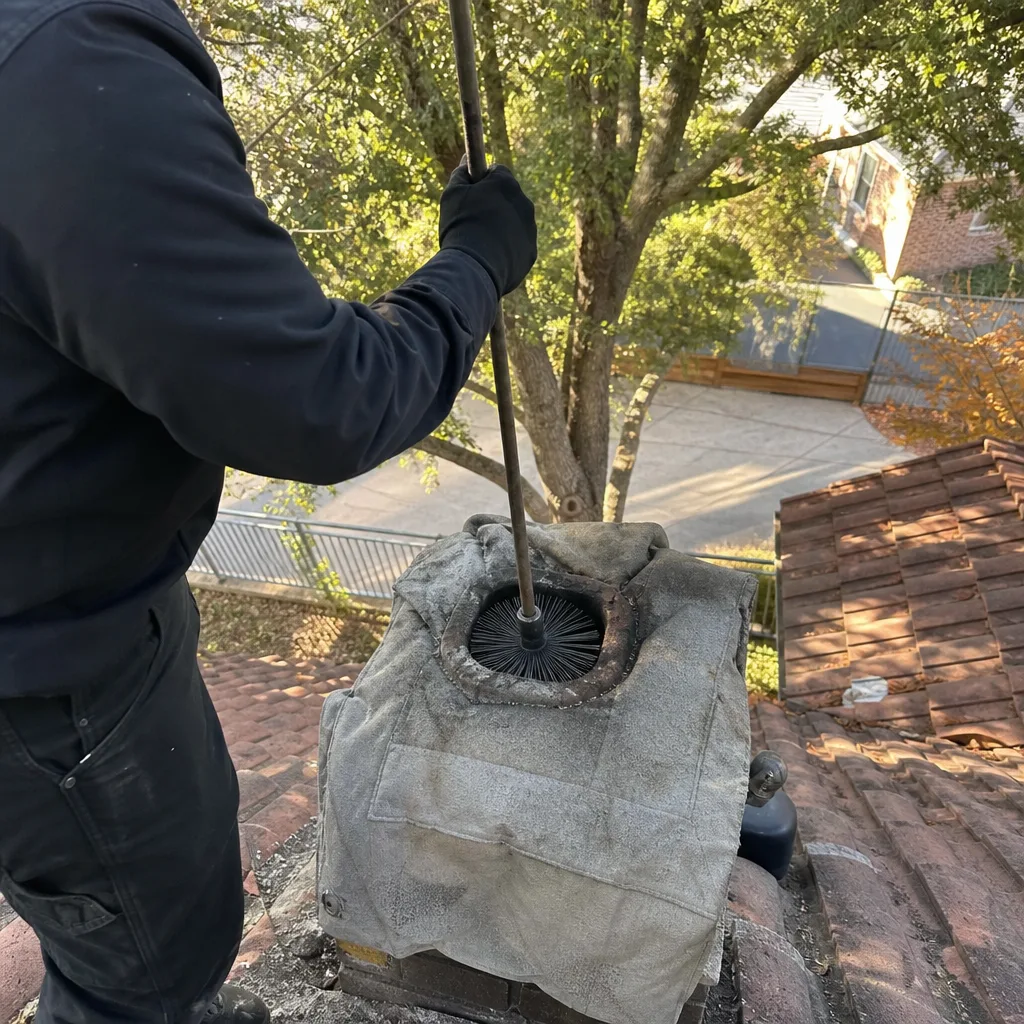
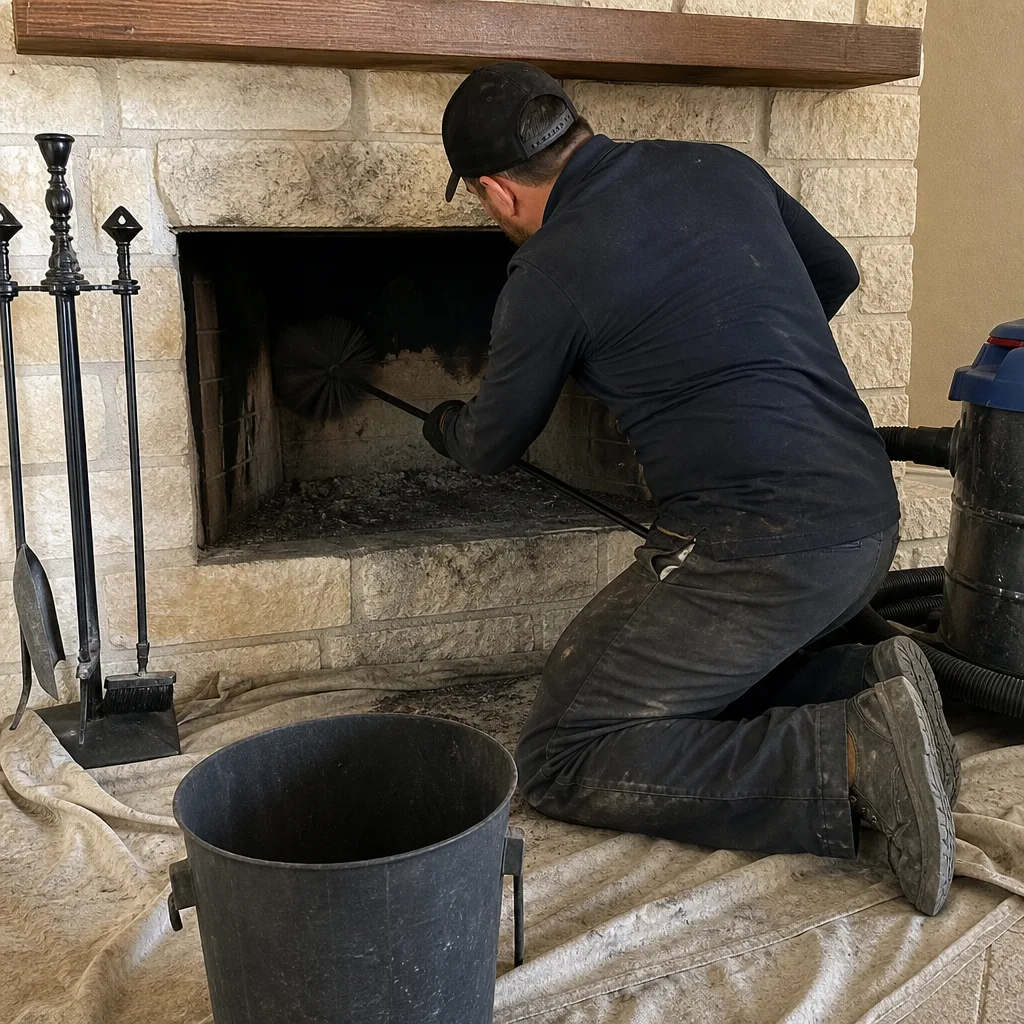
Chimney sweep logs do not sweep chimneys. They loosen some creosote - which then falls where a brush and vacuum still have to collect it.
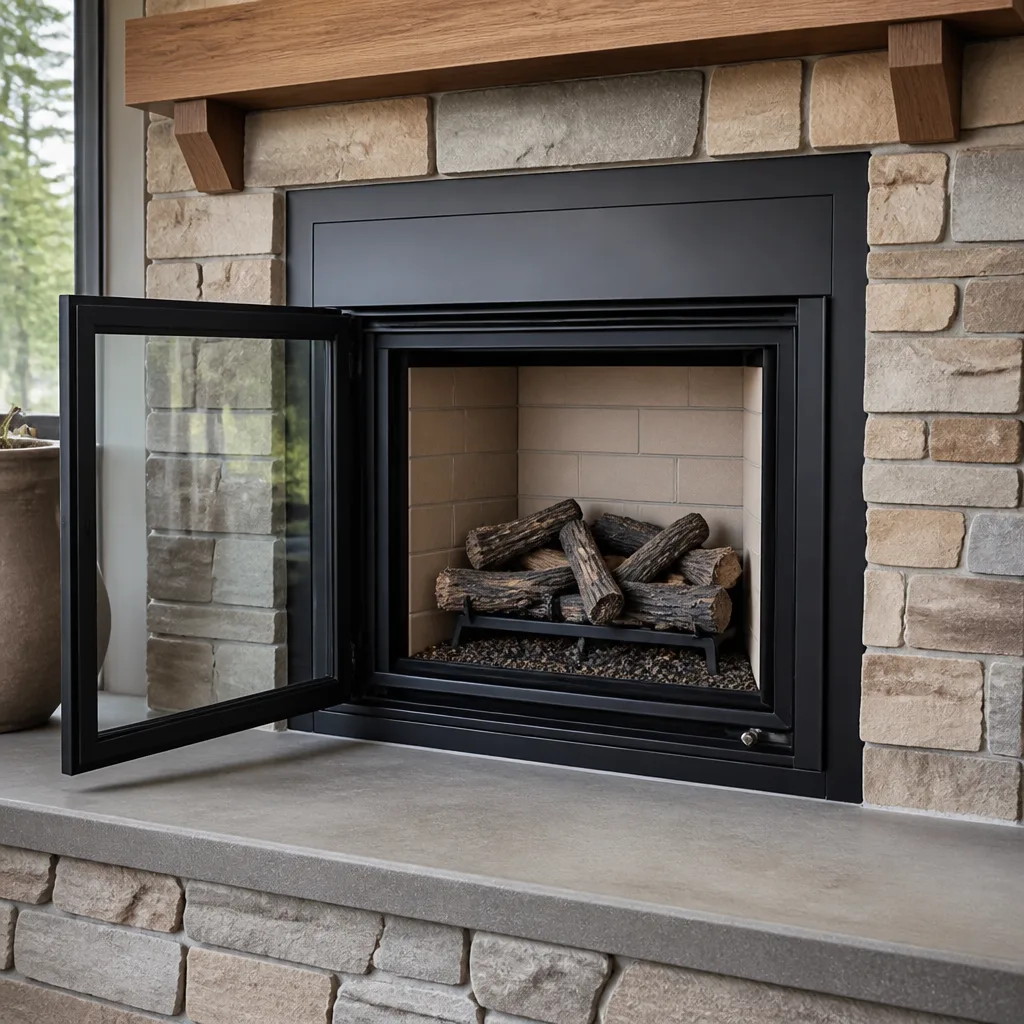
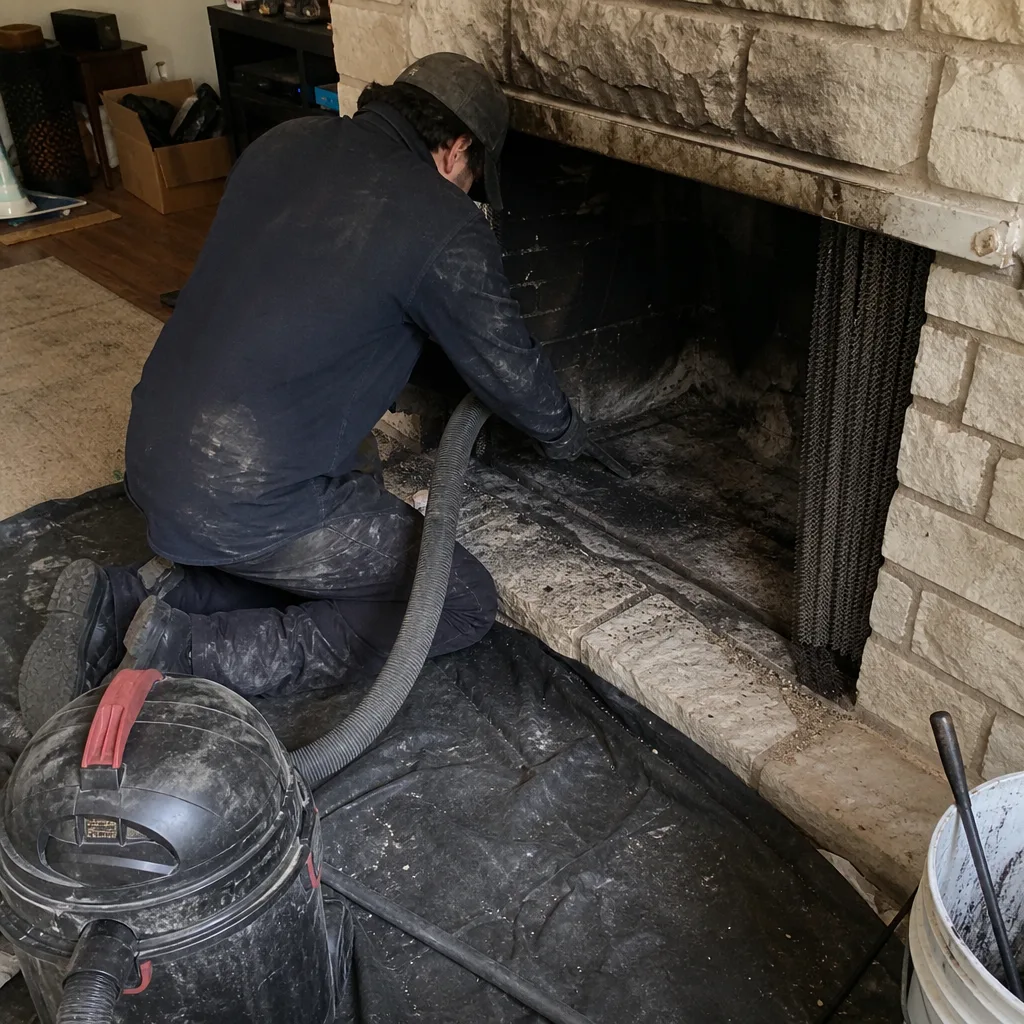 Before
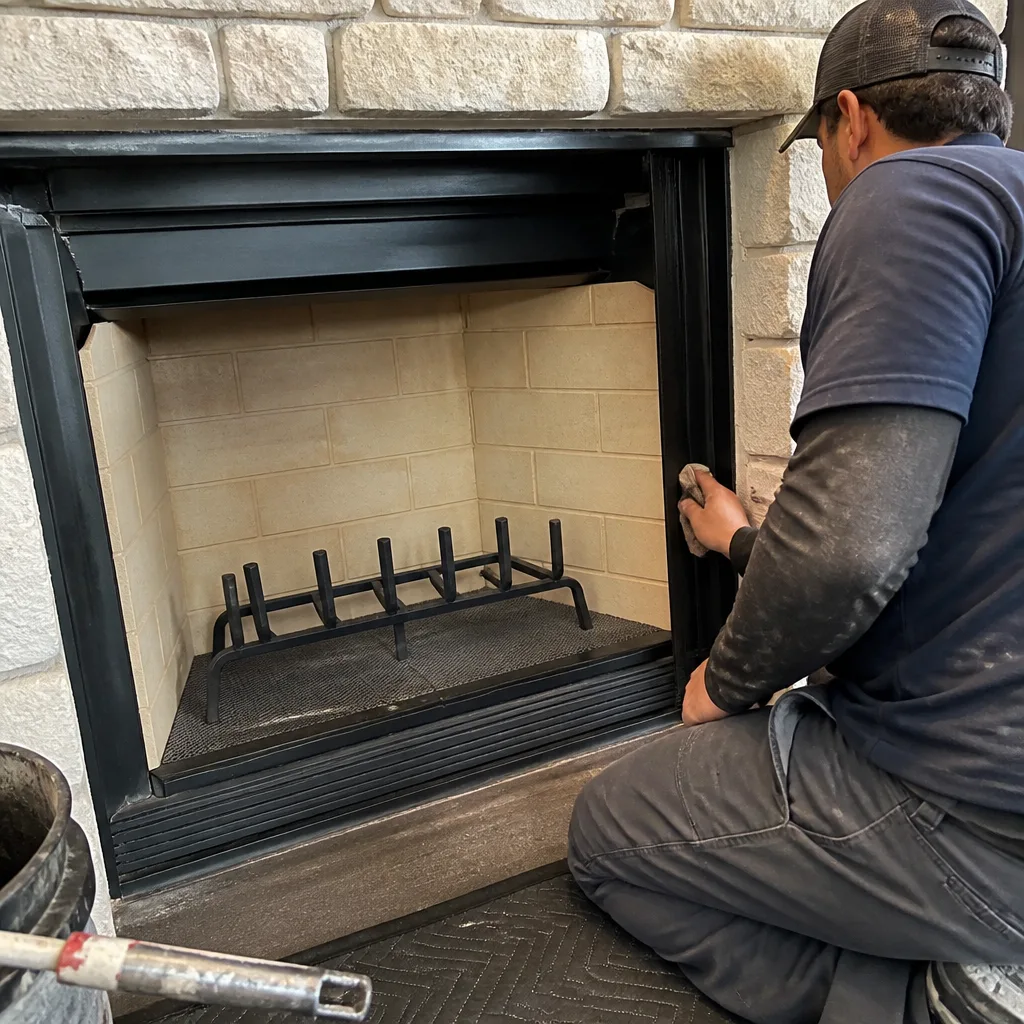 After
After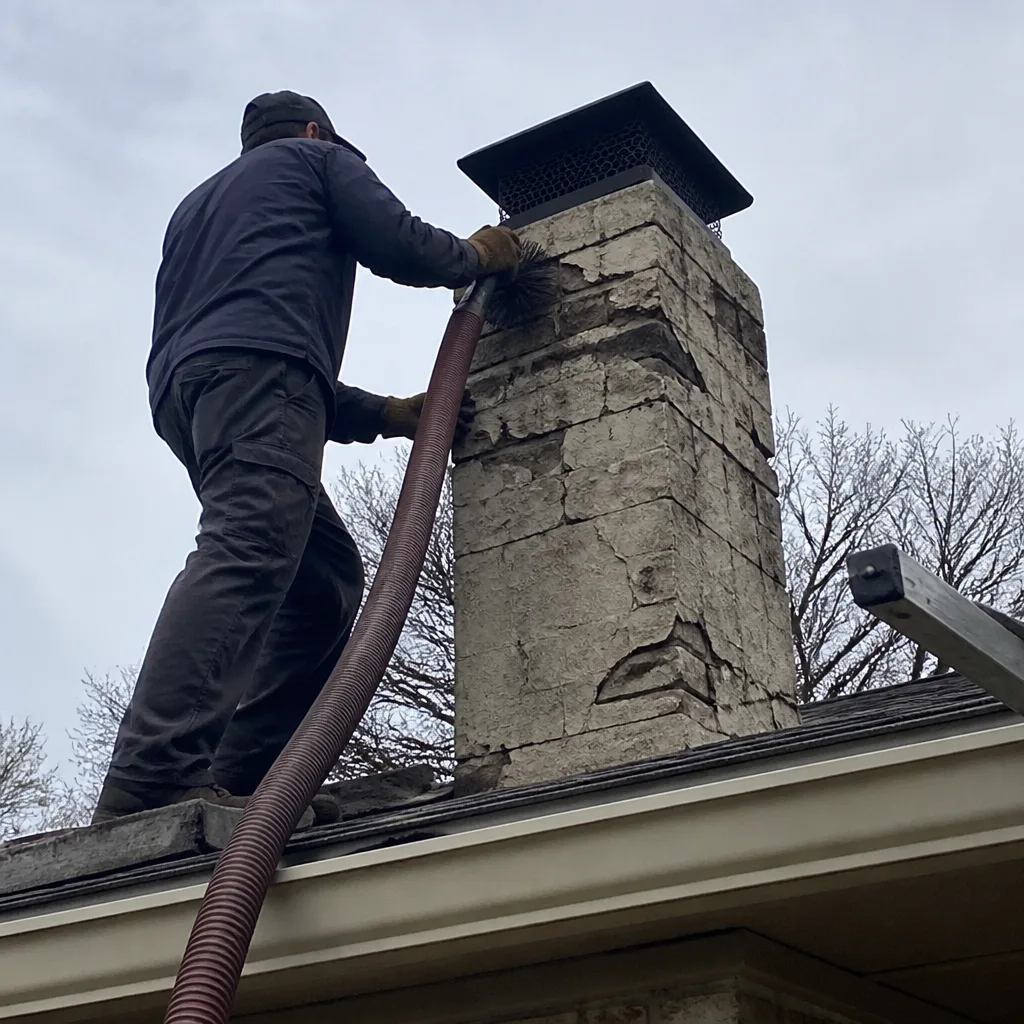 Before
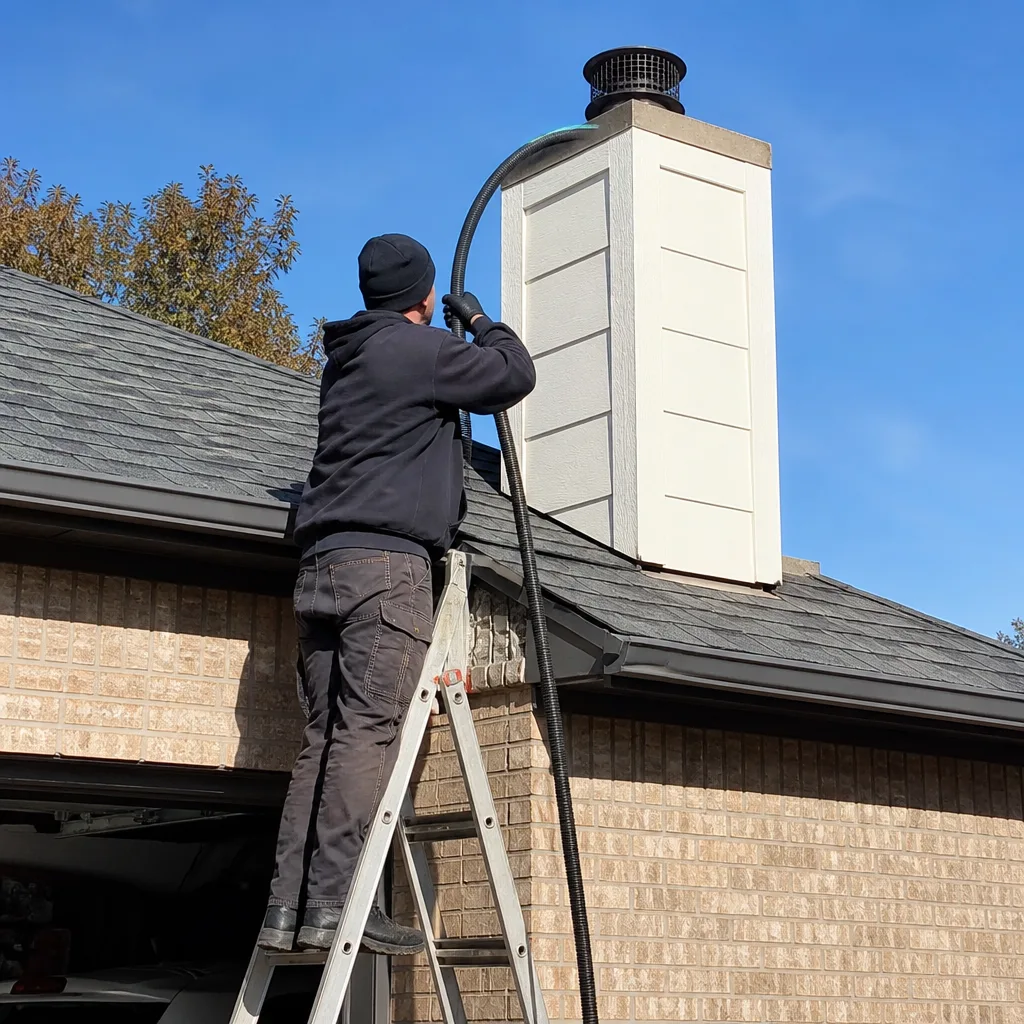 After
After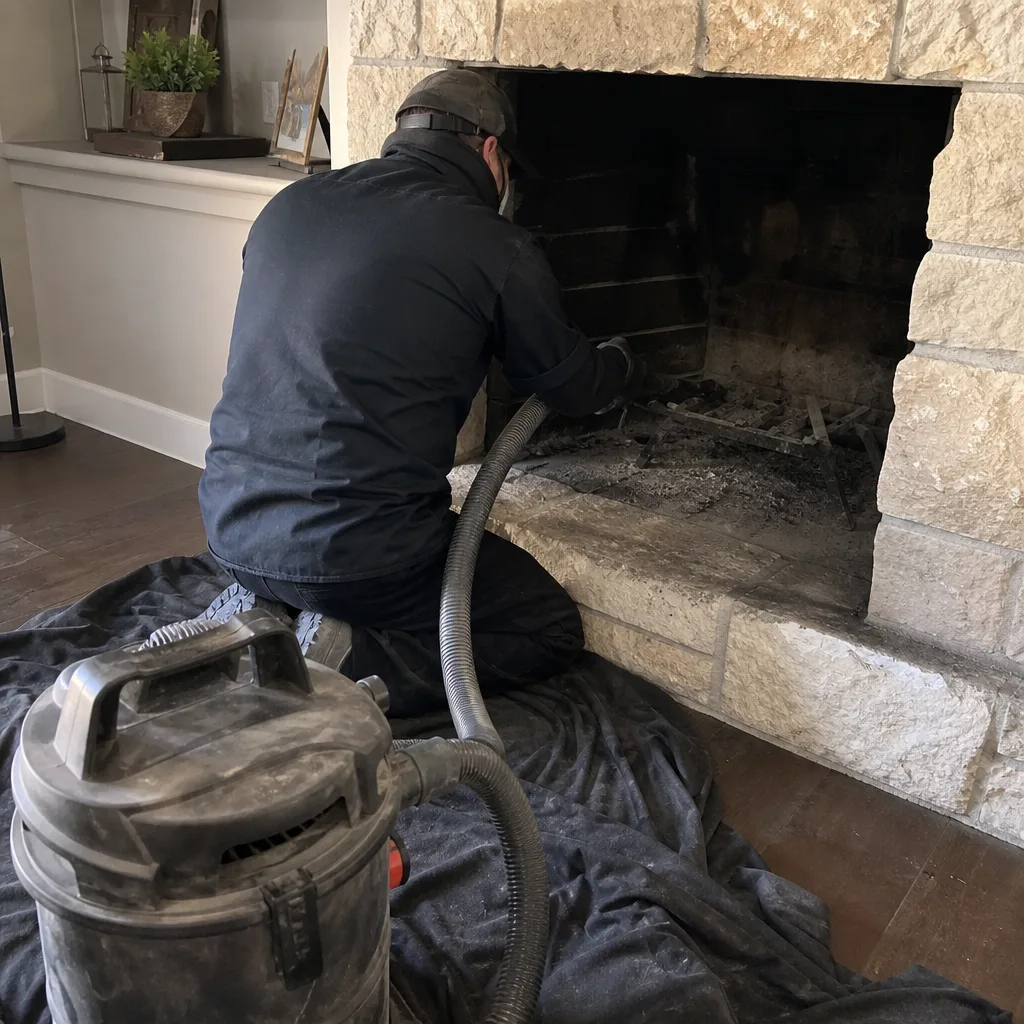 Before
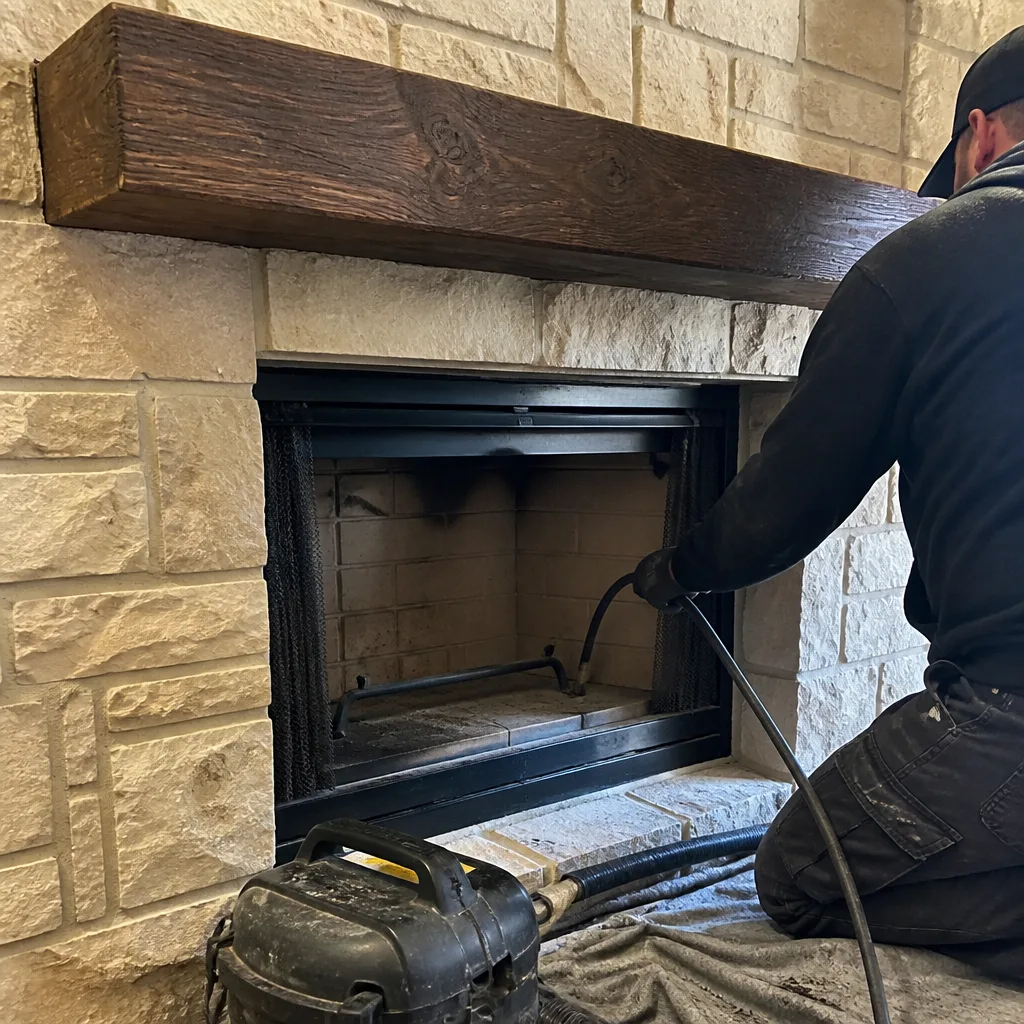 After
AfterChimney Cleaning Warning Signs: A Fort Worth Homeowner’s Reference Guide
That white stain creeping down your brick chimney in Fort Worth? Most articles call it “efflorescence, a cosmetic issue.” It is cosmetic, but only the way a fever is cosmetic. Water is moving through your masonry, dissolving salts, and carrying them to the surface. Every freeze cycle, that water expands, and the brick loses cohesion you cannot see until the face spalls off. We’ve inspected over 38,000 chimneys since 2009, and the ones that cost homeowners the most were the ones that showed early warnings the owners learned to ignore. This guide pairs twelve visible symptoms with the structural deficiency each indicates, the consequence of waiting another season, and the specific criterion for deciding whether to call today or schedule at your next sweep. For more guides & resources on chimney maintenance, visit our blog.
Quick Answer
The twelve chimney warning signs every Fort Worth homeowner should recognize are: white efflorescence on exterior brick, rust stains on the firebox or damper, a popping or cracking sound during heating, three distinct odor types, smoke entering the room, visible creosote buildup, cracked or missing flue tiles, deteriorated mortar joints, a tilting or separating chimney crown, water in the firebox, damaged flashing, and animal debris or nesting material. If you’re weighing whether to tackle maintenance yourself or hire help, see our DIY vs Professional Chimney Cleaning: The Fort Worth Homeowner’s Decision Guide. Each indicates a specific structural or functional deficiency, and three of these - smoke rollback, a separated crown, and a cracked flue liner with visible gaps - require same-day professional evaluation due to active fire or carbon monoxide risk.
Table of Contents
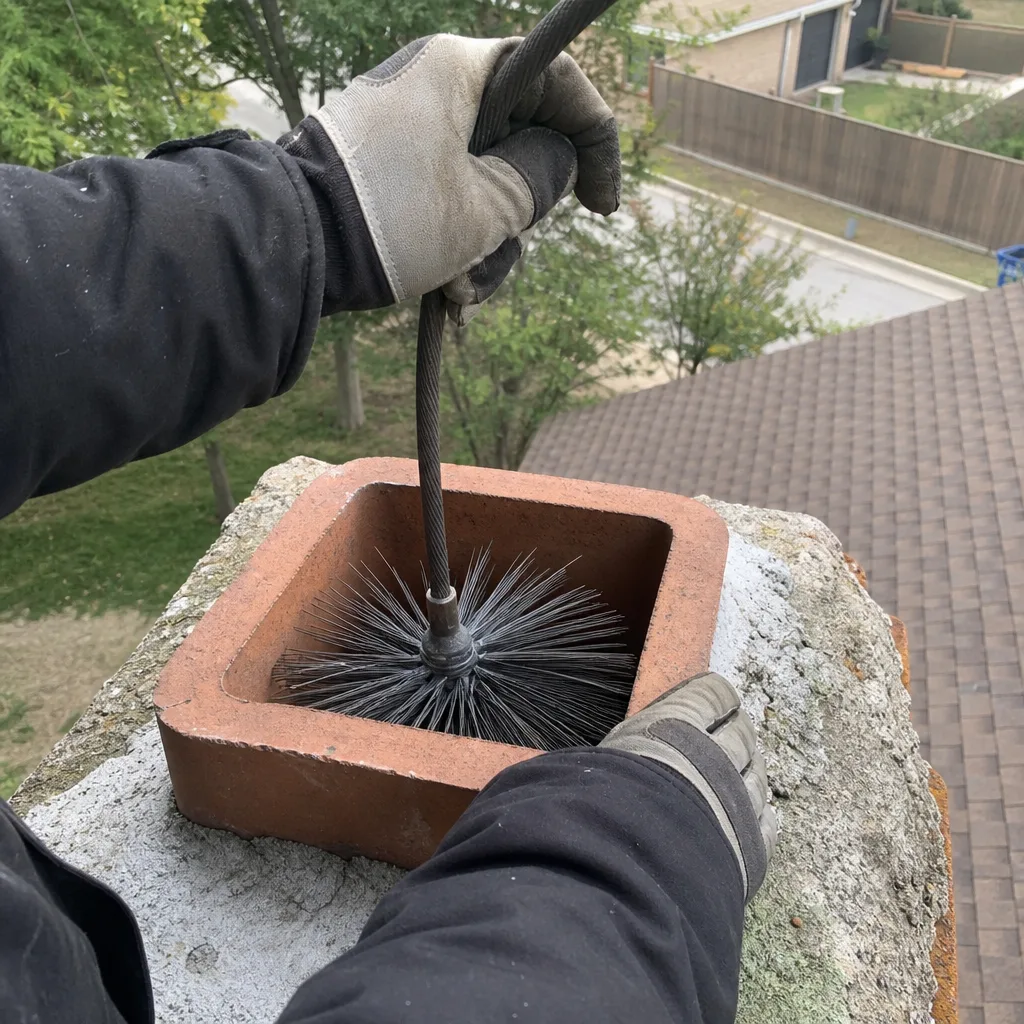
- White Stains on Exterior Brick: What Efflorescence Actually Means
- Rust Stains: The Hidden Water Path
- The Pop or Crack You Hear: Fort Worth’s Short Cold Season
- Chimney Odor Taxonomy: Three Smells, Three Different Responses
- Smoke in the Room: When Draft Reversal Becomes Dangerous
- Creosote Buildup: What You’re Actually Looking At
- Cracked Flue Tiles: The Liner Failure Progression
- Deteriorated Mortar Joints: Spalling and Structural Movement
- Crown Separation and Deterioration
- Water in the Firebox: The Path from Crown to Hearth
- Damaged Flashing: Roof-Chimney Intersection Failures
- Animal Debris and Nesting Material
- Same-Day Safety Issues vs. Next-Sweep Monitoring
- Interior Firebox Checklist: No Tools Required
- Common Mistakes to Avoid
- When to Call a Professional
- Frequently Asked Questions
- The Bottom Line
 Before
 After
AfterWhite Stains on Exterior Brick: What Efflorescence Actually Means
That chalky white deposit on your chimney’s exterior is soluble salt carried to the surface by water moving through the masonry. In Fort Worth, where clay soils shift and winter temperatures drop below freezing just enough to matter, this process accelerates. The salt itself is harmless. The water movement is not.
Here’s what happens structurally. Water enters through deteriorated mortar joints, crown cracks, or failed flashing. It dissolves naturally occurring salts in the brick and mortar. Capillary action draws it to the surface. When temperatures drop below 32°F, typically twenty to thirty nights per year in Tarrant County, that water freezes and expands by about 9%. The expansion forces micro-fractures in the brick face. Next season, more water enters. The cycle repeats until the brick face spalls off entirely, exposing the softer interior to accelerated weathering.
We’ve documented this progression in hundreds of Fort Worth inspections, particularly in older neighborhoods like Mistletoe Heights and Berkeley Place where original masonry chimneys from the 1920s through 1950s remain common. The critical distinction: efflorescence that reappears after cleaning indicates an active water source. One-time staining from construction moisture is different. Active efflorescence means water is moving now.
The monitoring threshold: if you can brush the stain off and it returns within one heating season, the water path is active. If the brick face feels soft or crumbles under light pressure with a house key, spalling has begun. At that stage, tuckpointing or partial rebuild is typically required. Waiting two seasons often doubles the repair scope.
Our Chimney Repair in Fort Worth service addresses this with crown sealing, flashing replacement, and masonry restoration using materials sourced through our Haven buying network.
Rust Stains: The Hidden Water Path
Rust on the firebox floor, damper frame, or smoke shelf indicates water has traveled the full height of the flue and reached metal components never designed for wet conditions. The structural deficiency is not the rust itself; it’s the water management failure that allows sustained moisture in a system designed to handle only combustion gases.
In Fort Worth’s climate, rust progression moves faster than homeowners expect. Our humidity averages above 60% for much of the year, and the temperature differential between a cool flue and warm exterior air creates condensation even without active leaks. Add actual water intrusion, and a steel damper can corrode to inoperability in two to three seasons.
What to look for:
- Orange-brown staining on the firebox floor, especially after rain
- Damper blades that stick, grind, or won’t fully open or close
- Flaking metal on the smoke shelf visible from below
- Rust streaks running down the firebox side walls
The documented consequence of deferral: a seized damper left closed during a fire creates smoke rollback and carbon monoxide risk. A damper left open continuously wastes conditioned air year-round, typically adding $150-$300 annually to heating and cooling costs in a Fort Worth home. Replacement requires firebox access and often smoke chamber modification.
Under Clause 4 of the Haven Standard, we document the rust location, extent, and source with camera footage before quoting repair. The photo record becomes your baseline for monitoring if you choose to defer.
The Pop or Crack You Hear: Fort Worth’s Short Cold Season
This is the warning sign our competitors’ articles almost never mention, and it’s particularly relevant to Fort Worth’s climate pattern. Homeowners here report a sharp pop or crack from the fireplace area during the first cold snap, often attributing it to “the house settling.” In our experience inspecting chimneys across Tarrant County since 2009, this sound frequently indicates a clay tile flue liner fracturing under rapid temperature change.
Fort Worth’s heating season is short and sharp. Temperatures can drop forty degrees in twenty-four hours. A flue that has been at ambient temperature for eight months is suddenly exposed to 300°F combustion gases. Clay tile, a ceramic material, expands when heated. If the tile has existing micro-cracks from thermal cycling, previous chimney fire, or settling stress, the rapid expansion causes sudden fracture. The sound is the tile cracking or, in some cases, a fragment shifting in the flue.
The structural deficiency: a cracked flue liner no longer contains combustion gases. Hot gases and sparks can reach combustible framing. Carbon monoxide can leak through gaps into living spaces. The NFPA 211 standard requires a continuous, intact flue liner; a fractured tile liner fails this requirement.
The diagnostic challenge: you cannot see upper flue damage from the firebox without a camera. The sound is often the only early warning. If you hear a pop or crack during heating, especially the first fire of the season, schedule a Level 2 inspection. This includes a camera scan of the full flue length under Clause 4 of the Haven Standard. We have documented partial liner collapses in Fort Worth homes where the homeowner heard the initial fracture sound two seasons before calling.
Repair options range from HeatShield cerfractory flue sealant for minor cracking to a stainless steel liner from DuraFlex or Olympia Chimney for more extensive damage. We quote both approaches in writing with photo documentation before any work begins.
Chimney Odor Taxonomy: Three Smells, Three Different Responses
Not all chimney odors indicate the same problem, and treating them the same wastes money. We’ve developed this taxonomy from thousands of Fort Worth inspections where homeowners described “a chimney smell” and received inappropriate solutions.
Type 1: Creosote Off-Gassing
The smell: sharp, tar-like, reminiscent of asphalt or roadwork. Often stronger in humid weather and when the fireplace is not in use.
The cause: Class II or Class III creosote (glazed or tar-like deposits) warming in the flue and releasing volatile compounds. This occurs when the flue temperature stays below 250°F during burning, typical of smoldering fires or insufficient air supply.
The response: sweeping removes the fuel for the odor, but the underlying cause - cool flue operation - must be addressed or the odor returns. For a thorough walkthrough of proper cleaning procedures, read The Complete Guide to Chimney Cleaning in Fort Worth. We check firebox dimensions against flue size, verify proper combustion air supply, and document creosote class with photos. In Fort Worth’s newer construction with tightly sealed envelopes, makeup air deficiency is a common contributor.
Type 2: Animal Nesting Decay
The smell: organic, musty, sometimes sharply unpleasant like a dead animal. Often localized and sudden in onset.
The cause: birds, squirrels, raccoons, or rodents in the flue or smoke shelf. Fort Worth’s urban wildlife density is high, and uncapped flues are accessible nesting sites. A trapped animal dies and decomposes; nesting material accumulates moisture and decays.
The response: removal of the animal and nesting material, sanitization of the affected area, and installation of a proper chimney cap. We use Gelco and Famco caps sourced through our Haven buying network. This is not a sweeping issue; sweeping does not remove carcasses or large nesting deposits.
Type 3: Draft Reversal Bringing Exterior Air Down the Flue
The smell: variable, often described as “damp” or “like the basement,” sometimes carrying exterior odors from the roof area.
The cause: negative pressure in the house exceeding the flue’s natural draft. Common in Fort Worth’s newer homes with range hoods, bathroom exhaust fans, and dryer vents creating substantial depressurization. The smell is not originating in the chimney; the chimney is acting as an air inlet.
The response: pressure testing and combustion appliance zone evaluation, not sweeping. We measure depressurization and recommend solutions ranging from dedicated combustion air supply to fan sizing adjustment.
The critical distinction: if you smell your chimney, note when it occurs, what it resembles, and whether it changes with weather or appliance use. This information directs the correct response and avoids paying for a sweep that does not solve the problem.
Smoke in the Room: When Draft Reversal Becomes Dangerous
Smoke entering the room during fireplace use is not a nuisance. It indicates active failure of the venting system and creates immediate health risk. Carbon monoxide, present in all wood smoke, is odorless and can reach dangerous levels before occupants recognize symptoms.
The structural deficiencies that cause smoke rollback include:
- Blocked flue: Creosote buildup, animal nests, or collapsed liner material obstructing gas flow. The obstruction creates backpressure; smoke follows the path of least resistance, which becomes the firebox opening.
- Incorrect flue sizing: A flue too large for the firebox cannot establish adequate draft velocity. Common in Fort Worth homes where original fireplaces were modified with insert installations without proper flue adaptation.
- House depressurization: As described in Type 3 odors above, but severe enough to overcome even a properly functioning draft. Often occurs when multiple exhaust appliances operate simultaneously.
- Structural flue damage: Cracked or missing tiles, separated liner joints, or deteriorated mortar allowing smoke leakage into wall cavities that then enters the house through gaps in framing.
The same-day criterion: any smoke in the room during fireplace use requires extinguishing the fire and professional evaluation before the next use. Do not attempt to “burn it out” or improve draft with doors open or windows cracked. These adaptations mask the underlying failure while exposing occupants to combustion byproducts.
Our Fireplace Services in Fort Worth include draft testing, pressure diagnostics, and proper insert installation with appropriate flue sizing.
Creosote Buildup: What You’re Actually Looking At
Creosote is not generic “soot.” It forms in three distinct classes, and each indicates different burning conditions and carries different risk profiles. Understanding what you’re seeing helps you communicate accurately with a sweep and evaluate whether the cleaning you received was thorough.
Class I: Sooty, powdery, easily brushed. Indicates proper burning with adequate air supply and sufficiently hot fires. Normal accumulation rate: 1/8 inch per cord of properly seasoned wood. Removal is straightforward sweeping.
Class II: Granular, crunchy, black or dark brown. Indicates cooler flue temperatures, often from burning unseasoned wood or restricting air supply. Accumulates faster than Class I and requires more aggressive brushing. In Fort Worth, where homeowners often burn whatever wood is available, this is the most common type we encounter.
Class III: Glazed, tar-like, hardened to the flue surface. Indicates sustained cool burning, typically from air-starved fires or unseasoned wood with moisture content above 25%. This is the most dangerous form; it ignites at lower temperatures and burns with extreme intensity. Removal requires specialized chemical treatment or rotary cleaning equipment. We document Class III creosote with photos and recommend burn practice modification to prevent recurrence.
The visual check: from the firebox, shine a flashlight up the flue. Class I appears dusty. Class II looks like coarse black sand. Class III appears shiny, dripped, or baked-on, like hardened tar. If you see Class III, schedule cleaning before the next burning season. If you see any buildup exceeding 1/4 inch, schedule regardless of class.
Our Chimney Cleaning & Sweep in Fort Worth includes creosote class documentation and burn practice guidance with every service.
Cracked Flue Tiles: The Liner Failure Progression
Clay flue tiles crack predictably under stress, and the progression follows a pattern we’ve documented thousands of times. Early stage: hairline cracks visible only on camera inspection. Middle stage: visible cracks from the firebox opening, sometimes with missing corner fragments. Late stage: tile collapse, partial flue blockage, or exposed masonry joints.
The structural deficiency at each stage:
- Hairline cracks: Loss of gas-tight integrity. Combustion gases migrate through cracks to the masonry surround. In Fort Worth’s freeze-thaw climate, this introduces moisture and accelerates mortar deterioration.
- Visible cracks: Active spark and ember pathway to combustibles. The NFPA 211 requirement for a continuous liner is failed.
- Tile collapse: Partial or complete flue obstruction. Creates backdraft conditions, carbon monoxide risk, and potential for chimney fire from accumulated debris behind the collapse.
The monitoring threshold: if you can see cracks from the firebox, the damage is at minimum middle stage. Camera inspection is required to assess upper flue condition. We do not recommend waiting for the next scheduled sweep; the progression from visible crack to collapse can occur in a single heating season with thermal stress.
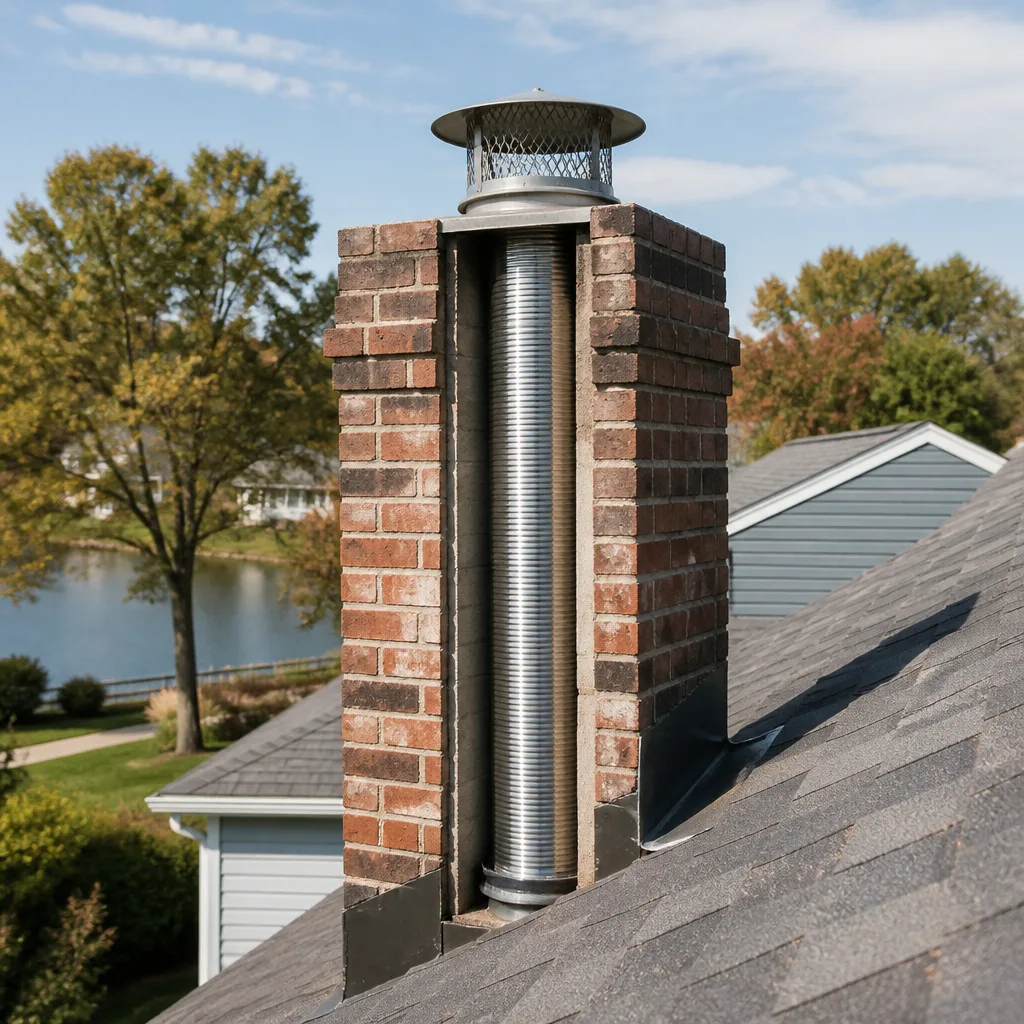
Repair options depend on damage extent and location. HeatShield cerfractory sealant addresses cracks and minor gaps without liner replacement. For more extensive damage, a stainless steel liner from DuraFlex or Olympia Chimney provides a new, continuous flue path within the existing chimney structure. We quote both approaches with written scope and warranty before work begins.
Deteriorated Mortar Joints: Spalling and Structural Movement
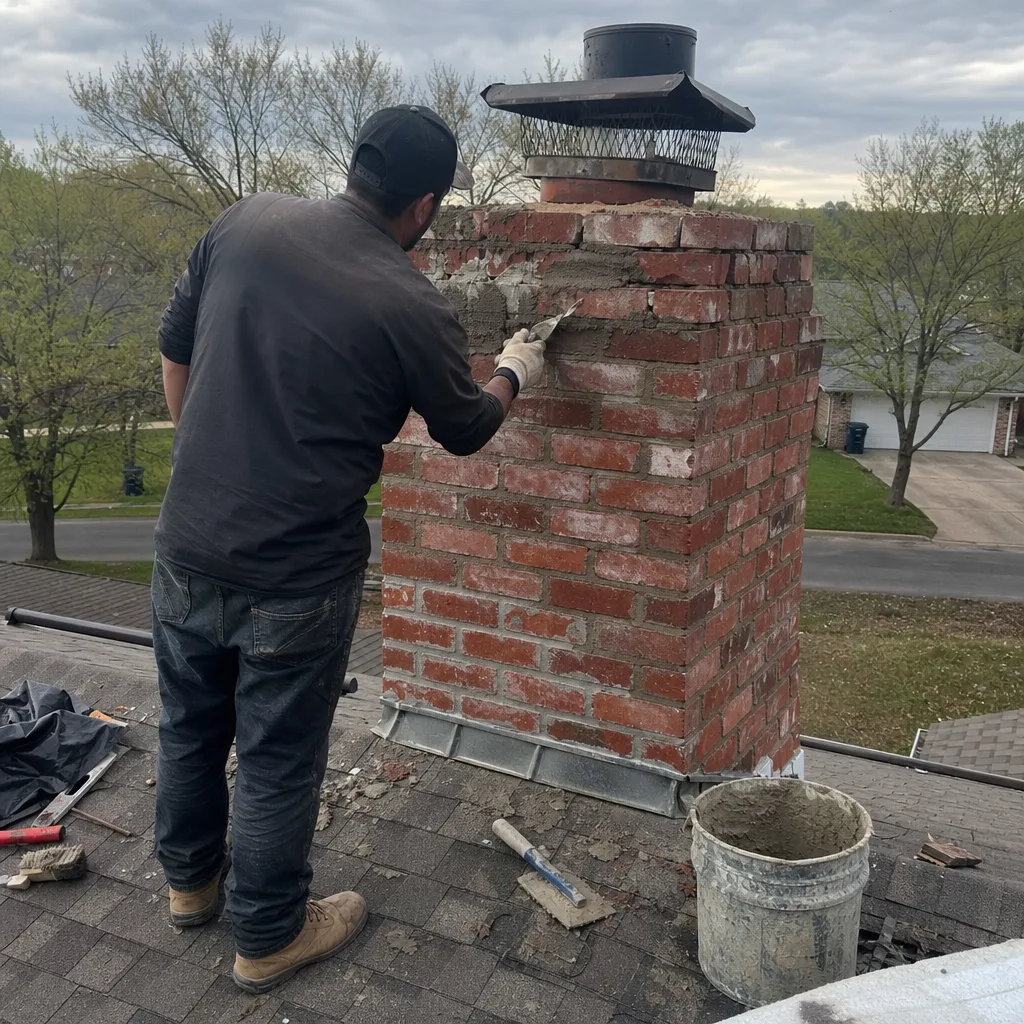
Mortar joints between bricks are sacrificial; they are designed to deteriorate before the brick itself, allowing repointing (tuckpointing) to restore integrity without rebuilding. When mortar loss exceeds approximately 1/4 inch depth, water penetration accelerates, and the structural function of the joint is compromised.
In Fort Worth, mortar deterioration follows two distinct patterns. In pre-1970 construction with lime-based mortar, natural weathering produces gradual erosion. In post-1970 construction with harder Portland cement mortars, the mortar itself resists erosion but becomes brittle; thermal and soil movement causes cracking rather than erosion, and water enters through cracks rather than porous surface.
Spalling - the flaking or popping off of brick faces - indicates that water has entered the brick, frozen, and expanded. Once a brick face spalls, the interior is exposed to accelerated weathering, and replacement becomes necessary. In neighborhoods like Rivercrest and Westover Hills, we’ve seen original 1920s brick survive a century with proper maintenance, while poorly maintained 1980s brick requires extensive replacement in thirty years.
The monitoring threshold: probe mortar joints with a house key or screwdriver. If you can insert the tool more than 1/4 inch, or if mortar crumbles freely, repointing is indicated. If brick faces flake when scraped, spalling is active and replacement units will be required. Address repointing before spalling begins; the cost difference is typically 3:1 or greater.
Crown Separation and Deterioration
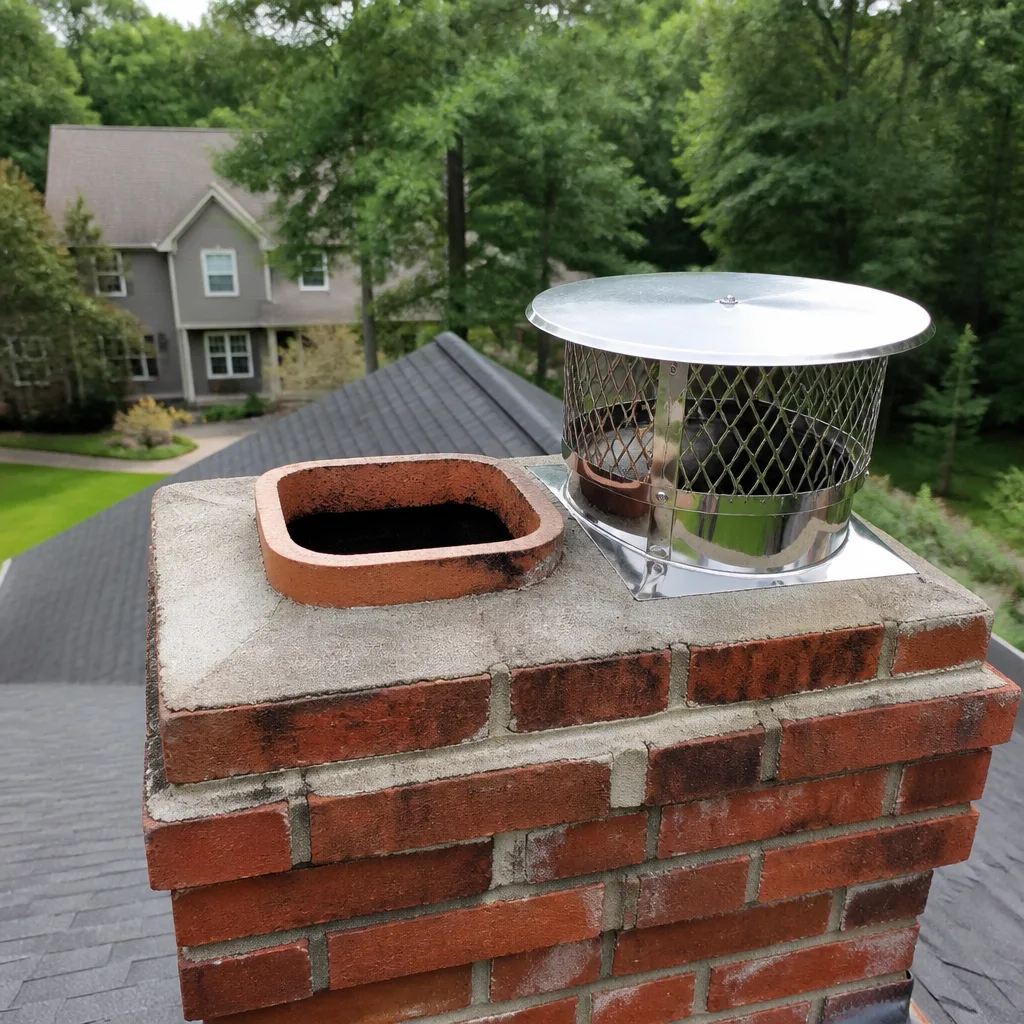
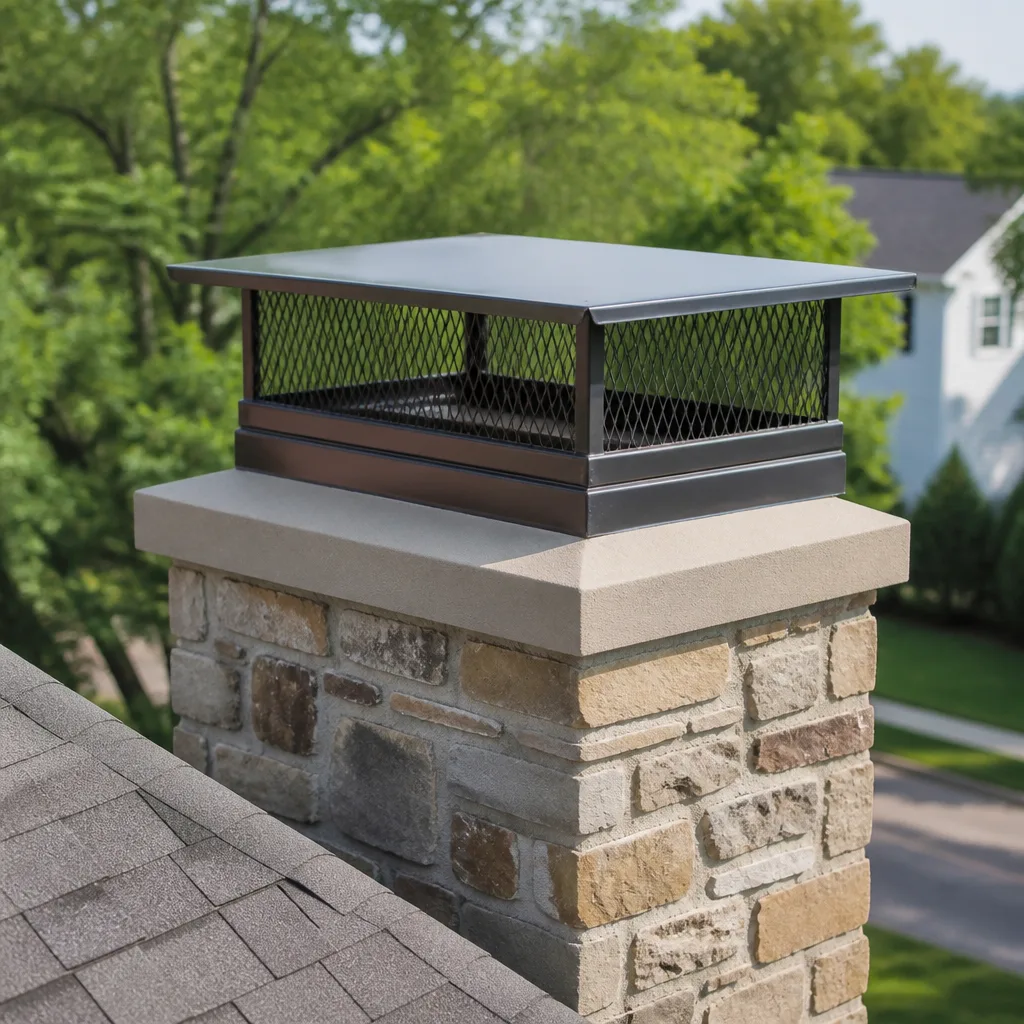
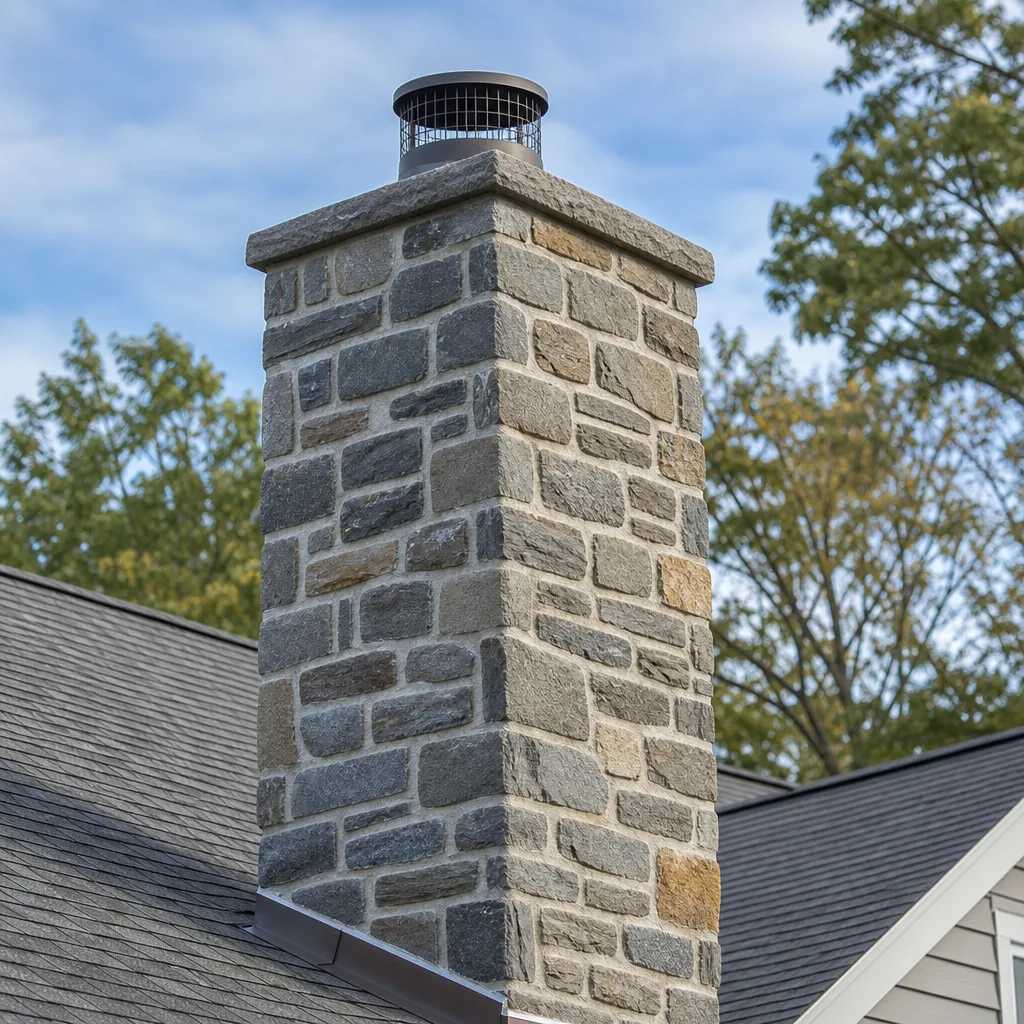
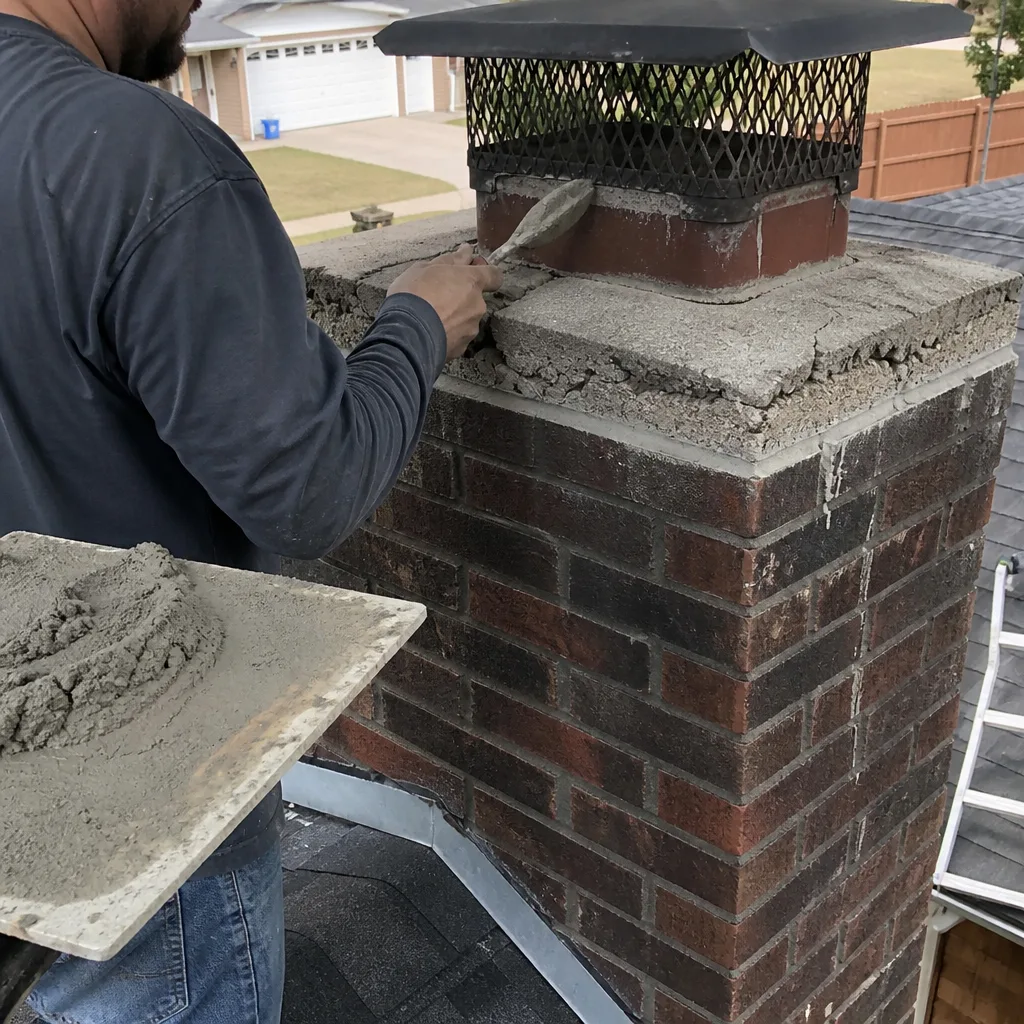
The chimney crown is the concrete or mortar cap that seals the top of the chimney, shedding water away from the flue opening and protecting the masonry below. It is not the same as the chimney cap, which is a metal cover over the flue opening. The crown is structural; the cap is protective.
Crown failure begins at the edges. A proper crown overhangs the masonry wall by at least 2 inches with a drip edge; water running down the crown face drips clear of the brick below. When the crown edge cracks or separates, water runs directly down the masonry face, causing the efflorescence and spalling described earlier.
Crown separation from the flue tile is equally serious. This gap allows water direct access to the interior chimney structure, saturating the masonry surround and accelerating all forms of deterioration. In Fort Worth’s wind-driven rain patterns, a separated crown can introduce gallons of water per storm into a chimney structure.
The visual check from ground level: look for cracks running across the crown surface, separation where the crown meets the flue tile, or missing chunks at the crown edge. If you can see daylight through a crown crack from below, water can enter. Crown repair with proper slope and drip edge detailing, or full crown replacement, addresses this. We use crown formulations designed for our climate zone, with flexibility additives to accommodate thermal movement.
Water in the Firebox: The Path from Crown to Hearth
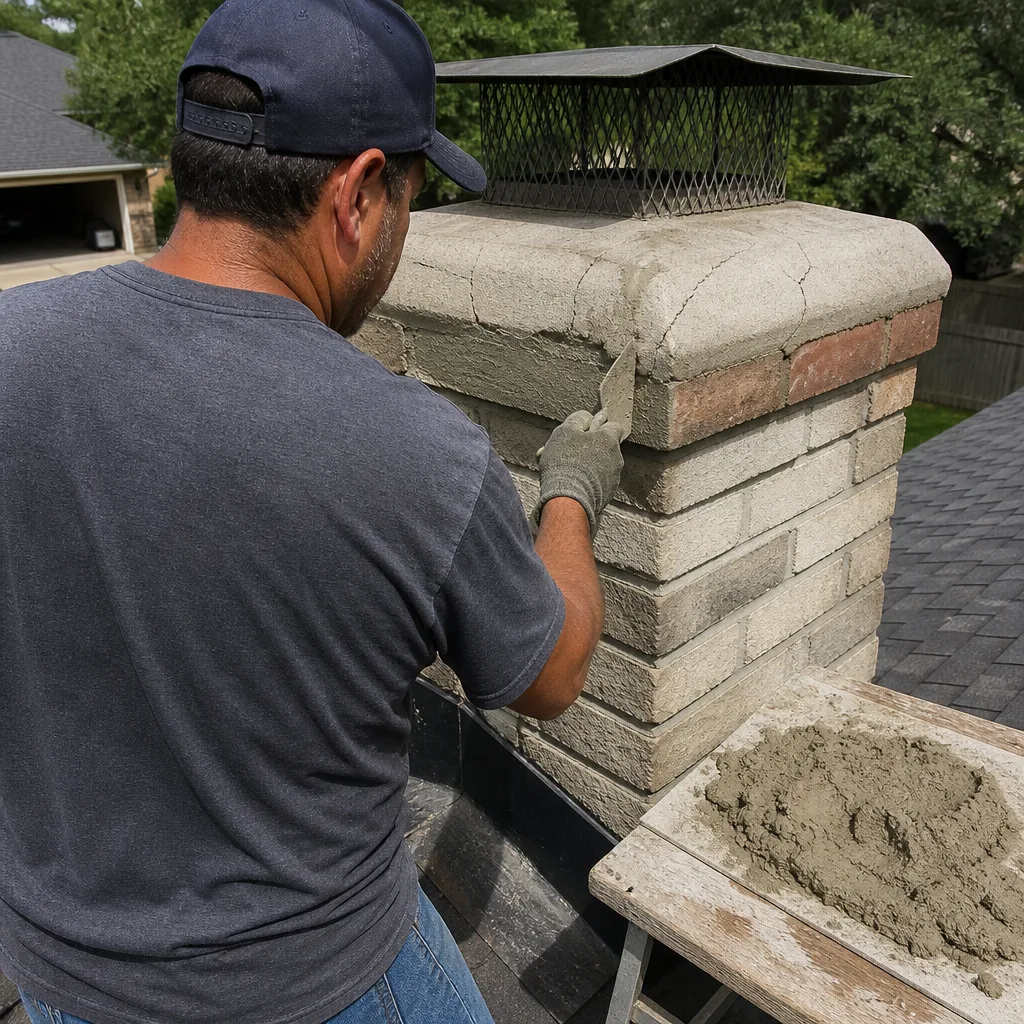
Water on the firebox floor after rain indicates a completed water path from the chimney top to the interior. This is not condensation; condensation produces uniform moisture on cool surfaces. Pooled water, drips, or stains that appear after precipitation indicate active intrusion.
The water path typically runs: crown crack or separation → masonry saturation → flue liner gap or mortar void → smoke shelf → firebox. Less commonly, flashing failure at the roof line allows water to run down the exterior and enter through a mortar joint at or below the roofline.
The structural significance: water in the firebox means the chimney’s water management system has failed at multiple levels. The crown, masonry, and potentially the liner are all compromised. The water itself damages the damper, firebox floor, and any metal components. In Fort Worth’s climate, persistent moisture also supports mold growth in the smoke shelf and lower flue areas.
The same-day criterion: water in the firebox does not create immediate combustion risk, but it indicates ongoing damage that accelerates with each rain event. Schedule inspection within one week during dry weather to allow accurate source identification. Do not use the fireplace until the water path is identified; wet masonry steamed by fire heat accelerates mortar deterioration and can produce noxious odors from accumulated deposits.
Damaged Flashing: Roof-Chimney Intersection Failures
Flashing is the sheet metal assembly that seals the joint where the chimney penetrates the roof. It is the most common leak source we find in Fort Worth inspections, and the most commonly misdiagnosed. Roofers often blame the chimney; sweeps often blame the roof. The actual failure is usually at the flashing itself or its installation.
Proper flashing has two components: step flashing interwoven with roof shingles and counterflashing embedded in the chimney mortar joints. The counterflashing laps over the step flashing, creating a shingle-like water path. Failure occurs when:
- Counterflashing pulls out of the mortar joint (common in our clay soil movement environment)
- Step flashing corrodes or separates at shingle joints
- Sealant at the flashing-chimney interface ages and cracks
- Improper original installation omits step flashing or uses only surface-applied counterflashing
The interior sign: water stains on the ceiling near the chimney, often appearing days after rain due to insulation saturation. The exterior sign: rust stains on the chimney below the roofline, or visible gaps at the flashing-masonry joint.
Flashing repair requires coordination between roofing and masonry trades. We evaluate the chimney-side condition and can recommend qualified roofing partners for the roof-side work. Our inspection includes photo documentation of flashing condition for your roofing contractor’s reference.
Animal Debris and Nesting Material
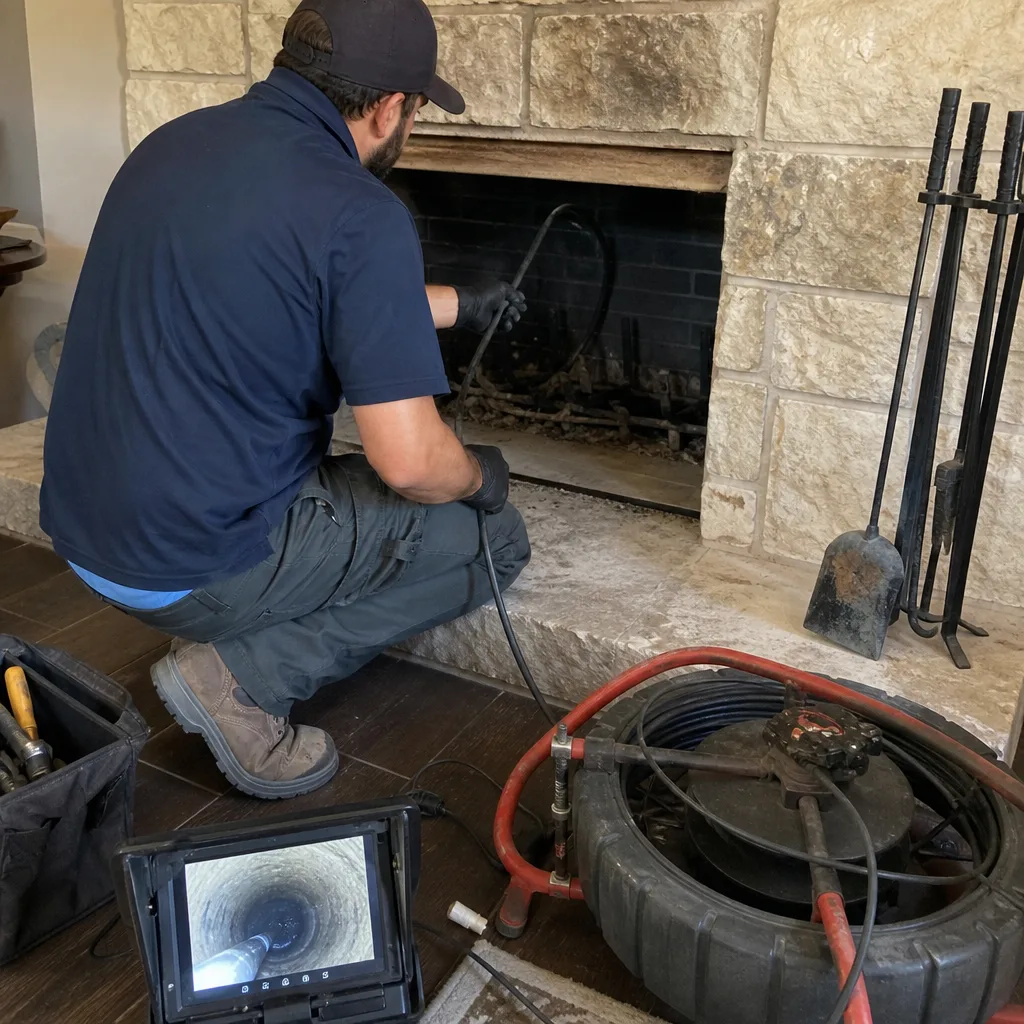
Twigs, leaves, or fur in the firebox indicate animal access through an uncapped flue or damaged cap. In Fort Worth, the most common culprits are chimney swifts (protected migratory birds), squirrels, and raccoons. Each presents distinct risks.
Chimney swifts nest in vertical shafts and cannot perch horizontally. Their nests adhere to flue walls and are protected by federal law during nesting season (roughly March through August). Removal requires waiting until young have fledged, then cleaning and capping to prevent return.
Squirrels and raccoons enter through uncapped flues or damaged screens. They build substantial nests on the smoke shelf and can block the flue entirely. Raccoons in particular damage flue liners with their weight and claws.
The hazard: nesting material is highly combustible. A single spark can ignite a nest and initiate a chimney fire. Additionally, animal waste introduces pathogens and parasites; histoplasmosis from bird droppings is a documented risk in our region.
The response: do not attempt to burn out nesting material. Do not start a fire to “smoke out” animals. Schedule professional removal, flue cleaning, and proper cap installation. We use caps from Gelco and Famco with appropriate mesh sizing for the species common to Fort Worth.
Same-Day Safety Issues vs. Next-Sweep Monitoring
Not every warning sign requires immediate emergency response. Some indicate progressive conditions that can be scheduled at your next planned service. The distinction matters for your safety and your budget.
Same-Day: Active Combustion or CO Risk
- Smoke entering the room during fireplace use
- Visible gaps or holes in the flue liner with the firebox in use or imminent use
- Separation of the chimney crown with visible flue tile exposure
- Strong gas odor (natural gas or propane, indicating possible gas line leak near fireplace)
- Chimney fire indicators: loud cracking or popping, dense smoke, intense odor, visible flames in the flue
If any of these occur, extinguish the fire if safely possible, evacuate if CO symptoms are present (headache, nausea, dizziness), and call for professional evaluation before next use.
Schedule Within One Heating Season: Progressive Deterioration
- Active efflorescence with soft brick
- Class III creosote buildup
- Visible flue tile cracks without active use planned
- Rust with damper malfunction
- Water in firebox after rain
- Animal debris without active nesting
Monitor at Annual Sweep: Early Stage Conditions
- Minor efflorescence without brick softening
- Class I or II creosote under 1/4 inch
- Minor mortar erosion without depth exceeding 1/4 inch
- Cosmetic crown cracking without separation
- Flashing sealant aging without active leak
The criterion for escalation: any condition that changes category between inspections. Efflorescence that was minor is now active. Cracks that were hairline are now visible. Document with photos at each sweep for comparison; Clause 4 of the Haven Standard requires this documentation, and it provides your baseline for monitoring decisions.
Interior Firebox Checklist: No Tools Required
Before lighting the first fire of the season, run this checklist from the firebox opening. No tools, no ladder, no roof access required.
- Shine a flashlight up the flue. Look for visible cracks in flue tiles, obstructions, or buildup. Note creosote color and texture: powdery black (Class I), granular (Class II), or shiny/tar-like (Class III).
- Inspect the firebox floor and walls. Look for rust stains, cracks in refractory panels, or missing mortar. Tap refractory panels; a hollow sound indicates delamination or loosening.
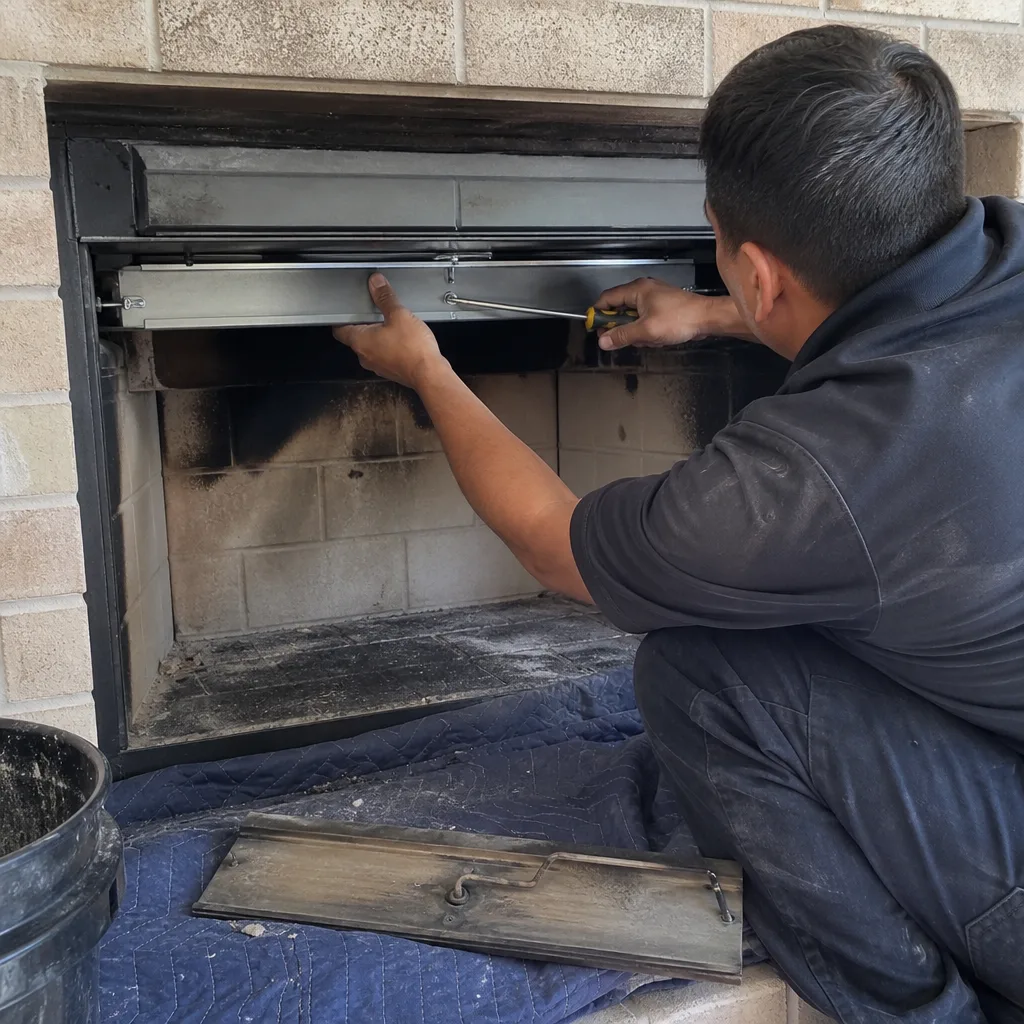
- Operate the damper. It should open fully, close fully, and seal reasonably when closed. Note any grinding, sticking, or visible rust.
- Check the smoke shelf area. Shine light up and back. Look for debris accumulation, animal nesting material, or water staining.
- Sniff for odors. Note whether the smell is tar-like (creosote), musty/organic (animal), or damp/variable (draft reversal).
- Look up at the chimney crown from the yard. Visible cracks, missing pieces, or separation from the flue tile require evaluation.
- Check the roof-chimney intersection from ground level. Look for visible gaps, rust stains, or damaged flashing.
Document anything unusual with phone photos. This record helps us evaluate urgency when you call, and provides comparison baseline for future inspections.
Common Mistakes to Avoid
- Assuming a “chimney sweep” includes inspection. Many Fort Worth-area sweeps offer cleaning only, with a flashlight glance as “inspection.” A true NFPA 211 Level 2 inspection requires camera scan of the full flue, accessible exterior evaluation, and written documentation. Know what you’re paying for.
- Burning unseasoned wood because it’s cheaper. Wood with moisture above 25% produces Class III creosote at 2-3x the rate of seasoned wood. The money saved on fuel is spent on accelerated cleaning and premature liner replacement.
- Ignoring the pop or crack sound. As described above, this is often the only audible warning of flue tile fracture. Dismissing it as “settling” defers diagnosis until the damage is more extensive and expensive.
- Accepting “call for pricing” for chimney work. You cannot evaluate whether a quote is fair without a written scope and documented condition. Every Level Two Chimney Fort Worth job begins with written price, written scope, and written warranty under Haven Standard Clause 1.
- Installing a decorative cap without proper mesh. Small mesh keeps animals out but can clog with creosote. Large mesh allows smaller animals and debris. Proper cap sizing matches your flue dimensions and burning practices.
- Deferring maintenance because “we hardly use the fireplace.” Even unused chimneys deteriorate from weather exposure, and occasional use with a compromised system creates disproportionate risk. Annual inspection is the standard regardless of use frequency.
When to Call a Professional
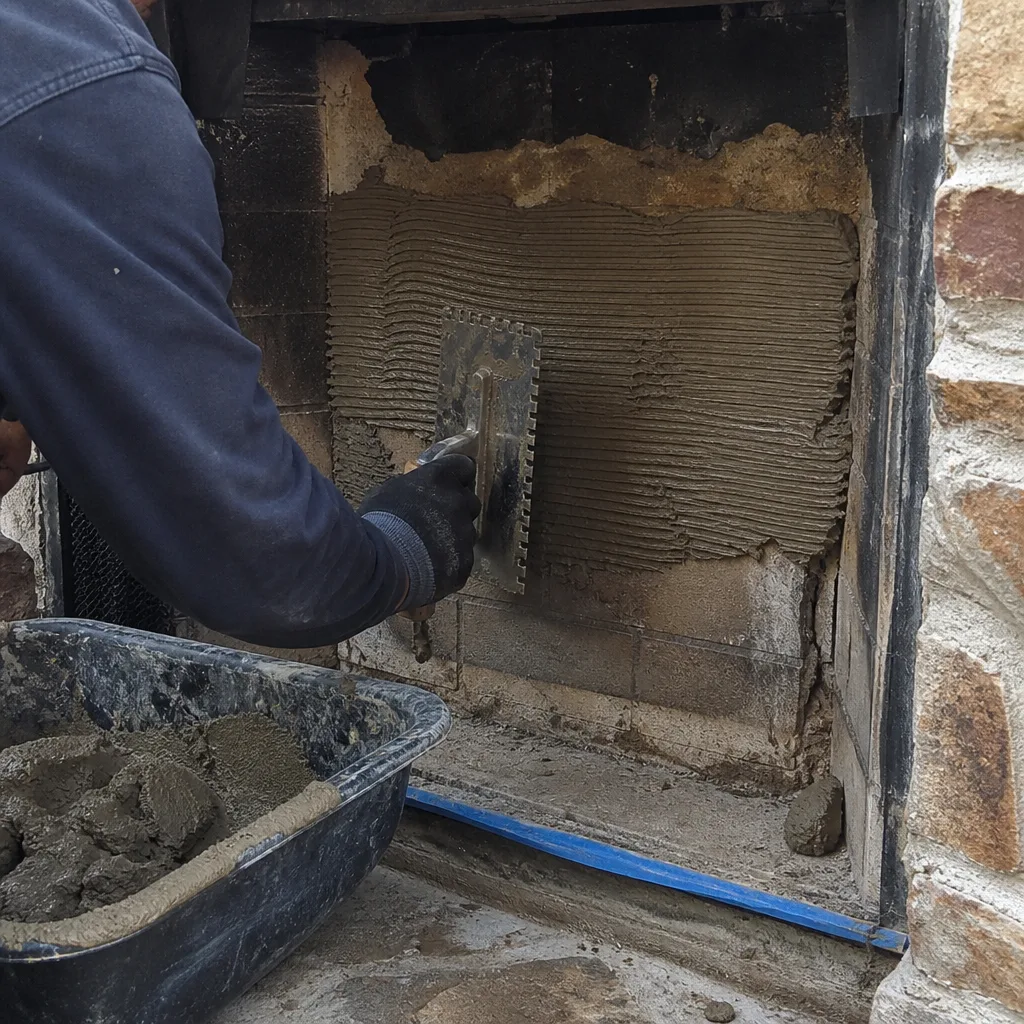
Call for professional evaluation when any same-day safety indicator is present, when your annual checklist reveals changes from prior years, or when you cannot confidently assess condition yourself. The cost of inspection is modest; the cost of deferred maintenance is not.
Level Two Chimney Fort Worth offers free estimates in Fort Worth. Every evaluation includes NFPA 211 Level 2 camera inspection, written documentation of findings, and a written price before any work is proposed. Our 365-Day Done Right Promise applies to every job. Call (682) 499-2712 to schedule, or return to our Level Two Chimney Fort Worth home page to learn more about our services.
Frequently Asked Questions
Chimney sweeping in Fort Worth typically ranges from $199 to $349 for a standard service including NFPA 211 Level 2 inspection with camera scan, written documentation, and debris removal. Factors affecting price include creosote class (Class III requires chemical treatment or rotary equipment), accessibility (steep roof pitch, chimney height), and whether animal removal or debris clearing is required. We deliver a written price before any work begins under Haven Standard Clause 1. Call (682) 499-2712 for an exact quote - estimates are free.
You need a new liner when the existing liner fails to contain combustion gases and sparks, as documented by camera inspection. Clay tile cracks that are visible from the firebox, separated tile joints, or missing tiles all indicate failure. In some cases, HeatShield cerfractory sealant can restore liner integrity without full replacement. We quote both repair and replacement options with photo evidence so you can see the condition yourself. Nothing is recommended without camera documentation you can review. Call (682) 499-2712 for an evaluation - estimates are free.
The NFPA 211 standard recommends annual inspection for all chimneys, and sweeping when creosote buildup reaches 1/8 inch. In Fort Worth’s climate, with our short heating season and tendency toward cooler, smoldering fires, many homeowners accumulate Class II or III creosote faster than expected. Annual inspection lets you sweep only when needed rather than on an arbitrary schedule. We’ve documented chimneys that needed sweeping after half a cord and others that were clean after two cords; inspection determines actual condition. Call (682) 499-2712 to schedule - estimates are free.
Deferred maintenance produces predictable consequences: creosote accumulation increases chimney fire risk; water intrusion degrades masonry and metal components; liner damage allows gas leakage and potential carbon monoxide exposure; animal nesting creates blockage and fire hazard. The cost progression is also predictable. Sweeping a chimney with 1/4 inch of Class I creosote is straightforward. Removing 1 inch of Class III glazed creosote requires chemical treatment and rotary equipment, typically 3-4x the cost. Rebuilding a chimney with spalled brick and collapsed liner costs 50-100x the annual inspection fee. Call (682) 499-2712 for a current condition assessment - estimates are free.
Summer chimney odors in Fort Worth result from the combination of high humidity and negative pressure from air conditioning. Humid air activates creosote off-gassing and accelerates organic decay in any animal debris. Simultaneously, air conditioning creates negative pressure that draws air down the flue, bringing those odors into living spaces. The odor type determines response: tar-like smells indicate creosote requiring cleaning; musty organic smells indicate animal debris requiring removal; damp variable smells indicate pressure imbalance requiring diagnostic evaluation. Call (682) 499-2712 to identify your specific odor source - estimates are free.
You can and should perform the interior firebox checklist described in this guide before each heating season. However, you cannot assess the full flue length, crown condition, or flashing integrity without proper equipment and roof access. Camera inspection of the full flue, required by NFPA 211 Level 2, reveals conditions invisible from the firebox. We’ve found significant damage in upper flues that appeared normal from below in thousands of Fort Worth inspections. Use your checklist to identify when professional evaluation is needed; don’t rely on it to certify safety. Call (682) 499-2712 to schedule a Level 2 inspection - estimates are free.
The Bottom Line
Chimney warning signs are not mysterious. Each visible symptom indicates a specific structural deficiency, and each deficiency follows a predictable progression if ignored. The white stain is water moving through masonry. The pop you hear is a liner fracturing under thermal stress. The smell you notice identifies which system has failed. The key is pairing what you observe with what it means, then deciding whether today’s condition permits monitoring or requires action. In Fort Worth’s climate, with our rapid temperature swings and active soil movement, conditions progress faster than in more stable environments. Annual inspection with camera documentation, written findings, and written pricing before any work begins is the standard that protects your home and your budget. We’ve applied that standard to over 38,000 chimneys since 2009, and it remains the foundation of every service we provide.
Written by Corrine Halstead, Owner at Level Two Chimney Fort Worth, serving Fort Worth since 2009.